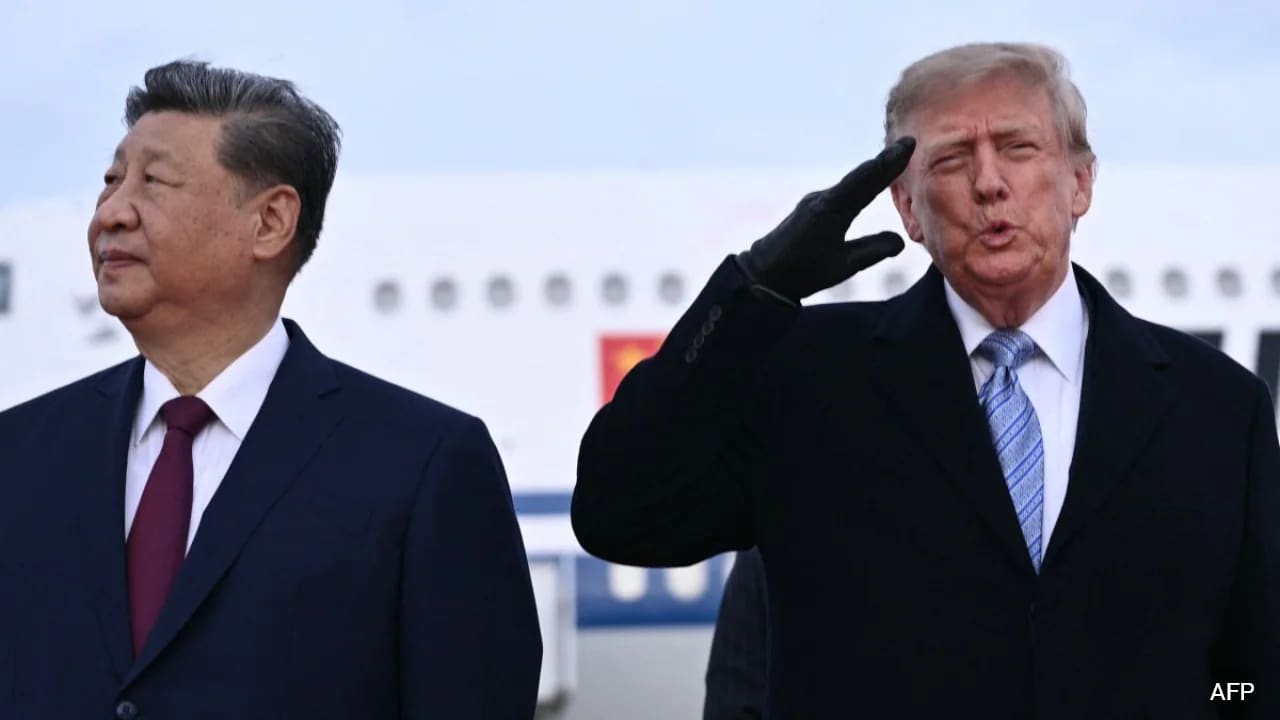
When Washington and Beijing sit down to shake hands, capitals across the globe watch closely. But few watch with the acute, quiet anxiety of New Delhi. Whenever American and Chinese leaders lock in a high-stakes diplomatic summit, Indian strategists immediately start running worst-case scenarios. It is not just about trade deals or tech skirmishes. It is about the fundamental fear of being sidelined in a bilateral world order carved up by superpowers.
The core anxiety for India isn't complex. New Delhi has spent decades building its credentials as an independent global player, relying on a strategy of multi-alignment and strategic autonomy. When the US and China manage to establish a pragmatic trade truce or carve out working arrangements on artificial intelligence and critical minerals, the room for independent maneuvering gets tighter. If Washington and Beijing decide to compartmentalize their rivalry and manage global flashpoints behind closed doors, where does that leave India's core security interests, especially along the disputed Himalayan border?
The Quad Question Mark
Look at multilateral frameworks like the Quad. The Quadrilateral Security Dialogue was meant to be a bulwark ensuring a free and open Indo-Pacific. Yet, diplomatic follow-through often falters when US domestic priorities shift. After previous summits, scheduling the next meeting frequently runs into political apathy in Washington. When American leadership loses interest or treats regional security as a secondary bargaining chip, India is left holding the bag in its own immediate neighborhood.
This brings up the persistent worry about great powers cutting deals over the heads of regional actors. History is full of examples where smaller or rising powers find themselves treated as secondary considerations while heavyweights negotiate spheres of influence. Even if the current Trump-Xi talks remain limited and transactional rather than a grand geopolitical grand bargain, the mere fact that Washington can flip a switch and engage Beijing directly leaves Indian policymakers scrambling to recalibrate.
Trade Traces and the China Plus One Strategy
Economics complicate things further. The whole rationale behind the "China Plus One" manufacturing shift was the expectation of a permanent decoupling or at least a severe, long-term fracture in US-China commerce. If Washington grants tariff reliefs or pauses export controls on non-sensitive sectors, the urgency for global corporations to relocate out of Chinese manufacturing hubs drops.
Lower capital flight from China directly undercuts India's manufacturing ambitions. New Delhi wants global supply chains to anchor deeply on its soil through initiatives like production-linked incentives. But if the US-China trade friction cools down, foreign investors might hesitate to take the expensive plunge into setting up alternative ecosystems in South Asia. Furthermore, if the US slaps sweeping trade restrictions or tougher rules of origin to manage its overall deficit, Indian exports could get caught in the crossfire.
Managing the Neighborhood
India faces its own distinct hurdles that neither Washington nor Beijing care much about solving. The bilateral standoff on the Line of Actual Control remains frosty. China needs tactical stability with India when its external pressures mount elsewhere, but Beijing never yields on its territorial claims. Meanwhile, South Asian geopolitics remains volatile, with domestic political upheavals in neighboring nations testing New Delhi's diplomatic agility daily.
Relying on external superpowers to keep the Indo-Pacific stable is a fool's errand. New Delhi knows this. The only real answer is accelerating domestic economic reforms, upgrading manufacturing competitiveness, and deepening resilient supply chain partnerships with reliable middle powers like Japan, Australia, and European nations. Stop waiting for Washington to manage Beijing on India's behalf. Building internal economic muscle is the only currency that matters in great power politics.
Trump-Xi Meet: Can The US-China Trade Truce Survive?
This video explores the nuances of the US-China trade negotiations and whether a lasting truce between Washington and Beijing is feasible.