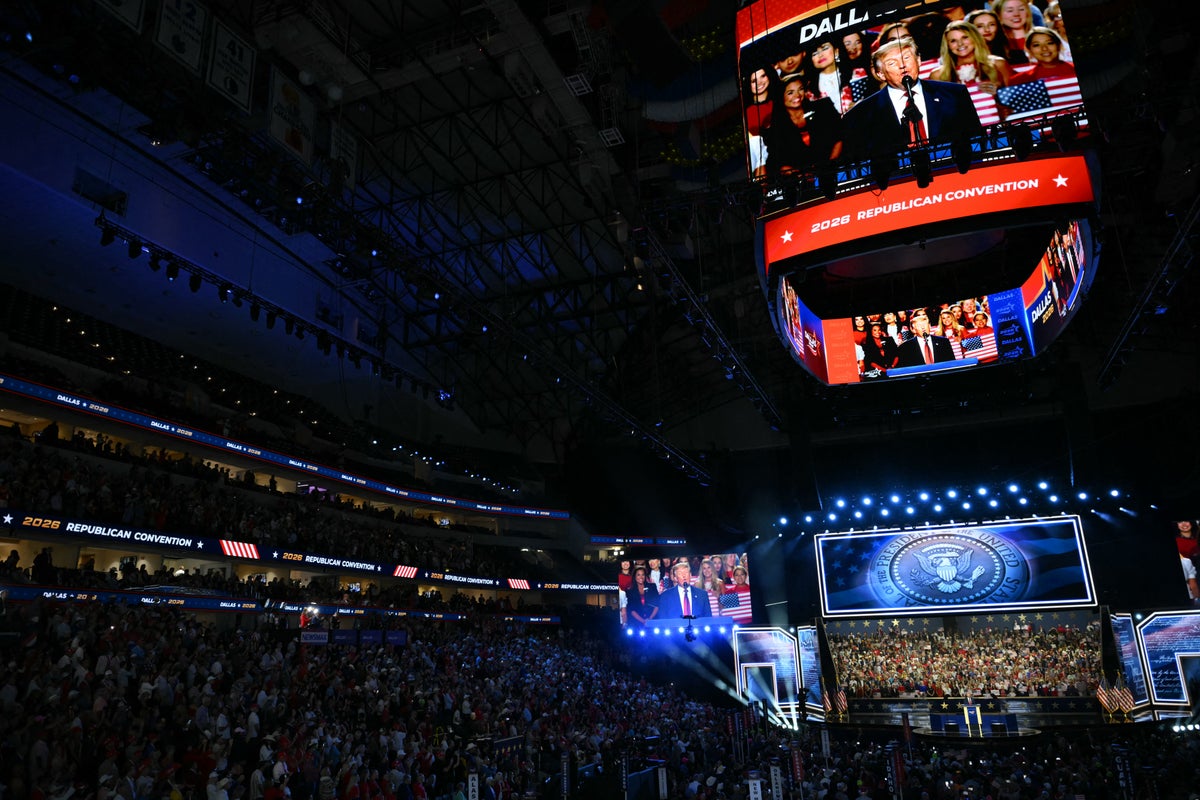
Donald Trump isn't even running for office this year, but you would never guess it by watching the chaotic spectacle in Dallas. With control of Congress hanging by a thread, the president stepped up to the microphone at the first-ever Republican midterm convention and dropped a demand that left political observers shaking their heads. He told a cheering arena of twenty thousand supporters to pretend he's personally on the ballot this November.
It's a blunt acknowledgment of a brutal political reality. Midterm elections are traditionally brutal for the party currently sitting in the White House. When you add plunging approval ratings, a fresh foreign conflict, and mounting voter frustration over grocery prices into the mix, the Republican path to holding the House of Representatives looks narrow. Trump knows his base loves him, but midterm voter turnout is notoriously lazy. So, he's trying to manufacture a presidential-level urgency out of thin air.
Why does this strategy matter right now? Because a fractured Congress could turn the rest of his presidential term into a legislative ghost town. If Republicans lose their majorities, investigations start, vetoes pile up, and the executive branch hits a brick wall. Trump is betting everything on personal loyalty. He's telling voters to treat congressional races as a direct referendum on his administration, whether his name appears on the paper or not.
The $5000 Pitch And The Backlash
You can't talk about this convention without mentioning the big financial carrot dangling over the proceedings. Trump doubled down on a massive proposal promising a five-thousand-dollar dividend check to every American adult if the GOP manages to retain both chambers of Congress.
Economists immediately pointed out that the math is staggering, estimating the price tag at well over a trillion dollars. Democrats didn't hold back either, labeling the promise outright electoral bribery designed to distract everyday families from soaring inflation and rental costs. Yet, inside the arena, the crowd didn't care about the fiscal debates. They heard a populist promise of cash linked directly to party victory, and that's all that mattered for the room's energy.
Star Power And A Party Identity Crisis
The Dallas event felt less like a policy conference and more like a multi-day rock concert built around a personality cult. There were zero formal legislative sessions or traditional committee votes. Instead, the stage hosted a revolving door of prominent figures, family members, and high-profile surrogates pushing a unified message.
Donald Trump Jr. took direct aim at what he called a left-wing drift toward socialism, drawing on family history to warn crowds against government rationing. Ted Cruz leaned heavily into religious and cultural divides, warning about foreign influences threatening constitutional values. Vice President JD Vance framed the opposition as a party built on resentment, casting the Republican platform as the true defender of working-class Americans.
Even Robert F. Kennedy Jr. took his turn under the bright lights, arguing that the modern Democratic party has abandoned the working middle class that his family once championed decades ago. Every speech hammered the same core narrative: a vote for a local Republican is a vote against a dystopian future.
The Democratic Counter-Attack
Naturally, the opposition isn't sitting quietly while the administration rewrites the midterm playbook. Democratic lawmakers hit back hard from press conference rooms just miles away from the arena floor, pointing out the stark disconnect between the party celebration in Dallas and the kitchen-table struggles of ordinary households.
They argue that no amount of balloon drops or fiery rhetoric can hide the reality of high gas prices, expensive rent, and stubborn inflation. From their perspective, the entire convention is an expensive distraction designed to insulate wealthy donors and shield a struggling administration from accountability.
What Happens Next
The midterm cycle is officially sprinting into high gear. Pelling voters based on personal affection for a president who isn't up for election is a massive gamble. If turnout surges because people treat this as a proxy war for the White House, the gamble pays off. If voters look past the noise and focus strictly on local economic pain, the Republican majority could evaporate overnight.
You need to watch how independent voters respond to these multi-thousand-dollar promises over the next few weeks. Pay attention to early voting numbers in key swing districts, because that will tell you whether the presidential magic is actually working down-ballot. Don't get distracted by the arena theatrics; look at the ground game in competitive suburban counties where elections are actually won and lost.