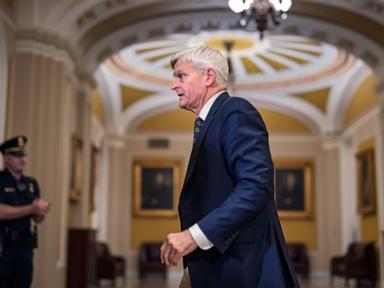
Closed-door political lunches are usually boring affairs where politicians eat lukewarm catering and nod along to party talking points. That did not happen when Donald Trump walked into the Senate Republican lunch on Capitol Hill. What was supposed to be a standard show of party unity quickly turned into a screaming match between the president and a sitting Republican senator.
Trump found himself locked in a face-to-face confrontation with Senator Bill Cassidy of Louisiana. Voices were raised. Insults were thrown. Trump even called Cassidy a lunatic. If you found value in this post, you might want to look at: this related article.
This was not just a random burst of bad temper. It was the messy public boiling over of an intense, years-long grudge mixed with real anxiety over an ongoing war. For another perspective on this story, check out the recent coverage from Wikipedia.
The Breaking Point Over the Iran War
The fight started because Trump was furious about a recent Senate vote. A day before the lunch, four Republicans joined Democrats to pass a war powers resolution aimed at restricting further U.S. military action in Iran. Trump was already venting on social media, calling those lawmakers losers.
When he arrived at the private lunch, he openly questioned how any Republican could vote to tie his hands on military action.
Cassidy did not stay quiet.
He stood up and told Trump directly that the administration had left everyone in the dark. He pointed out that the military operation was sold to Congress as something that would wrap up in four weeks. Instead, it has dragged on for four months without hitting its main goals.
Trump did not handle the criticism well. He raised his voice and commanded Cassidy to sit down. Cassidy refused to be intimidated, matching Trump's volume and tone right back.
A Lame Duck Senator with Nothing Left to Lose
To understand why Cassidy was willing to look Trump in the eye and shout back, you have to look at what happened to his career just last month.
Cassidy became the first incumbent senator in 14 years to lose a primary election. The primary reason for his loss dates back years, specifically to his vote to convict Trump during the post-January 6 impeachment trial. Trump never forgave him and actively backed a primary challenger in Louisiana to take him out.
During their shouting match at lunch, Trump threw that election loss right in Cassidy's face. Cassidy later remarked that Trump simply uses whatever comes to mind to demean people.
For a long time, Cassidy tried to play nice. He supported most of Trump's policies and nominees, attempting to patch things up with the base. It didn't work. Now that the primary is over and his Senate career has a clear expiration date, the gloves are entirely off. He does not have to worry about courting Trump-loyal voters anymore. He can say exactly what he thinks.
The Silence of the Room
While the two men yelled at each other, the rest of the Republican senators mostly sat there in silence. Nobody jumped up to defend Cassidy while Trump was in the room. That tells you everything about the current state of congressional Republicans. Publicly, almost everyone falls in line to avoid the wrath of the president and his base. In private, the anxiety is real.
After Trump left, some senators tried to shrug off the blow-up. Senator Tommy Tuberville compared it to a standard halftime locker room talk. Senator Roger Marshall told reporters that people yell at each other all the time and it wasn't a huge deal.
Others were a bit more cynical. Senator John Cornyn, who also recently lost a primary after facing a Trump-backed challenger, sarcastically called the meeting quite a unity message.
How the Administration Managed to Quiet the Storm
What happened after the blow-up is perhaps the most interesting part of the whole story. The administration realized that screaming at senators might not be the best way to keep a thin legislative majority together.
Within hours of the lunch fight, the White House extended an olive branch to Cassidy. They invited him down to Pennsylvania Avenue for the exact thing he had been complaining about, a detailed briefing on the Iran situation.
Cassidy went to the White House and sat down with Vice President JD Vance and envoy Steve Witkoff. They gave him the information he wanted. The strategy worked. Cassidy walked back to the Capitol later that night and voted against a similar war powers resolution, helping Republicans block it.
It shows that even when personal animosity is running incredibly high, practical transactional politics can still get things done. Cassidy wanted answers; the White House wanted his vote. Once the information was shared, the vote followed.
What This Fight Reveals About the Party Future
This confrontation exposes a deeper problem that the Republican party faces as the 2026 midterm elections approach. The ongoing war in Iran is making rank-and-file lawmakers incredibly nervous. Thin majorities mean that leadership cannot afford to lose more than a couple of votes on any major issue.
When military operations drag out far past their original timelines, lawmakers start worrying about the political cost back home. Most senators choose to express that worry quietly behind closed doors. Cassidy just happened to be the one who didn't care about the consequences anymore.
If you want to track how these internal party dynamics develop over the coming weeks, keep an eye on these specific indicators.
- The next military spending bill: Watch how many Senate Republicans demand strict timelines or explicit goals attached to the next round of funding for the Iran operation.
- Primary fallout: Track whether other lawmakers who are retiring or who lost primaries start voting more independently on foreign policy.
- Briefing frequency: See if the administration starts holding regular, closed-door briefings for the entire Senate to prevent more defections before they happen.