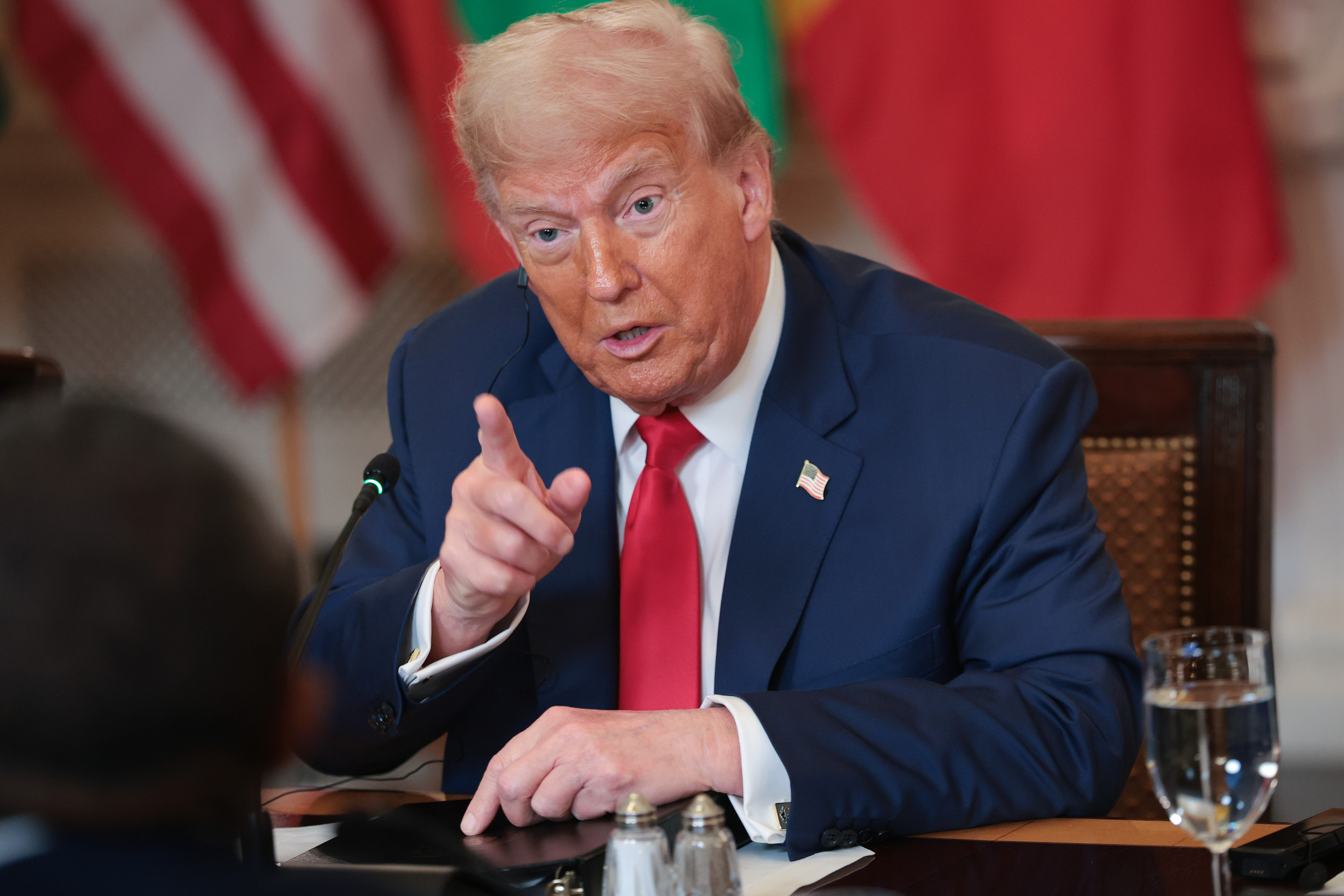
The fragile peace in West Asia has completely shattered. In a dramatic escalation of hostilities, Donald Trump threatens strikes on Iranian power plants and bridges next week unless Tehran crawls back to the negotiating table. It's a massive shift in tactics that moves the conflict from targeted military strikes along the coast to a direct assault on the critical infrastructure holding the Iranian economy together. "You better make a deal," the President warned, telling the regime they won't have "anybody left" if they continue to resist American demands.
This isn't just standard diplomatic posturing. It's an aggressive, high-stakes gamble to force a regime on its knees to capitulate. By threatening civilian-adjacent infrastructure, Trump is signaling that the old rules of engagement are gone. The ceasefire signed in June is officially dead, and the region is staring down the barrel of an all-out war.
Inside the threat to dismantle Iran's infrastructure
During a sit-down interview on Fox News with chief foreign correspondent Trey Yingst, Trump didn't mince words. He laid out a literal timeline for the destruction of Iran's energy and transport systems. The message was clear: negotiate now, or watch your country go dark.
"We're going to hit them very hard tonight," Trump said, describing the immediate military action. "We're going to hit them very hard tomorrow night. We're going to hit them very hard the night after, and then next week it gets really bad for them because next week comes the power plants. Next week comes the bridges."
The President claimed that US representatives had been in contact with Iranian officials just an hour before he went on air. He told them flatly that they would have "nothing left" if they refused a new deal.
Is it a bluff? Probably not. The US military has already spent four consecutive days pounding Iranian military installations along the coast. According to Trump, the strikes have been so successful that the military is actually running out of obvious targets. Moving the target list to civilian power plants and transport bridges is the next logical—and terrifying—step in his maximum pressure campaign.
Why Trump is threatening strikes on Iranian power plants now
To understand why we're on the brink of a massive regional war, you have to look at how quickly the June ceasefire fell apart.
The temporary truce was supposed to bring both sides to a permanent peace agreement. Instead, it became a waiting game. The tipping point came when Iran began attacking commercial shipping vessels transiting through the vital Strait of Hormuz.
Over the last week, the situation on the water turned bloody. Iran reportedly attacked seven commercial ships, resulting in nearly a dozen crew members killed, missing, or injured. In one brutal incident, two Emirati oil tankers were hit by Iranian cruise missiles, killing an Indian crew member and wounding eight others.
Iran claims it closed the Strait of Hormuz in retaliation for US actions. Trump's response was swift. He ordered the US Central Command to reimpose a strict naval blockade on all Iranian ports. If Iran won't let international shipping pass, the US won't let Iranian ships move at all.
The international law issue that everyone is ignoring
Trump insists that US forces are being "very careful with the civilian population." But you can't knock out a nation's power plants and bridges without causing a massive humanitarian disaster.
Under the 1949 Geneva Conventions, attacking infrastructure that is essential to the survival of the civilian population is flatly prohibited. If you turn off the electricity, water treatment facilities stop working. Hospitals go dark. Food distribution chains collapse.
Trump's critics are already pointing this out. But the administration's view is that Iran's hostile actions in international waters have invalidated normal diplomatic courtesies. By calling the previous Obama-era nuclear agreement "a worthless piece of paper," Trump has made it clear he wants a total rewrite of the geopolitical balance in the Middle East. He wants a deal that completely strips Iran of any nuclear capability and stops their regional proxy operations permanently.
No American boots on the ground
One of the most revealing moments of the Fox News interview was when Trey Yingst pushed Trump on whether these goals could be achieved strictly through air power. Would the US need to launch a ground invasion to stop Iran's nuclear ambitions?
Trump's answer was classic outsourcing:
"Sometimes you need a ground campaign, but we have other people that will do the ground campaign for us."
He didn't name these "other people," but it doesn't take a genius to figure it out. The US has deep military partnerships with Gulf states and Israel, both of whom view a nuclear-armed Iran as an existential threat. Trump's plan is to let regional allies handle any messy ground combat while the US military provides the overwhelming air power, intelligence, and naval blockade capabilities.
That said, he didn't rule out direct US ground action entirely. He specifically mentioned that he would consider a ground operation to seize Kharg Island—the hub of Iran's oil export industry—if the regime is sufficiently degraded.
The shadow of Pickaxe Mountain
While the immediate threat focuses on power grids and bridges, the real target of this escalation sits deep underground. The US is closely watching the Natanz nuclear facility, specifically the underground tunnel complex known as Pickaxe Mountain.
Trump admitted that US intelligence is tracking fresh activity at the site. He hinted that Pickaxe Mountain could easily end up on the target list if negotiations don't start immediately. The administration's core objective is keeping Iran from building a nuclear weapon. To Trump, Iran's public statements about peaceful nuclear energy are nothing but lies.
If the US military shifts its focus to Pickaxe Mountain, we are no longer talking about a regional skirmish. We are talking about a pre-emptive strike on a nuclear facility that could trigger an unmanageable chain reaction across the entire globe.
What this crisis means for your wallet
You don't have to live in the Middle East to feel the impact of this brewing war. The Strait of Hormuz is the world's most important oil transit chokepoint. Before the war started, roughly 20% of global oil and gas moved through this narrow waterway every day.
With the shipping lanes currently crippled by attacks and blockades, global energy markets are panicking. Brent crude prices have already spiked 15% in just one week, climbing to $85 a barrel. If Trump follows through on his threat to destroy Iran's energy grid, expect oil prices to shoot past $100 in a heartbeat.
Initially, Trump floated a controversial plan to charge a 20% toll on all cargo transiting the Strait of Hormuz to pay for US security efforts. After heavy international blowback, he quietly scrapped that idea. Instead, he's pivoting to secure massive trade and investment deals with wealthy Gulf states in exchange for American military protection.
How Iran is preparing to fight back
Iran isn't just taking these hits quietly. Their military strategy relies heavily on asymmetrical warfare, drone strikes, and regional proxies.
Shortly after Trump's interview aired, Iran's army announced it had launched successful drone attacks targeting US military positions at the Azraq airbase in Jordan. The Islamic Revolutionary Guard Corps (IRGC) also claimed responsibility for strikes on weapons and storage facilities in Bahrain and Kuwait.
Iran's Deputy Foreign Minister, Kazem Gharibabadi, made it clear that Tehran will not be bullied into submission.
"If the U.S. thinks that by tightening its measures against us, its military actions and its economic blockade, we will return to negotiations, it is making a mistake," Gharibabadi told Iranian state television.
🔗 Read more: north brunswick new jersey map
This leaves both nations trapped in a classic escalatory spiral. Trump believes that more pain will force Iran to make a deal. Iran believes that showing any weakness will invite total destruction.
What to watch for next
The clock is ticking down to next week's deadline. If you want to know which way this crisis is going to break, keep a close eye on these three indicators:
- Backchannel diplomacy in Oman: While the public rhetoric is incredibly hostile, US and Iranian negotiators are still communicating through mediators. Watch for any sudden, quiet meetings that could signal a last-minute pause to the bombing campaign.
- Oil tanker movement: If commercial shipping companies completely halt transits through the Gulf, the economic pressure on Western countries will skyrocket, potentially forcing Trump to reconsider the scale of his strikes.
- Retaliatory proxy attacks: Watch for increased Houthi activity near the Bab el-Mandeb Strait in the Red Sea. If Iran successfully chokes off both the Persian Gulf and the Red Sea, the global supply chain will freeze.
Trump has laid his cards on the table. He is willing to plunge Iran into literal darkness to get the deal he wants. Now, the world waits to see if Tehran will blink first, or if next week will mark the start of a catastrophic new chapter in the Middle East.