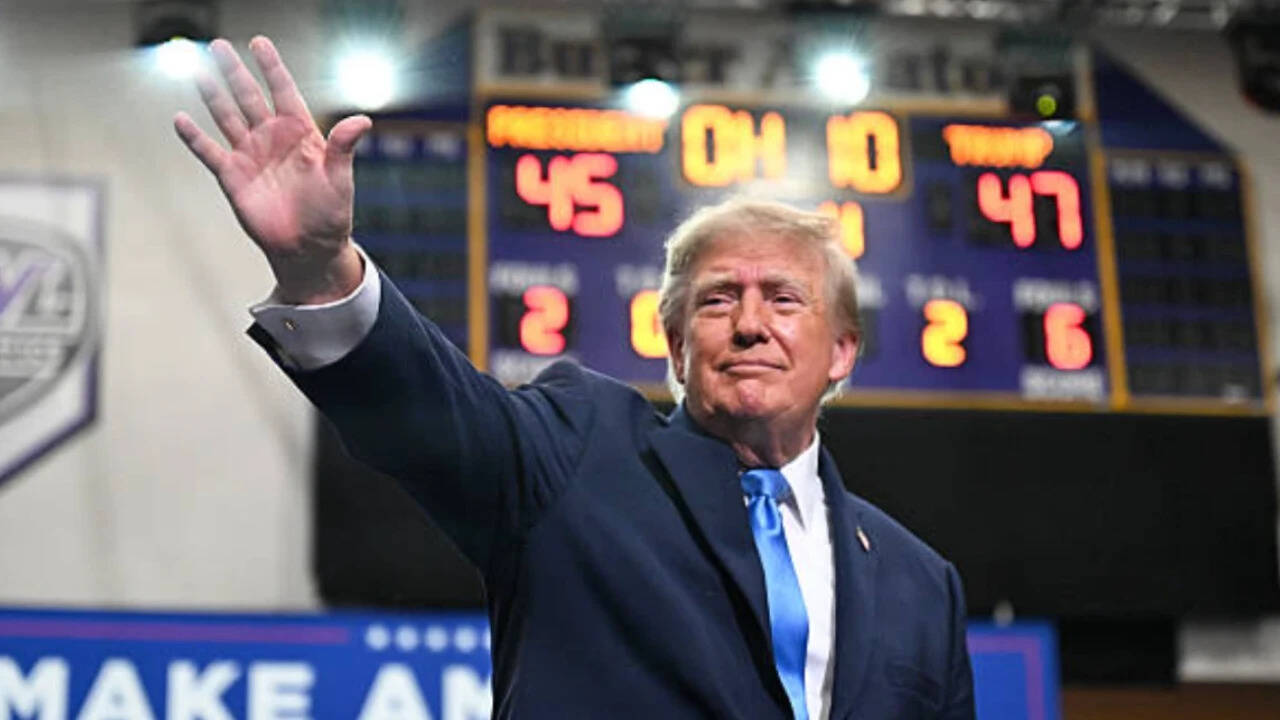
Donald Trump has never pretended to love California. The state routinely rejects him by massive margins. But during a campaign stop in Nebraska, his rhetoric crossed a line that even his own supporters struggled to defend. While talking about the financial toll of the ongoing conflict with Iran, Trump brushed off the security of America's second and eighth largest cities.
He called potential missile strikes on Los Angeles and San Diego a "small price to pay" for keeping the country safe.
The internet exploded. Local politicians fired back within hours. Yet, the real story goes way deeper than a standard political gaffe. It exposes a massive blind spot in how high-stakes geopolitical posturing collides with domestic reality. Let's break down why this specific comment triggered a political earthquake and what it means for the current electoral landscape.
The Speech That Started the Firestorm
Picture the scene. Grand Island, Nebraska. The crowd is cheering, expecting the usual talking points about inflation, energy independence, and foreign policy foes. Trump is trying to rationalize why goods feel expensive and why the conflict with Iran is dragging down wallets.
Then came the verbal stumble. Or was it a stumble?
Instead of saying the US must stop Iran from developing long-range nuclear capabilities that could threaten American cities, the phrasing came out backward. He essentially invited the scenario. "Let 'em take out Los Angeles. Let 'em take out San Diego," he told the crowd, before labeling the potential wipeout of millions of Americans as a minor sacrifice.
Crowds at rallies cheer on autopilot sometimes. They clap for the rhythm of the sentence, not always parsing the nouns and verbs in real-time. But the transcript didn't lie. Video clips hit social media before Air Force One even cleared the Nebraska airspace.
The Irony of Targeting San Diego
If you want to understand why this comment infuriated military strategists and local representatives, you have to look at a map of San Diego.
Politicians in Washington often view California as a monolith of progressive politics. They picture movie stars, beach yoga, and tech startups. They forget what actually sits on the coast. San Diego is a massive military town.
It hosts the Pacific Fleet. It houses major Navy and Marine installations, nuclear submarines, and active aircraft carriers. Tens of thousands of active-duty service members and their families live there. Right now, families are anxiously awaiting the return of sailors and marines currently stranded on deployment because of the escalation in the Middle East.
Calling San Diego a "small price to pay" isn't just an insult to liberal voters. It is a direct dismissal of the armed forces that conservatives claim to champion. Local congressional representatives didn't waste time pointing out the irony. When you tell a city of 115,000 active-duty military personnel and their families that their hometown is expendable, you lose the room. Quickly.
The White House Damage Control Playbook
The White House rapid-response team moved at lightspeed to clean up the mess. The argument was simple: critics are twisting his words. He meant that stopping Iran now prevents them from getting the tech to hit us later.
Fair interpretation? Maybe. But effective communication requires clarity, especially when you hold the highest office in the world.
When a leader speaks off the cuff, voters don't want a translation dictionary handed out by press aides the next morning. They judge what leaves the speaker's mouth. This is the classic Trump rhetorical trap. His defenders spend half their time doing verbal gymnastics to explain what he must have meant, while opponents simply quote what he actually said.
That gap is exhausting. Even inside red states, voter fatigue is setting in. Rally crowds are reportedly showing visible empty sections. People want answers, not riddles.
What This Means for the Midterms
Timing is everything in politics. Dropping a quote telling major American metropolitan areas they're expendable just four weeks before midterm elections is a tactical disaster.
Recent polling numbers show the Republican party fighting an uphill battle. National polls put approval ratings deep in negative territory, and tight Senate races are tightening further in unexpected places. When a leader hands the opposition a ready-made commercial on a silver platter, campaign managers lose sleep.
Governors and mayors from both sides of the aisle had to respond. Calling the remarks "deranged" or "reckless" plays well with a terrified electorate worried about global conflict spilling onto domestic soil.
Moving Past the Rhetoric
Rhetoric matters because words shape expectations. When leaders treat domestic population centers as abstract chess pieces, it degrades trust in the entire security apparatus.
If you are following these developments, look past the viral soundbites. Watch how local congressional reps from military-heavy districts react over the next few weeks. That is where the real political damage will show up at the ballot box. Pay attention to how campaigns frame foreign policy—not as a distant abstraction, but as something with a direct address on your street.