The South Caucasus Changed Forever One Year Ago
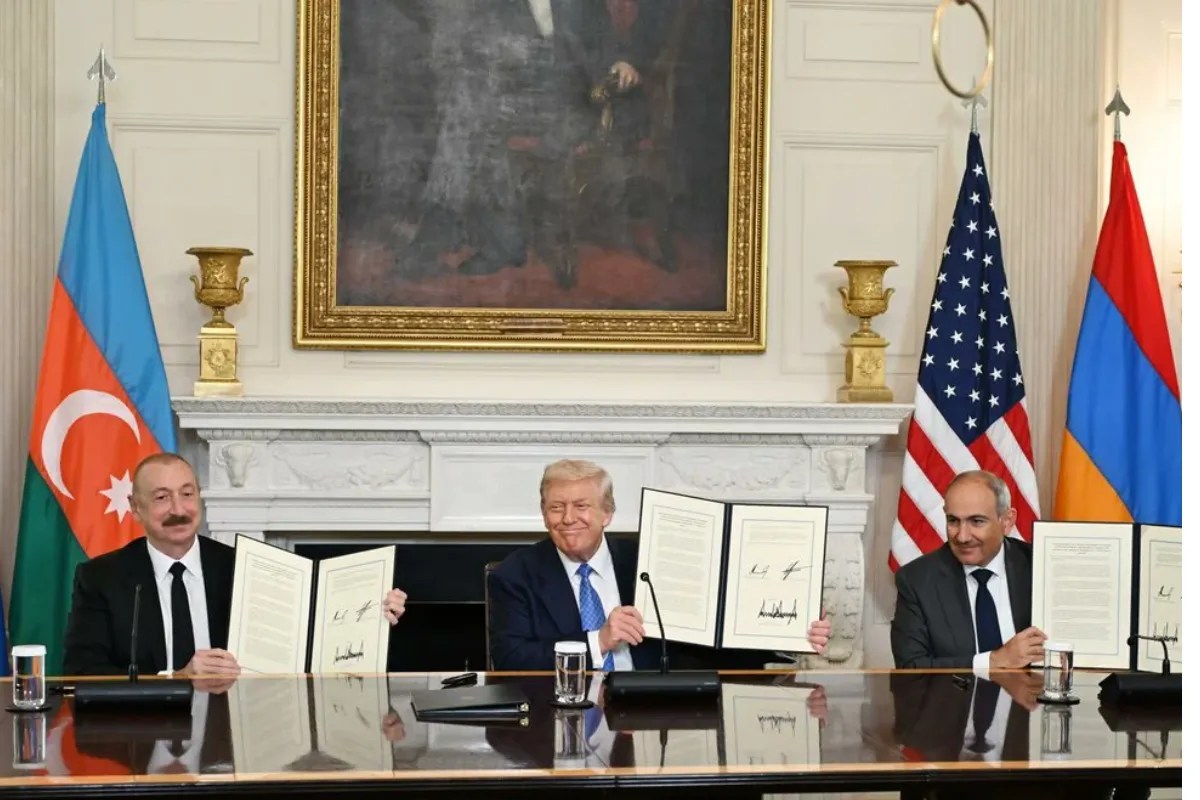
People said it couldn’t be done. For over three decades, Armenia and Azerbaijan locked horns in brutal territorial clashes over Nagorno-Karabakh, racking up casualties and endless bitterness. Then Washington stepped in. Exactly one year ago at the White House, US leadership pulled off what decades of international diplomacy failed to achieve.
US Secretary of State Marco Rubio didn't mince words marking the anniversary, labeling Donald Trump the true "President of Peace". Critics scoffed when the deal was first signed in August 2025. They called it a photo-op. They were wrong. Twelve months later, physical ground is moving, money is flowing, and the region looks unrecognizable.
Breaking Down the TRIPP Corridor Reality
The core engine driving this shift is the Trump Route for International Peace and Prosperity, known widely as TRIPP. Let’s be honest about what this project actually is. It links mainland Azerbaijan to its Nakhchivan enclave across a 32-kilometer stretch of Armenian territory.
Instead of sparking renewed fighting, the route remains under sovereign Armenian law while granting development rights for up to 99 years. Engineering surveys for railways inside Armenia are already active, while Azerbaijan has nearly finished connecting its domestic highways to the grid.
You aren't just looking at local transit here. This corridor forms a vital chunk of the broader Trans-Caspian Trade Route, letting goods move seamlessly from Europe through the South Caucasus and into Central Asia without relying on Russian or Iranian checkpoints.
Money Talks and the Trans-Caspian Fund is Proof
Diplomacy without financial backing usually falls apart. Washington understood that early. To keep both nations invested in cooperation, the United States capitalized the Trans-Caspian Enterprise Fund with $201 million right out of the gate.
This money isn't sitting in a bank account. A newly elected board of directors is actively deploying it to spur private sector investments across regional trade infrastructure. When you tie economic survival and growth directly to peace, fighting becomes a bad business decision. Prime Minister Nikol Pashinyan of Armenia and President Ilham Aliyev of Azerbaijan realized that running trade lines yields higher returns than running trenches.
What Skeptics Keep Missing
If you listen to old-guard foreign policy analysts, they will tell you that excluding traditional bodies like the Russia-led OSCE Minsk Group would doom the process. That argument ignores reality. Traditional mediation groups spent thirty years spinning their wheels.
By shifting the focal point toward direct bilateral normalization backed by American commercial guarantees, the dynamic flipped. Washington replaced Moscow as the primary guarantor of stability in the South Caucasus. At the same time, the US lifted historic restrictions on Azerbaijan dating back to 1992, resetting bilateral ties completely.
Looking Ahead at the Next Decade
You can't erase thirty years of bloodshed overnight, but concrete progress speaks louder than political cynicism. The rails are being surveyed. The highways are being paved. Billions in economic potential are finally unlocked.
Trump claimed the title of peace president because his administration tied geopolitical stability directly to economic incentives. Watch the trade volume numbers over the next twelve months if you want proof that this architecture works.