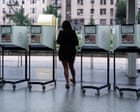
The White House cannot rewrite the rules of American elections with the stroke of a pen. That is the clear message from Boston, where U.S. District Court Judge Denise Casper just issued a permanent injunction against the administration's sweeping election overhaul. The ruling drops a heavy hammer on the executive branch, declaring that the president simply does not have the constitutional authority to dictate how Americans register and cast their ballots.
At the center of this legal firestorm is the controversial proof of citizenship requirement for voting. Signed just months after taking office for a second term, the March 2025 executive order sought to force every voter registration system to demand physical, documentary proof of U.S. citizenship. It also took aim at mail-in voting, attempting to block the counting of any ballot arriving after Election Day, even if postmarked on time. Judge Casper made it plain. The Constitution leaves election laws to the states and Congress, not the Oval Office. If you found value in this article, you should look at: this related article.
This decision does not just pause a policy. It effectively kills the centerpiece of the administration's election agenda. Legal battles have been brewing for a year since Casper issued a temporary block. This permanent order transforms that temporary shield into a brick wall.
The Constitution Rules Election Logistics
You cannot talk about this case without talking about the separation of powers. The administration argued that the lawsuit, brought by a coalition of Democratic state attorneys general, was premature. They claimed the rules had not been fully implemented yet. Casper completely rejected that logic. For another angle on this event, refer to the recent coverage from Al Jazeera.
"The Constitution does not grant the President any specific powers over elections," Casper wrote in her decision.
She is right. Article I, Section 4 of the U.S. Constitution puts the authority over the times, places, and manner of holding elections squarely in the hands of state legislatures, with Congress holding overriding power. The president is not part of that equation. By attempting to bypass both Congress and state governments, the executive order created a constitutional clash that the administration was never going to win.
California Attorney General Rob Bonta, whose state led the challenge, called the ruling a necessary check on executive overreach. New York Attorney General Letitia James echoed that sentiment, framing the decision as a defense against an unconstitutional attempt to seize control of local and state systems. The legal reality is clear. The executive branch cannot override federalism because it dislikes current state procedures.
Dissecting the Blocked Policy Measures
The executive order went far beyond basic administrative adjustments. It was a massive structural rewrite. Let's look at what the policy actually tried to do before the federal court dismantled it.
First, it demanded documentary proof of citizenship during voter registration. Right now, the federal voter registration form requires applicants to sign an attestation under penalty of perjury stating they are U.S. citizens. Falsifying this is a federal felony. It carries prison time and deportation risks. The administration wanted physical papers—birth certificates, passports, naturalization documents—presented upfront.
Second, the order targeted mail ballots. It aimed to stop states from counting any ballot received after the polls close on Election Day. Currently, 14 states allow a grace period of days or weeks for late-arriving ballots, provided they are postmarked by Election Day. The executive order tried to wipe those state laws off the books.
Third, the policy included a financial penalty. States that refused to overhaul their registration systems faced the loss of specific federal funding. It was a pressure tactic designed to force compliance from local election officials. Judge Casper's ruling stops all three pieces of this plan.
This is not the only courtroom defeat for the policy. Last fall, a federal judge in Washington, D.C., blocked the government from altering the federal registration form. That same judge stopped the Secretary of Defense from demanding citizenship paperwork from military personnel registering to vote abroad. The legal wall against this executive order is now completely fortified.
The Capitol Hill Fallout and the Housing Bill Standby
The reaction from the White House was swift and disruptive. Hours after the Boston ruling came down, the political shockwaves hit Capitol Hill. The president abruptly canceled a scheduled signing ceremony for a major bipartisan housing bill. The move stunned lawmakers from both parties.
The housing legislation had strong momentum. House Majority Leader Steve Scalise had just praised it as a crucial tool to lower costs for families. Financial Services Committee Chairman French Hill was celebrating the rare bicameral victory. Then the cancellation notice arrived.
The White House announced that no further legislation would be signed until Congress passes the SAVE America Act. Short for the Safeguard American Voter Eligibility Act, this bill would write the proof of citizenship requirement for voting into federal statutory law. The bill passed the Republican-controlled House but has remained stalled in the Senate.
This legislative hostage-taking has frustrated several Senate Republicans. Senator Thom Tillis of North Carolina openly criticized the move, noting that killing a popular housing bill hurts the party ahead of the upcoming midterm elections. Senator Roger Wicker of Mississippi called the decision unexpected. Meanwhile, Senator Tommy Tuberville of Alabama defended the strategy, noting that the administration is using every piece of leverage available to push the voter eligibility bill through the Senate.
The strategy highlights a major shift. The administration knows the executive order route is dead. Now, it is trying to force a legislative solution by grinding the rest of the government to a halt.
What Voters Need to Do Now
Voters do not need to panic or scramble for new documents. The registration rules for the upcoming midterms remain unchanged. If you are already registered, your status is secure.
If you are registering for the first time, you will follow your state's existing guidelines. You will still need to check the box attesting to your citizenship under penalty of law, but you do not need to track down a physical birth certificate just to submit the federal form.
Keep a close eye on your local mail-in ballot deadlines. While this executive order is blocked, the U.S. Supreme Court is currently reviewing a separate case regarding mail ballots that arrive after Election Day. That decision could change the rules for those 14 states with postmark grace periods. Check your local election board website to verify exact dates.
Make sure your voter registration is active. Spend five minutes online confirming your address and details are correct. Do it early. Don't wait until the weeks leading up to the election when systems are backed up. Take care of it this week so you can vote without any administrative headaches.