The fragile peace in the Middle East has completely unraveled, and the US is going back to a full wartime footing.
Just weeks after an interim ceasefire was supposed to pave the way for a permanent end to the conflict, US Central Command (CENTCOM) officially resumed its naval blockade against Iranian ports and coastal areas. The move, which went into effect on July 14, 2026, at 4:00 p.m. ET, marks a dramatic escalation. It ends any lingering hope that the 60-day diplomatic window negotiated earlier this year would hold.
If you think this is just another round of standard economic sanctions, you're missing the bigger picture. This is an active, aggressive maritime encirclement backed by massive firepower.
The Sudden Collapse of the Sixty Day Peace Deal
Let's look at how we got here. The conflict originally erupted in February 2026 following the assassination of Iran's supreme leader, Ali Khamenei, in joint US-Israeli airstrikes. What followed was months of brutal warfare. The first blockade ran from April 13 to June 18, during which the US military redirected over 140 ships and disabled nine non-compliant vessels.
An interim deal was supposed to stop the bleeding. Instead, it became a cover for a shadowy war of attrition.
Over the last several days, the Strait of Hormuz turned into a shooting gallery. Iranian forces attacked multiple commercial tankers, including the Mombasa B and Stolt Magnesium. These weren't warning shots. The attacks caused major engine room fires, disabled steering systems, and tragically killed several merchant mariners.
Recent Tanker Escalations in the Strait:
- Mombasa B: Hit 8.5 miles off Musandam; engine disabled, crew evacuated with injuries.
- Stolt Magnesium: Attacked outside Omani waters; severe engine room fire.
- UAE Tankers: Targeted by cruise missiles; one Indian crew member killed.
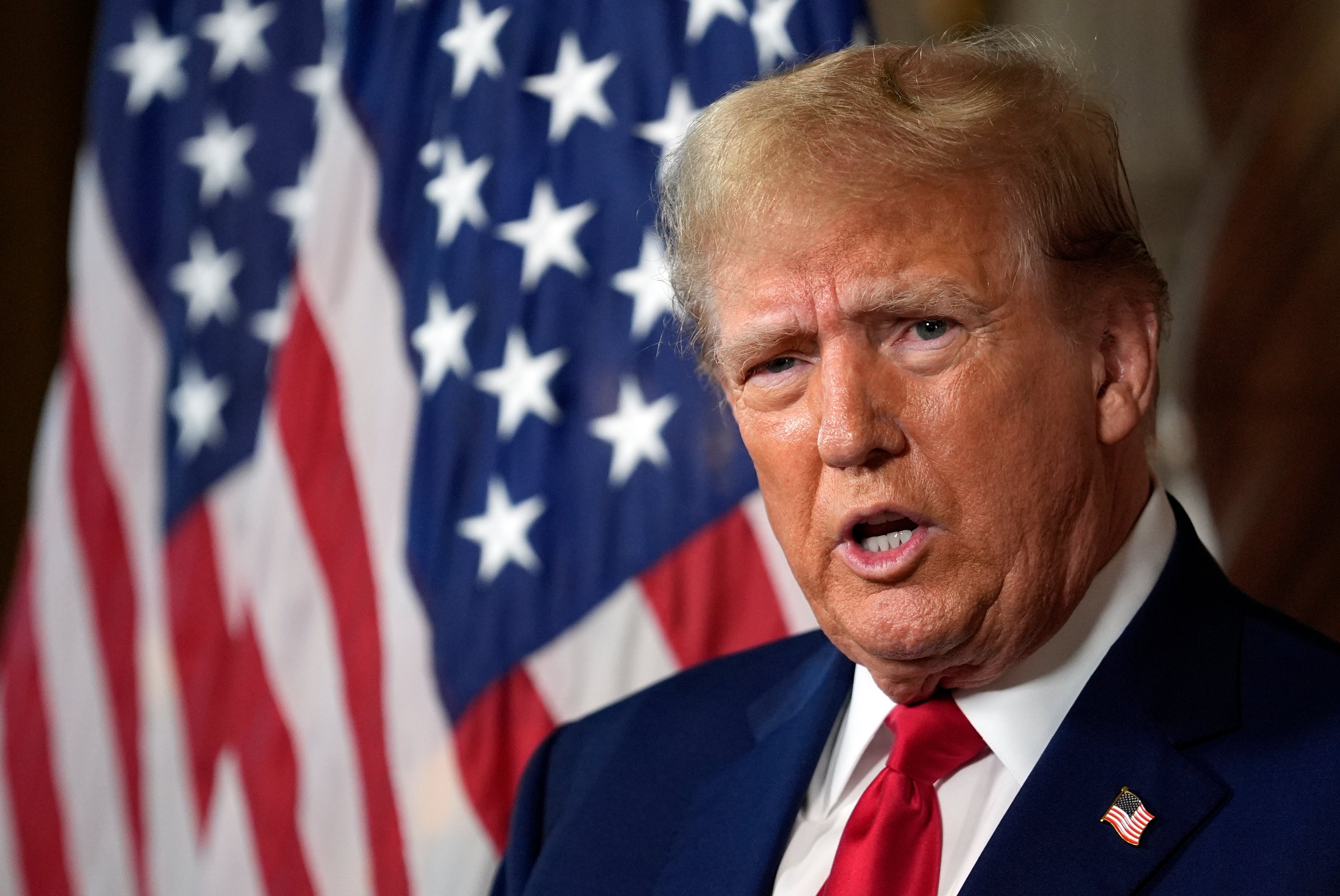
Trump didn't wait around. On July 7, he sent a formal war powers notification to Congress, essentially starting a new clock to bypass legislative approval for military action. Since then, American forces have conducted consecutive nights of heavy airstrikes against Iranian coastal defenses, drone sites, and missile launchpads.
What the Blockade Looks Like on the Water
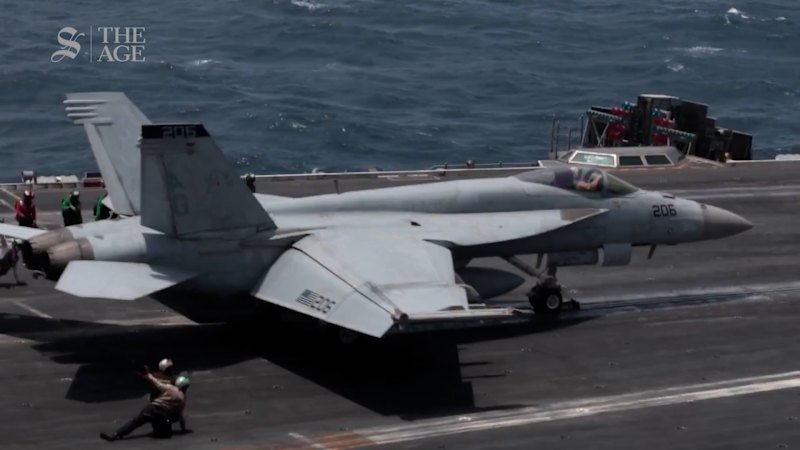
This isn't a "paper blockade." CENTCOM has deployed over 20 highly advanced warships and hundreds of combat aircraft across the region.
The rules of engagement are incredibly strict. Any ship trying to enter or leave Iranian ports without express authorization is subject to intercept, diversion, or outright capture. Under international maritime norms, a formal blockade is essentially an act of war. The US Navy has made it clear that they'll use active force against non-compliant vessels. Only verified humanitarian shipments are being allowed through after undergoing rigorous screening.
Trump's Short-Lived Toll Booth Idea
For a hot minute, the administration tried to turn the Strait of Hormuz into a toll road. Trump floated a plan to slap a 20% security fee on all commercial cargo passing through the strait to reimburse the US for its military expenses.
It didn't go over well. Foreign policy experts and even Secretary of State Marco Rubio reportedly pointed out that charging international ships for passage through an international strait is flatly illegal under maritime law.
By Tuesday, Trump backed off the tariff idea after a series of frantic phone calls from Middle Eastern allies. Instead of direct tolls, Trump claims Gulf nations have promised "billions and billions of dollars" in direct investments in the US to help offset the security costs. Whether those investments actually materialize remains to be seen.
The Real Economic Fallout
If you're wondering why this matters to you, look at your local gas station. The Strait of Hormuz is the world's most critical energy chokepoint. Roughly a fifth of the global oil supply flows through this narrow strip of water.
With US warships actively hunting Iranian vessels and Iran's Revolutionary Guard threatening that "not a single drop" of oil or gas will safely leave the Gulf if the blockade continues, energy markets are panicking. Brent crude prices have already spiked significantly.
It's not just oil. The European Union Aviation Safety Agency has warned commercial airlines to avoid the airspace over the United Arab Emirates, Qatar, Bahrain, and Kuwait. Shipping companies are rerouting vessels around Africa, adding weeks to transit times and driving up shipping container costs. The global supply chain, which was just beginning to find its footing, is facing another massive shock.
What Happens Next
The situation is highly volatile. While the US holds a massive naval advantage, Iran has spent decades preparing for asymmetric warfare in these exact waters. They rely heavily on fast-attack missile boats, sea mines, and swarms of low-cost loitering munitions that can overwhelm sophisticated air defenses.
Here's what to watch for in the coming days:
- Asymmetric retaliation: Watch for Iran to launch cyberattacks targeting Western infrastructure or utilize proxy networks in Iraq, Yemen, and Lebanon to strike US assets.
- The tanker squeeze: Energy transport companies will likely suspend transits through the Gulf entirely if insurance premiums continue to skyrocket.
- Allied cooperation: Pay attention to how regional heavyweights like Saudi Arabia and the UAE navigate the crisis. While they want Iranian aggression checked, they're also highly vulnerable to retaliatory missile strikes.
Make no mistake, the region has moved past diplomatic posturing. We are looking at an active blockade that could easily trigger a wider, direct confrontation between global powers.