When JD Vance pitched a radical idea to secure a Ukraine ceasefire right after the 2025 inauguration, Donald Trump didn't buy it for a second.
The newly released book Regime Change: Inside the Imperial Presidency of Donald Trump by New York Times reporters Maggie Haberman and Jonathan Swan reveals a wild behind-the-scenes debate from early last year. On January 30, 2025, just ten days into Trump’s second term, senior officials gathered in the Oval Office to map out an end to the Russia-Ukraine war.
Retired Army Lieutenant General Keith Kellogg laid out an America First peace plan. The core problem was obvious. How do you enforce a ceasefire line without putting American or NATO troops in the line of fire?
Vance thought he had the answer. He spitballed a couple of unexpected options. Why not use troops from Saudi Arabia or India?
Trump chuckled. He shot the idea down instantly.
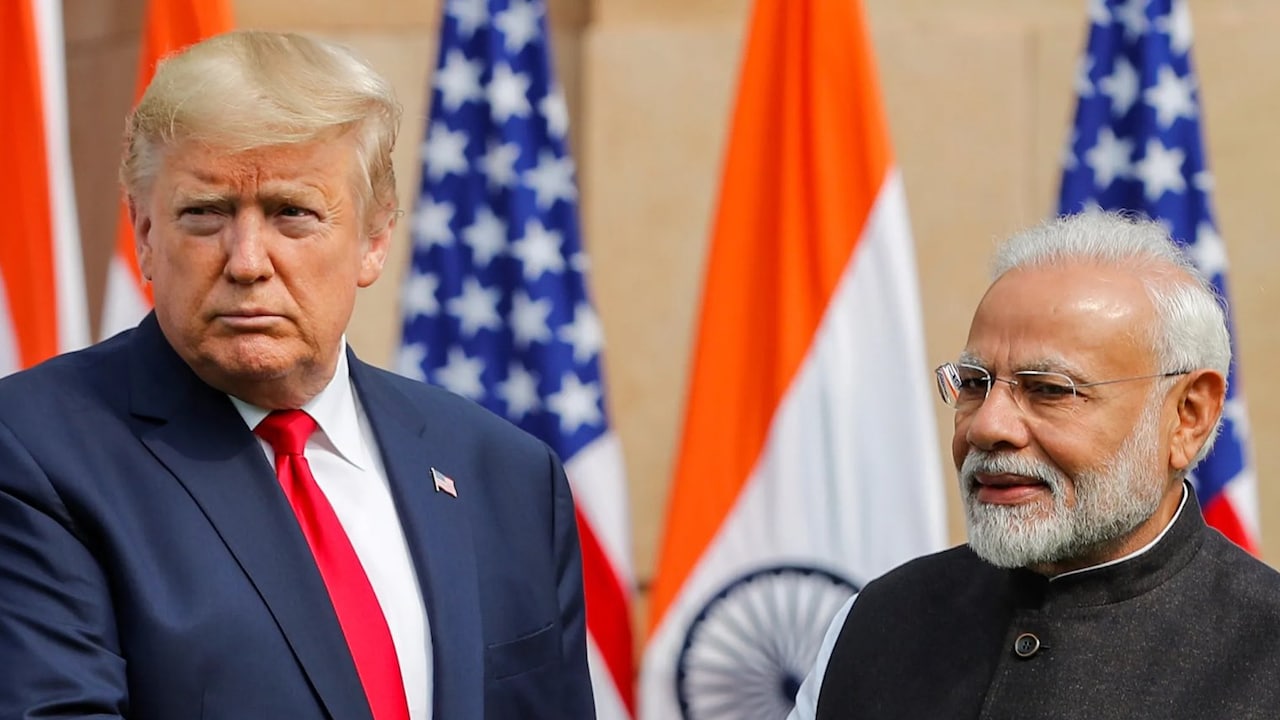
According to the book, Trump’s response was characteristically blunt. The Indians won't do that, he told his vice president. They won't pay for something like that. Trump went on to claim that while Indian Prime Minister Narendra Modi liked him and wanted to visit, the Indians do not ever pay for anything.
This brief exchange exposes the massive gap between Vance’s theoretical geopolitical chess and Trump’s raw, money-first worldview. It also shows a spectacular misunderstanding of how India actually operates on the global stage.
The Vance Theory vs Trump Reality
Vance wanted to avoid NATO involvement at all costs. He knew putting British, French, or Dutch troops on a freeze-line in Ukraine would drive Vladimir Putin through the roof. By suggesting India or Saudi Arabia, Vance was looking for powerful, wealthy nations outside the Western alliance that maintained open communication channels with both Moscow and Washington.
It sounds clever on paper. In reality, it was a total non-starter.
Trump did not care about the grand strategic nuance of non-aligned peacekeepers. He looked at the ledger. To Trump, foreign policy is a balance sheet. If your country is not writing a check or buying American manufacturing, you are taking advantage of the United States.
The book details how Trump spent the rest of that meeting complaining about Ukrainian President Volodymyr Zelensky. He also made it clear he had zero objections if Britain or France wanted to send their own soldiers to die in Europe, as long as American taxpayers were completely off the hook.
The Core Misconception of Indian Peacekeeping
Vance’s suggestion shows he looked at a spreadsheet of global military statistics without understanding the history behind them. India is one of the largest contributors of personnel to United Nations peacekeeping missions. Tens of thousands of Indian blue helmets have served in complex environments across Africa and the Middle East for decades.
But there is a massive catch. India does not send its military abroad under unilateral or ad-hoc coalition banners. They strictly deploy under the official blue flag of the United Nations.
There are two major reasons for this strict rule.
First, New Delhi learned a brutal lesson in 1987. They sent an independent Indian Peace Keeping Force into Sri Lanka to police a civil conflict. It turned into an absolute disaster. The operation cost India over a thousand soldiers, triggered immense political backlash, and ultimately led to the assassination of former Prime Minister Rajiv Gandhi. Since that trauma, India has flatly refused to send troops to foreign conflicts without an explicit UN mandate.
Second, the money matters, though not exactly the way Trump thinks it does. India does not pay out of pocket to deploy peacekeepers. The UN reimburses contributing countries for their personnel and equipment. Trump's complaint that India wouldn't pay for a Ukraine mission is technically accurate, but his interpretation is skewed. No developing country is going to finance an expensive military observation force in Eastern Europe out of its own national treasury just to satisfy a Washington peace initiative.
The Russia Problem Vance Ignored
The absolute biggest flaw in the plan was India's relationship with Russia. New Delhi and Moscow share a decades-long strategic partnership that survived the entire Cold War.
India relies heavily on Russia for military hardware, spare parts, and deep-discounted crude oil. While Western nations spent years trying to isolate Moscow economically, India ramped up its Russian oil purchases to record highs. It was a matter of survival and economic practicality for a country of 1.4 billion people.
India values its strategic autonomy above almost everything else. They refuse to pick a side. They will not join Western sanctions, but they also will not endorse Russia's invasion.
Putting Indian soldiers on the ground in Ukraine to police a ceasefire would force New Delhi into an impossible position. If Russian forces violated the ceasefire, Indian troops would either have to shoot back at their primary weapons supplier or back down and look weak on the global stage. Indian policymakers would never willingly step into that trap. Vance should have known that.
It All Comes Back to Tariffs
Trump’s dismissive attitude toward India in the Oval Office was not an isolated incident. The Haberman and Swan book highlights another telling meeting from March 2025 in the Roosevelt Room.
Trump was hosting the Technology CEO Council, which included the heads of IBM, Dell, Intel, and Qualcomm. Commerce Secretary Howard Lutnick was pushing these executives to build more American factories. Trump interrupted the economic discussion to launch into a tirade about foreign trade barriers.
He singled out India.
Trump claimed that India hits American goods with massive tariffs of 175 percent. He complained that the United States is treated completely unfairly by its global partners, comparing India’s trade policies directly to China. He warned the CEOs that any company refusing to manufacture domestically would face massive import duties.
This shows the consistency in Trump’s approach. Whether he is discussing a multi-national military crisis in Europe or semiconductor manufacturing in the Midwest, he views every single international partner through the exact same lens. Are they buying our stuff, or are they charging us money?
Where Global Security Moves Next
The revelations from early 2025 explain a lot about how international diplomacy is playing out today in 2026. The idea of a magical, neutral third-party country stepping in to police the borders of Europe is a fantasy.
We are seeing JD Vance take on different, heavy-lifting diplomatic assignments, like his recent high-stakes talks with Iran regarding regional security and maritime trade routes. His style has had to adapt to the transactional boundaries set by the top of the ticket.
If you are watching the current developments in the Russia-Ukraine war, stop looking for obscure diplomatic wildcards. Do not wait for New Delhi or Riyadh to send a savior force. The resolution of the conflict will rely entirely on the direct economic leverage Washington applies to its European allies and the direct financial costs the warring parties can actually sustain. Everything else is just Oval Office spitballing.