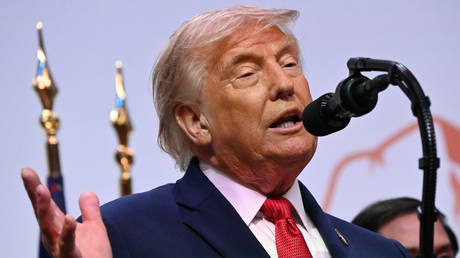
Donald Trump is bypassing traditional government channels again. This time, the decision centers on a massive luxury aircraft from the government of Qatar. Reports indicate that Trump accepts Qatar jet as new Air Force One despite ethics concerns raised by legal scholars and Washington watchdogs. It is a stunning departure from decades of military procurement protocols.
The move bypasses the heavily delayed and over-budget Boeing VC-25B program. But it opens a massive geopolitical can of worms. A United States president using a literal gift from a foreign monarchy as the primary symbol of American global power is unprecedented. It isn't just a logistical pivot. It is an ethical minefield.
Many citizens look at this and see a pragmatic businessman cutting through government red tape. After all, the official upgrade program for the presidential fleet has faced years of bureaucratic stagnation. Why not take a perfectly good, ultra-luxury Boeing 747 off Qatar's hands?
The reality is far more complicated. Accepting a multi-million-dollar asset from a foreign state directly challenges the core anti-corruption principles of the American republic.
The legal reality of foreign state gifts
The United States Constitution is clear about foreign gifts. The Foreign Emoluments Clause explicitly prohibits any person holding an office of profit or trust from accepting presents or emoluments from foreign kings, princes, or states without the express consent of Congress.
White House lawyers often argue that an aircraft used strictly for official government business does not constitute a personal gift. They claim the plane becomes property of the federal government, not the individual holding the office.
This argument ignores the massive diplomatic leverage created by such a transaction. Qatar isn't handing over an aircraft out of pure generosity. In international diplomacy, assets of this scale always come with invisible strings attached. Qatar maintains complex relationships throughout the Middle East. They balance ties with western nations while hosting political factions that complicate American foreign policy. Receiving a massive logistical favor from Doha muddies the waters of American neutrality.
Why the Boeing Air Force One program is stalling
To understand why this Qatari aircraft became an option, look at the ongoing disaster that is the official Air Force One replacement program. Boeing has been working on two modified 747-8 aircraft to replace the aging current fleet.
The project is years behind schedule. Costs have spiraled out of control. Boeing took billions of dollars in fixed-price losses on the contract. Supply chain issues, security clearance bottlenecks, and engineering disputes plagued the factory floor.
Trump frequently criticized Boeing during his previous term over these costs. His impatience with traditional defense contractors is well documented. The opportunity to bypass Boeing entirely and source an immediate, fully functional luxury widebody aircraft was likely too tempting to pass up.
Security implications of foreign manufacturing and maintenance
Air Force One isn't just a fancy passenger plane. It is a flying command center. It features advanced radiation shielding, military-grade defensive countermeasures, secure communications arrays, and the capability to refuel mid-air.
An aircraft built or modified for a foreign royal flight requires complete overhauling to meet Pentagon standards. Every square inch of the airframe must be inspected for surveillance devices. The electronics must be entirely stripped out.
National security experts worry about the underlying vulnerabilities. Even if the U.S. military replaces the interior systems, the base maintenance history and engineering blueprints of that specific airframe rest in foreign hands. That creates an unnecessary risk vector for the most high-value target in the sky.
Public perception and global symbolism
Air Force One represents the sovereignty and industrial might of the United States. When that iconic blue-and-white jet touches down on a foreign runway, it sends a message.
Using an aircraft originally configured for Gulf royalty shifts that message entirely. It signals that the United States is willing to accept handouts instead of manufacturing its own secure platforms. It positions the presidency as a transactional office rather than an institutional bedrock.
Critics point out that this sets a dangerous precedent for future administrations. If a president can accept a transport aircraft from Qatar, what prevents a future executive from accepting a fleet of vehicles from a European ally or tech infrastructure from an Asian partner? The boundaries of the Emoluments Clause exist precisely to prevent this slippery slope.
How to track the actual cost to taxpayers
Proponents claim this move saves the American taxpayer money. That claim requires scrutiny.
Look at the retrofitting costs. The Pentagon cannot simply fly the Qatari jet as it is currently configured. Installing the necessary encrypted satellite communication networks, defensive electronic warfare suites, and medical facilities costs hundreds of millions of dollars.
Keep an eye on the defense budget allocations over the coming months. Watch the line items under Air Force research, development, and procurement. True fiscal transparency will reveal whether this "gift" actually saves a single dime, or if the specialized modification process ends up costing more than finishing the original Boeing contract.
Demand accountability from congressional oversight committees. Write to your representatives. Ask them to force a full audit of the modification expenses for any non-standard presidential aircraft. True national security cannot be subsidized by foreign governments.