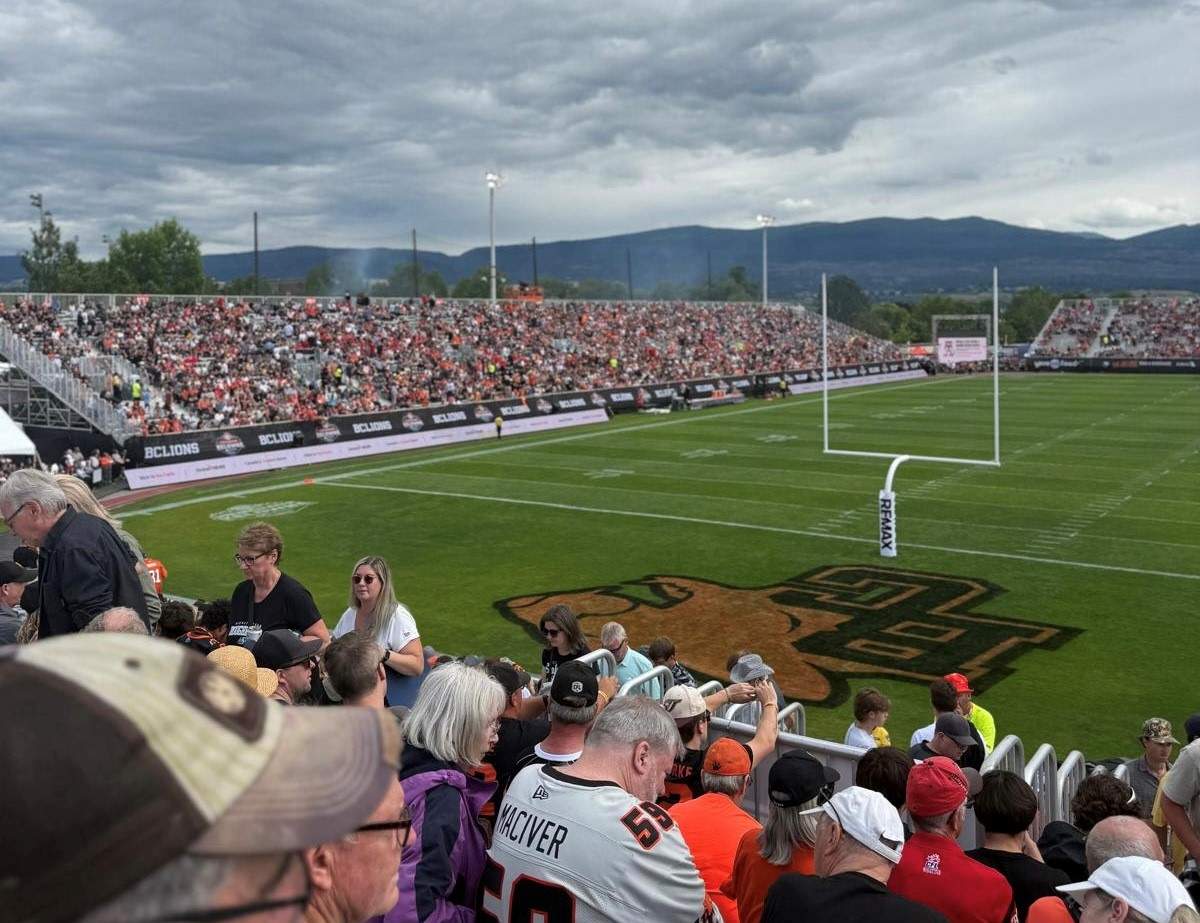
Kelowna isn't just a quiet wine-tasting getaway anymore. If you doubted whether a mid-sized secondary market could support big-league Canadian football, the massive crowds flooding the Okanagan this week just proved you wrong.
The BC Lions sold out the Apple Bowl, bringing over 19,000 fans into a stadium that normally holds just a fraction of that number. It isn't just about a single game either. This is a massive nine-day festival running from June 26 to July 4, 2026, designed to inject tens of millions of dollars into the local economy. Read more on a similar topic: this related article.
People want to know if these temporary neutral-site games are actually worth the massive logistics headache. Do they actually generate long-term value, or are they just a flash in the pan that leaves local taxpayers holding the bag? The reality is clear when you look at the packed patios and the sheer scale of the infrastructure built for this event.
The FIFA Domino Effect That Brought the CFL to the Okanagan
You can thank global soccer for this sudden football windfall. With BC Place in Vancouver being prepped and converted to host matches for the 2026 FIFA World Cup, the BC Lions found themselves looking for a temporary home for a couple of summer dates. Instead of complaining about displacement, the front office saw an opportunity to claim the entire province. Additional analysis by Bleacher Report delves into similar views on this issue.
Lions president Duane Vienneau didn't just book a random field. The team worked directly with local city officials to establish Touchdown Kelowna as a marquee event. This marks a massive escalation from their previous neutral-site experiment, Touchdown Pacific, which took place in Victoria back in 2024.
The city council prioritized this specific initiative as part of their long-term economic plans. They didn't just want a sporting event. They wanted an absolute tourist magnet during a window that bridges the gap right into the Canada Day long weekend. The provincial government threw in a cool $1 million in funding to help make it happen, betting big that the return on investment would justify the upfront public cost.
Turning a Modest Local Field Into a Massive Gridiron Party
If you've ever been to the Apple Bowl under normal circumstances, you know it's a modest community facility. It is the regular home of the Okanagan Sun of the Canadian Junior Football League. It features permanent fixed seating for only about 2,300 people.
To host a modern professional football broadcast, the organizers had to build a temporary stadium around the existing track. They brought in massive rows of temporary bleachers, raising the total capacity beyond 18,500 seats. By the time kickoff rolled around on Saturday, June 27, the official attendance blew past expectations to top 19,000 raucous fans.
The east side of the facility was completely rebuilt into an open-concept party zone. Organizers set up live music stages, cornhole boards, football tosses, and promotional tents. It didn't feel like a standard, sterile stadium experience. It felt like a massive summer festival that just happened to have a professional football game breaking out in the middle of it.
Breaking Down the Real Economic Numbers
Cities love to throw around massive projections to justify spending public funds on sports infrastructure. For Touchdown Kelowna, city planners floated an estimated economic impact of $50 to $60 million across the region. While those grand totals take months of economic assessment to fully verify, the immediate cash flow on the street is undeniable.
Local hospitality businesses are seeing immediate, tangible spikes in revenue. Chris Stirling, the owner of the Kelowna Beer Institute, noted that business jumped by nearly 30 percent during the opening weekend. Because the festival organizers strategically scheduled community events throughout the week between the two scheduled games, tourists aren't just flying in for three hours and flying out. They are booking full-week vacations.
Look at the retail and service level too. Staff at local spots like Rollz Ice Cream have been working extended hours to handle the waves of out-of-province visitors. Families from Calgary and Edmonton have filled up hotel rooms that would normally rely entirely on traditional winery tourism. Kelowna International Airport has seen a notable rise in passenger traffic specifically tied to football jersey-clad travelers.
What the Game on the Field Showed Us
The actual football match lived up to the off-field hype, even if local BC Lions fans left disappointed. The Calgary Stampeders walked into the Apple Bowl and spoiled the home party, walking away with a tense 41-33 victory over the Lions.
It was a wild, high-scoring affair that highlighted the unique environment of playing in a smaller, tighter venue. The wind coming off the nearby waters and the tight confines of the temporary stands created a loud, claustrophobic atmosphere for the players. The crowd noise echoed heavily off the temporary metal structures, giving the game a distinct collegiate energy that you rarely experience in massive covered domes like BC Place.
The Lions don't have long to lick their wounds. The second leg of this historic Okanagan residency takes place on Saturday, July 4, when they line up against the Edmonton Elks. Ticket sales for that second matchup are already tracking toward another complete capacity crowd, proving that the appetite for professional sports here wasn't satiated by a single weekend.
Logistics and the Growing Pains of Small Stadium Events
We need to be completely honest about the drawbacks here. Staging a massive event in a park designed for local sports means dealing with serious physical limitations. Organizers clearly applied several lessons from the Victoria games two years ago by drastically increasing the variety of food and drink options, but the facility was still pushed to its absolute limit.
Long lines choked the southeast corner of the stadium where the primary food trucks and Triple O's tents were set up. If you were seated on the north side of the stadium, getting a simple hot dog or water bottle required a massive trek through dense crowds. Certain beer tents ran completely dry before the fourth quarter even started, and the portable bathroom lines became a major point of frustration as the game wore on.
Parking at the Parkinson Recreation Park is practically non-existent for a crowd of 19,000 people. The city forced fans to rely on park-and-ride shuttles, transit, or long walks from downtown. It worked, but it wasn't exactly the seamless experience you get at a purpose-built metropolitan stadium.
Actionable Steps for Attending the July 4 Matchup
If you have tickets for the upcoming game against Edmonton, or if you're trying to navigate the city during the final days of the festival, you need a clear plan to avoid the logistical mess.
- Ditch the car completely: Do not try to drive to the Apple Bowl. Park your vehicle in the downtown core or at designated satellite lots and use the free event shuttles provided by the city.
- Arrive two hours early: The security gates and ticket scanners experience major bottlenecks because the entrance infrastructure is temporary. Give yourself plenty of time to get through the gates.
- Pre-game your meals downtown: The food trucks inside the stadium are excellent, but you will spend a significant portion of the game standing in lines. Eat a heavy meal at a local restaurant along the waterfront before heading toward the park.
- Bring a hat and sunscreen: The temporary bleachers have absolutely zero shade or roof coverage. You will be sitting directly under the hot summer sun for over three hours.
The success of this festival shows that secondary markets are fully capable of hosting major league events if city councils are willing to spend the money on temporary infrastructure. Kelowna just laid out the blueprint for how mid-sized Canadian cities can steal the spotlight from major metropolitan centers. Let's see if other regions have the nerve to try it next summer.



