A warm July evening in midtown Toronto should mean loud Latin music, the smell of street food, and thousands of families dancing on the asphalt. Instead, the annual Salsa on St. Clair festival turned into a stampede of terror. When gunfire erupted at the corner of St. Clair Avenue West and Arlington Avenue, the collective illusion of safety in one of North America's safest metropolitan areas shattered instantly. Two men are dead, four others are hospitalized in serious condition, and a city is left wondering how a community celebration turned into a war zone.
We hear the same refrain every time a public tragedy occurs in Canada. Officials line up to remind everyone that Toronto remains incredibly safe compared to major American cities. While that statistic is true on paper, it offers zero comfort to the 13,000 festival-goers who had to dive under restaurant tables or sprint for their lives. The reality is simple. Gun violence is changing, and our public safety strategies are failing to keep pace.
The Chaos on St. Clair Avenue West
The trouble started just after 8:00 p.m. Saturday night. The festival was packed, drawing an estimated 13,000 people to a dense stretch of shops and restaurants. Eyewitnesses reported a sudden shift from celebration to absolute panic. Vendor Patsy Gutierrez was in the middle of serving customers when a massive wave of terrified people came rushing down the street. People stopped caring about food or music. They just ran.
A few doors down, Valerie Rodriguez was sitting outside a restaurant when the cracks of gunfire cut through the music. Nearby diners began screaming, telling everyone to drop to the floor. The confusion was total because nobody knew where the shots were coming from or how many shooters were active.
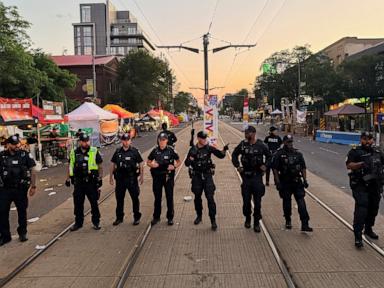
Within minutes, the Toronto Police Service flooded the area with emergency vehicles, including tactical units. Early reports blasted out an active shooter warning, sending panic through the surrounding neighborhoods. Police closed down streets and told everyone to stay away. By late Saturday night, the active shooter warning was retracted, but the damage to the community's sense of security was already done.
What the Police Found at the Scene
Toronto Police Deputy Chief Frank Barredo held a late-night press briefing to clarify the chaos. The initial active shooter alert was triggered by the sheer volume of calls and the frantic nature of the scene. Investigators later realized this wasn't a mass shooter targeting random civilians, but rather a targeted dispute that spilled out into the open.
Two individuals decided to settle a score right in the middle of a crowded festival. They drew weapons and exchanged gunfire, completely ignoring the thousands of innocent bystanders surrounding them. Officers recovered two firearms from the area, and the investigation spans three separate crime scenes along St. Clair Avenue.
The toll of this reckless exchange is heavy:
- Two adult men were pronounced dead right at the scene.
- Four other victims were rushed to local hospitals with serious gunshot wounds.
- The suspects managed to slip away into the fleeing crowds and remain at large.
Barredo didn't mince words during his press conference. He noted that the gunmen indiscriminately put a vast number of people in danger. When two people decide to fire weapons in a crowd of 13,000, every single person in attendance becomes a potential casualty.
The Myth of the Immune City
Politicians quickly put out their standard statements. Ontario Premier Doug Ford shared that he was devastated by the senseless violence. Toronto Mayor Olivia Chow expressed anger over the reckless act occurring in the middle of a family-focused event. These reactions are predictable, but they miss the core issue.
For decades, Toronto built a reputation as a global beacon of urban safety. We tell ourselves that mass public shootings are an American problem, insulated by strict Canadian border controls and rigorous firearm licensing laws. This shooting proves that no public space is completely immune to the trends of urban violence.
The individuals who brought guns to Salsa on St. Clair didn't care about licensing laws. They didn't care about the heavy police presence typically deployed around major summer festivals. The ease with which criminals obtain illegal firearms and their willingness to use them in broad daylight suggests a deeper breakdown in deterrence.
Illegal Firearm Trafficking Runs Deep
The majority of handguns used in Canadian urban crime are smuggled across the border from the United States. No matter how many local bans are placed on legal gun owners, the black market continues to supply street-level criminals with lethal weapons. Street festivals are soft targets. They are open, high-density environments where weapon screening is practically impossible.
The Evolution of Public Space Disputes
We are seeing a dangerous shift in how personal conflicts play out. A generation ago, a dispute at a bar or a festival might end in a fistfight. Today, individuals carry loaded firearms as a matter of routine, ready to pull the trigger over minor slights. The complete disregard for bystander life is the most terrifying aspect of the Salsa on St. Clair shooting. The gunmen knew they were surrounded by children, parents, and elderly residents, yet they fired anyway.
Rethinking Security for Major Summer Festivals
This tragedy forces a difficult conversation about how cities manage large-scale outdoor events. Toronto hosts dozens of massive street festivals every summer, from Taste of the Danforth to Caribana and the Beaches Jazz Festival. These events rely on open access. They celebrate the vibrancy of the city by opening the streets to everyone.
We can't turn every neighborhood festival into a high-security zone with metal detectors and concrete barriers. That would kill the spirit of the events entirely. We do need a serious overhaul in how these spaces are monitored and protected.
Increased Tactical Foot Patrols
Uniformed officers standing at intersections aren't enough to deter individuals who are determined to carry weapons. Festivals need proactive, plainclothes units embedded within the crowds to spot suspicious behavior before shots are fired. Early intervention is the only way to prevent a dispute from turning into a shootout.
Real Time Communication Infrastructure
The panic on St. Clair West was amplified by a lack of clear information. Thousands of people were running without knowing which direction was safe. Festival organizers and city officials must develop better ways to communicate with large crowds during emergencies. Utilizing localized mobile alerts to direct crowd flow away from active crime scenes could save lives in future incidents.
Actionable Next Steps for Navigating Crowded Events
You shouldn't have to live in fear of attending a community festival, but ignoring the reality of modern urban spaces is foolish. Being prepared means understanding your environment and knowing what to do if the worst happens.
Know Your Exits and Side Streets
When you arrive at a street festival, don't just focus on the vendors. Take a mental note of the geography. Look for side streets, alleys, or open businesses that can offer immediate cover if a crowd starts running. Avoid getting trapped in deep bottlenecks where movement is restricted.
Differentiate Between Cover and Concealment
If shots ring out, you need to find safety immediately. Understand the difference between cover and concealment. A canvas festival tent or a plastic banner offers concealment; it hides you from view but won't stop a bullet. Concrete walls, heavy brick buildings, and large vehicle engines provide actual cover.
Cooperate With the Investigation
The shooters escaped because they used the panicked crowd as a shield. Toronto Police are currently combing through massive amounts of cellphone footage, security camera feeds, and dashcam videos from the St. Clair West area. If you were at the festival and captured video or photos around 8:00 p.m., turn them over to investigators. Small details in the background of a casual family photo could be the key to identifying the gunmen.
The Salsa on St. Clair shooting is a stark reminder that public safety requires constant vigilance. We can't let fear dictate our lives or force us to abandon the vibrant street culture that defines Toronto. We must demand real accountability from the justice system and practical changes to how our communities are protected. Stay aware, look out for your neighbors, and don't take safety for granted.