Top minds don't stay put forever. Professor Lu Yixin, a heavy-hitting figure in modern chemistry who currently heads the chemistry department at the National University of Singapore (NUS), is packing his bags for the Eastern Institute of Technology (EIT) in China.
If you follow international science talent flows, this move isn't a shock. It's part of a massive, ongoing shift where top-tier research institutions in China aggressively recruit global academic royalty. Lu isn't just any professor. He's a towering authority in asymmetric catalysis and synthesis, holding prestigious positions like the NUS Provost's Chair Professorship and the presidency of the Singapore National Institute of Chemistry (SNIC). Losing him is a massive blow to Singapore's academic roster, but it highlights how competitive Chinese universities have become in securing world-class scientific leadership.
Who Is Lu Yixin and Why Does This Move Matter
To understand why people are talking about Lu's transition to EIT, you have to look at his resume. He earned his bachelor's degree from Fudan University, secured his Ph.D. at McGill University under George Just, and did postdoctoral stints with Peter W. Schiller at the Clinical Research Institute of Montreal and Ryoji Noyori at Nagoya University. That's an elite pedigree.
Since joining NUS in 2003, he's built an absolute powerhouse of a research group. His lab focuses heavily on organic catalysis, transition metal catalysis, and sustainable chemistry solutions, such as developing organocatalysts derived from natural amino acids that major commercial chemical companies have actually picked up and commercialized.
When a scientist with an NRF Investigatorship Award and fellowship status in bodies like the Royal Society of Chemistry and the German National Academy of Sciences Leopoldina changes institutions, university administrators take notes. It signals where the funding, the lab space, and the institutional support are heading.
The Rise of EIT and China's Talent Strategy
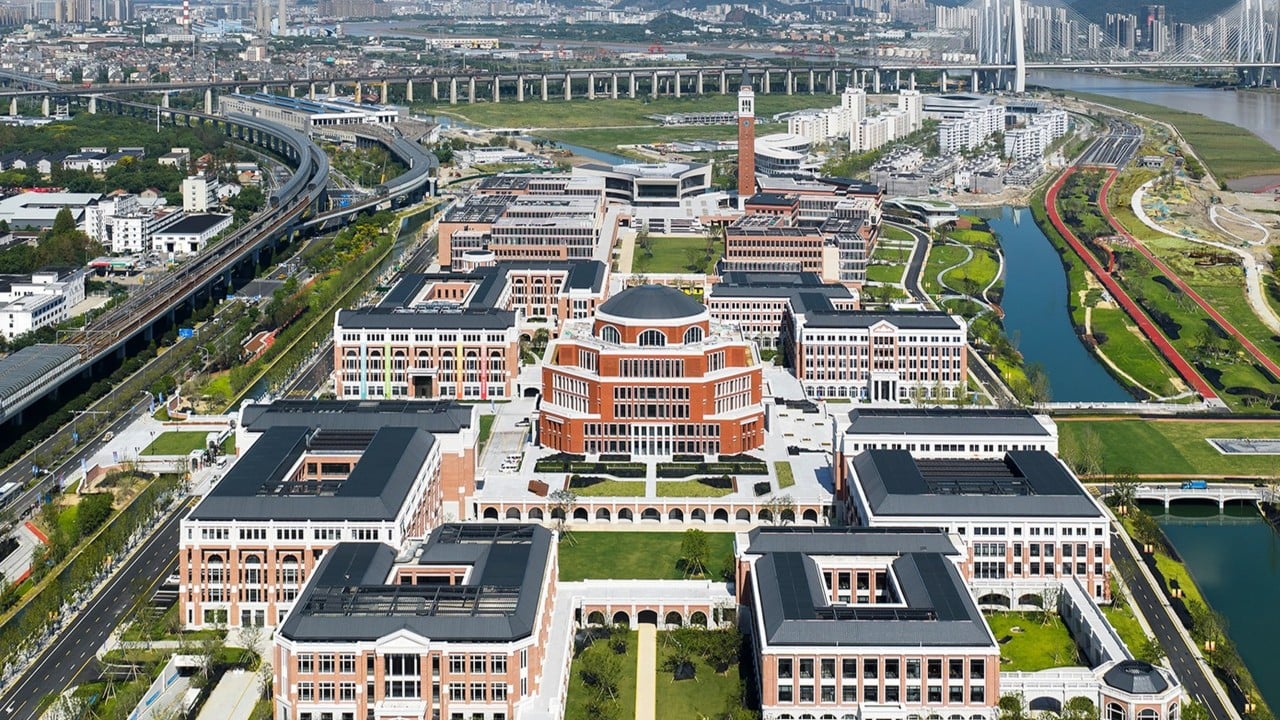
The Eastern Institute of Technology (EIT) is relatively young, but it's playing in the big leagues. Located in Ningbo, Zhejiang province, EIT has been designed from the ground up to attract global academic heavyweights. Instead of relying solely on organic domestic growth, Chinese technological and scientific hubs are dropping massive resources into state-of-the-art facilities, generous startup packages, and complete research autonomy to lure elite scientists away from established Western and Southeast Asian institutions.
Singapore has long enjoyed status as an academic oasis, drawing top-tier talent from across the globe with stable funding, clean infrastructure, and stellar university rankings. Yet, institutions like NUS and NTU now face intense retention pressure. EIT isn't trying to build a traditional, bureaucratic campus. They're structuring themselves around high-impact research clusters, and bringing in a scholar of Lu's caliber gives them immediate international credibility in chemical sciences.
What This Means for Global Scientific Research
Shifts like this change the geography of innovation. Organic chemistry and asymmetric synthesis aren't abstract academic exercises—they underpin modern drug discovery, agrochemicals, and advanced materials manufacturing.
When a top researcher moves, their postdocs, grant networks, and international collaborations often pivot with them. Graduate students and early-career researchers look at where leaders like Lu go because it dictates where the breakthroughs will happen next. EIT is betting that anchoring elite talent will spark an entire ecosystem of commercial and industrial spin-offs in the region.
You're watching a structural recalibration of global science. Traditional Western and regional hubs can no longer coast on reputation alone. If you've got the funding, the infrastructure, and a blank check for ambitious research agendas, the talent will follow. Lu's upcoming move to EIT proves that the center of gravity in specialized chemical research continues to shift eastward, reshaping the academic map for the next decade.


