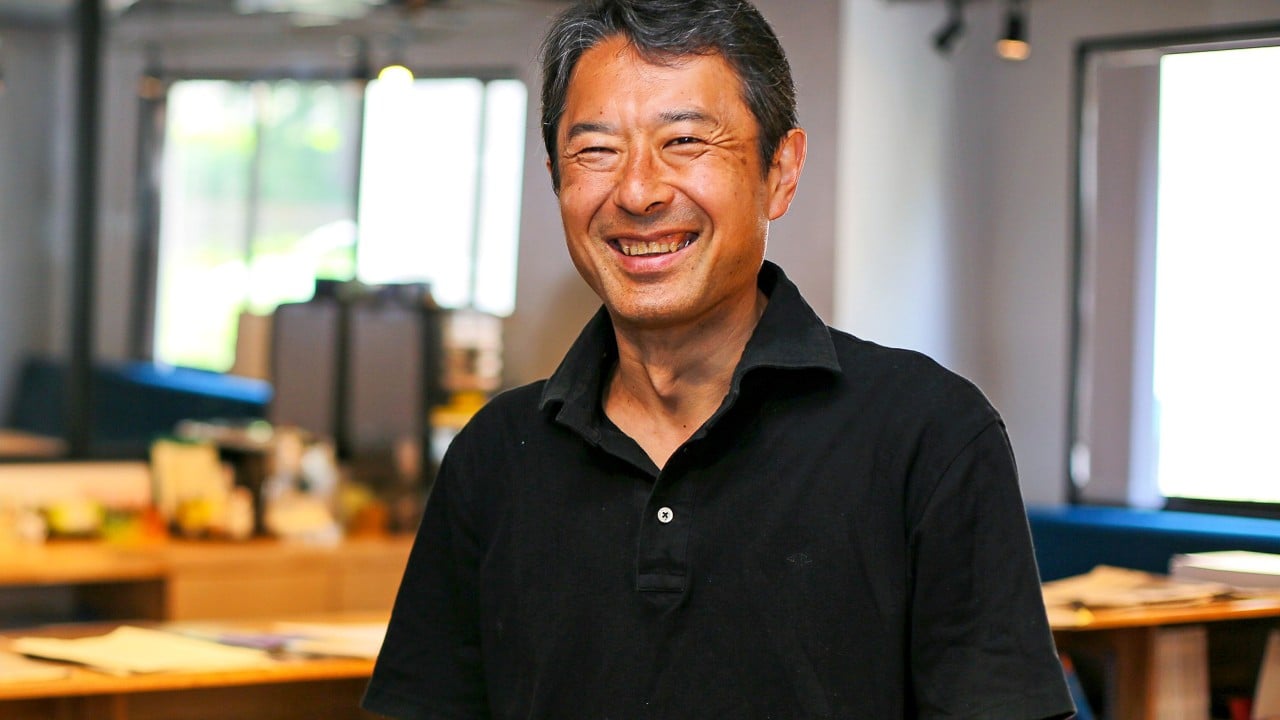
Western and Japanese academic institutions used to be the final destinations for the world's most elite minds. Not anymore. The global scientific landscape is undergoing a massive shift, and the latest proof arrived with a quiet announcement from Hangzhou. Shigeru Ida, a titan in theoretical astrophysics and the immediate past president of the Astronomical Society of Japan, packed up his decades of groundbreaking research and moved full-time to China's Westlake University.
If you think this is just an isolated retirement gig, you're missing the bigger picture.
Ida didn't just move for a paycheck. He relocated to build an entirely new Exoplanets and Astrobiology Laboratory from scratch. In doing so, he joined a swelling ranks of elite researchers abandoning traditional institutions in Japan, the US, and Europe for the raw ambition and aggressive funding of China's upstart research hubs. This trend isn't slowing down. It's accelerating.
The Magnet of the Scientific Blank Slate
Most elite legacy universities are bogged down by administrative sludge and hyper-rigid departments. If you want to study something radical—like merging astrophysics with prebiotic chemistry to figure out what life actually is—you have to fight years of bureaucratic turf wars.
China's newer research institutions operate more like heavily funded tech startups.
Westlake University, founded in 2018, gave Ida exactly what an ambitious scientist craves: a blank slate. The private university launched its Department of Astronomy just last October, and they essentially handed Ida the keys to build a world-class department. He officially stepped into his role as a distinguished fellow and full-time professor in April.
Ida admitted that he made the decision to join a year ago, drawn entirely by the openness and sheer ambition of the environment. For a guy who spent his career simulating how the Moon formed or tracking down free-floating planets in the Milky Way, the chance to design a brand-new playground was irresistible.
Legacy universities are built on tradition. But you can't build the future if you're stuck maintaining the past. China gets this, and they're using it to peel away top talent.
What Legacy Institutions Get Wrong About Funding Big Ideas
Let's look at what Ida actually brings to the table. This isn't just an administrator; he's one of the primary architects of modern planetary formation theory.
In 1997, Ida worked with researchers at the University of Colorado to run the numerical simulations that verified the giant impact hypothesis—the definitive model of how a Mars-sized body smashed into a young Earth to create our Moon. His team published those findings in Nature. A year later, he put forward the complete theory of oligarchic growth, explaining how tiny planetesimals clump together into massive protoplanets. He literally wrote the book on how the solar system formed, generating over 400 papers and 21,000 citations along the way.
Later in his career, Ida helped run the Earth-Life Science Institute (ELSI) at the Tokyo Institute of Technology. He realized that the future of astronomy isn't just looking at rocks through telescopes. It's simulating the formation of complex organic molecules across the cosmos.
That kind of cross-disciplinary work requires massive computing power and financial backing without immediate commercial payouts. In Japan and the West, grants for pure, exploratory basic science are drying up. Researchers spend half their time writing proposals instead of doing actual science.
Westlake University and similar Chinese hubs are taking the opposite approach. They provide massive baseline funding and high-end infrastructure, telling elite scientists to go figure out the secrets of the universe without worrying about next quarter's grant deadline.
The Real Reason Global Talent Is Shifting East
Ida's relocation is part of a broader, systemic migration. Dozens of world-class scientists have left the West and Japan for China over the last few years. The underlying drivers are highly practical:
- Infrastructure on Demand: While Western labs wait years for equipment upgrades, Chinese institutions build state-of-the-art facilities in months.
- Freedom from Hyper-Specialization: Newer private-public universities in China encourage cross-pollination between chemistry, biology, and astrophysics.
- Aggressive Academic Freedom: For international scholars, these specialized institutes offer a refuge from the domestic political battles and institutional austerity paralyzing many Western universities.
If you're a scientist wanting to answer the most fundamental questions in the universe, you go where the friction is lowest and the support is highest. Right now, that path points toward Asia.
The Next Steps for Global Research
The era of Western and Japanese monopoly on elite scientific research is officially over. If legacy institutions want to stop the brain drain, they need a radical shift in how they treat their top minds.
First, universities must slash administrative red tape. Scientists should be running simulations, not filling out compliance spreadsheets. Second, institutional funding models need to pivot back to funding long-term, high-risk basic science rather than safe, incremental projects.
If you are a young researcher looking at the global landscape, look closely at where the foundational infrastructure is actually being built. Don't tie yourself to a prestigious brand name if the institution itself is stagnant. Follow the energy, the funding, and the blank slates. That's exactly what Shigeru Ida did.