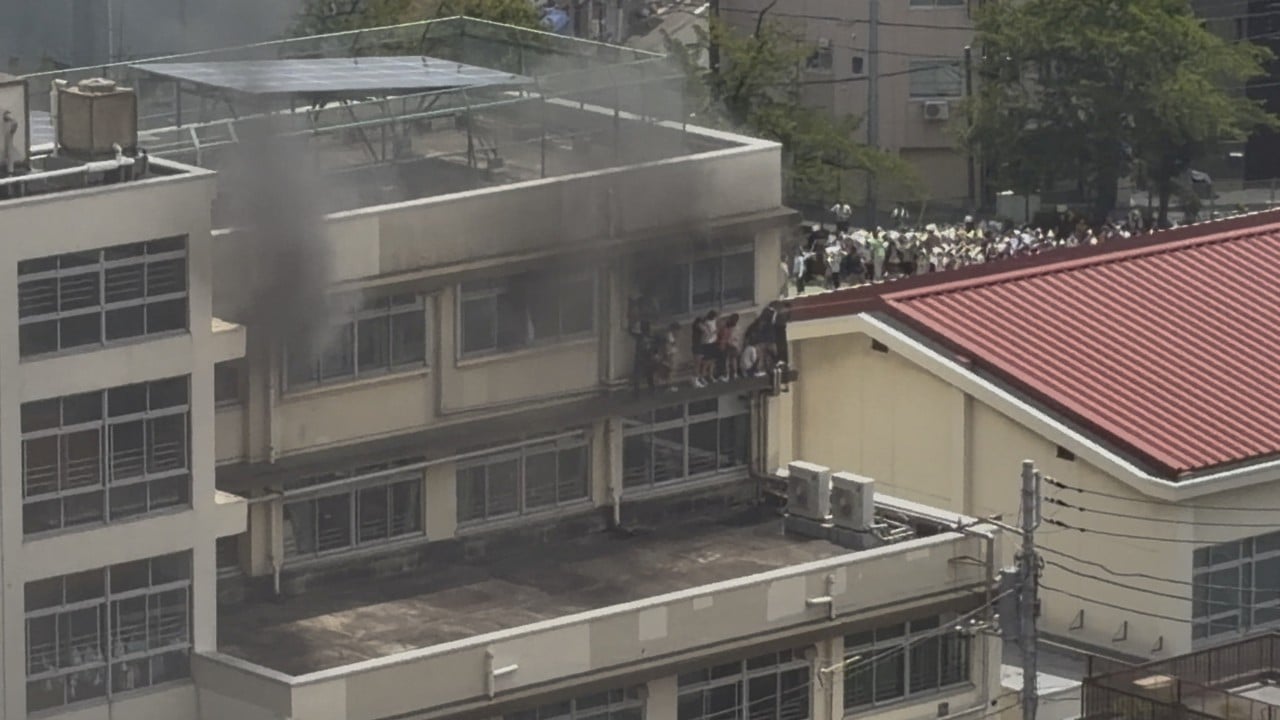
Thick black smoke pouring out of a fourth-floor window is every parent's worst nightmare. On a Friday morning in Tokyo, that nightmare became a reality at Takinogawa No. 3 Elementary School in the Kita Ward. A fire broke out next to a music room where fifth graders were actively in the middle of a class. Within minutes, the building was a crisis zone. Yet, despite the chaos, nearly 300 students and staff escaped without a single fatality.
This Tokyo school fire is not just a breaking news story. It is a masterclass in why repetitive, mechanical safety training matters. When the alarms went off around 11:00 AM, the system worked because the human beings inside knew exactly what to do. They did not panicking. They did not freeze. They grabbed their gear and moved.
Most media outlets cover these events with quick statistics and generic quotes about how scary it was. But looking beneath the surface reveals a distinct picture of preparedness. It shows how infrastructure, cultural discipline, and relentless training prevent mass tragedy when things go wrong.
Anatomy of the Tokyo School Fire
The timeline of the incident shows how fast a localized fire can threaten hundreds of lives. At approximately 11:00 AM, flames erupted in a room adjacent to the fourth-floor music room. The upper floor quickly filled with dense smoke, threatening to trap the fifth-grade class inside.
The Tokyo Fire Department responded with massive force. They deployed 75 fire engines and dozens of emergency personnel to the scene. Firefighters spent nearly three hours battling the flames, finally extinguishing the blaze around 1:45 PM.
[Timeline of Events]
11:00 AM - Fire breaks out on the 4th floor
11:05 AM - Alarms trigger, evacuation begins
11:15 AM - 75 fire engines arrive on scene
01:45 PM - Fire completely extinguished
While the response from emergency services was massive, the immediate actions taken during the first five minutes inside the building determined the outcome. School staff immediately initiated evacuation protocols. Students did not scramble for their backpacks or phones. Instead, they reached for their disaster hoods, a standard piece of equipment in Japanese classrooms, and headed for the exits.
The Reality of the Injuries
We cannot gloss over the injuries. Ten people were hurt during the evacuation and rescue operations. This group included eight pupils and two teachers. Most of these individuals suffered from smoke inhalation as the toxic fumes from the burning fourth-floor materials spread through the corridors.
The physical toll highlights the dangers of vertical evacuations. One female teacher suffered a broken hip during the chaotic escape. Two young children sustained fractured arms. Firefighters had to directly rescue four people from inside the building, including a teacher and three children who were cut off by the spreading smoke.
None of the injuries were life-threatening. When you consider that 300 people were inside a burning four-story building, an outcome where everyone survived with non-life-threatening injuries is remarkable. It shows that while physical accidents happen during high-stress escapes, the overriding priority of getting people out alive succeeded.
The Protective Hood System You Have Never Heard Of
If you visit an elementary school classroom in Japan, you will notice something specific attached to the back of every single chair. It looks like a thick, quilted cushion. This item is a bousukin, a disaster prevention hood designed to protect the head and shoulders from falling debris and intense heat.
During the Tokyo school fire, these hoods played a major role. As fifth graders exited the smoky fourth floor, they wore these protective hoods over their heads. The thick padding protects against falling plaster and glass, while the flame-retardant material keeps sparks from igniting hair or clothing.
Western schools rarely use anything like this. Most fire drills in the United States or Europe involve simply walking out of the classroom in ordinary clothes. The Japanese approach assumes that disaster environments are messy, violent, and full of falling objects. By integrating the protective hood into daily classroom life—often using it as a seat cushion so it is always within arm's reach—the school ensures that no time is wasted looking for safety gear.
Muscle Memory Overcomes Panic
It is easy to think that people will naturally do the right thing during an emergency. They do not. Fear makes people stupid. It makes crowds bottle up at exits, it makes individuals run back for personal belongings, and it causes fatal delays.
The reason the evacuation at Takinogawa No. 3 Elementary School worked so well is down to muscle memory. Japanese schools hold disaster drills regularly, sometimes every month. These are not casual walks to the playground. They are serious, timed exercises that simulate earthquakes, fires, and even structural collapses.
Students are taught the okashi rule from a young age:
- Osaikitari (Don't push)
- Kakanai (Don't run)
- Shibanai (Don't speak)
This simple acronym guides their behavior. Because they have practiced this sequence dozens of times, the routine takes over when real smoke appears. The brain does not need to process fear because the body already knows the steps.
How Fire Spreads in Modern School Buildings
Modern school infrastructure presents unique challenges for fire containment. While newer buildings use fire-resistant concrete and specialized drywall, older structures or specific interior rooms often contain significant amounts of flammable materials. Music rooms, for instance, are frequently lined with acoustic foam, heavy curtains, and wooden instruments that can ignite quickly and produce highly toxic smoke.
The fire on Friday started in a room right next to the music room. The fact that part of the fourth-floor wall was completely blackened and charred indicates intense heat. When a fire breaks out on an upper floor, evacuation becomes geometrically more difficult. Occupants must travel down stairs, moving against the natural upward flow of heat and toxic gases.
The Tokyo Fire Department uses specialized high-rise tactics even for four-story buildings. By deploying 75 engines, they could simultaneously attack the fire from outside using ladder trucks while sending heavily equipped teams inside to locate trapped individuals. This aggressive dual-strategy is what saved the four individuals who could not escape on their own.
What Your Local School is Getting Wrong About Fire Safety
Most schools outside of disaster-prone regions treat fire safety as a bureaucratic box to check. They do the bare minimum required by local laws. If your local school only runs two or three fire drills a year, they are failing their students.
Look at how the Tokyo incident unfolded compared to typical school emergencies elsewhere. In many western schools, fire alarms cause confusion. Teachers sometimes check their emails or look into the hallway to see if it is a false alarm before moving. That delay can be fatal.
In Tokyo, the response is instant. The moment the alarm rings, the assumption is that the threat is real. Teachers do not hesitate. They assume control of the perimeter, guide students into lines, and move toward designated safe zones like nearby public parks or open schoolyards.
The Economics of School Safety Upgrades
Implementing high-level disaster readiness is not cheap. It requires investment in physical hardware and dedicated time. Many school districts complain about budgets when asked to upgrade safety systems, but the cost of negligence is vastly higher.
Consider the equipment used in Tokyo. Providing every student with a high-quality, flame-retardant disaster hood costs money. Installing integrated public address systems that can survive structural damage costs money. Training staff and hiring safety consultants costs money.
But look at the alternative. A major fire with inadequate evacuation protocols leads to catastrophic lawsuits, structural total losses, and irreplaceable loss of life. Investing in safety equipment and regular, rigorous training is a form of financial prudence. It limits liability and ensures that the institution can resume operations quickly after a crisis.
Immediate Action Steps for Parents and Educators
Do not wait for a local tragedy to audit your own school's safety plans. You can take concrete steps right now to ensure the children in your community are protected.
First, ask your school administration for their exact evacuation statistics. Find out how long it takes for the entire student body to clear the buildings during a surprise drill. If it takes longer than three minutes, the protocol needs a complete overhaul.
Second, check the proximity of safety gear. Are fire extinguishers locked away in administrative offices, or are they accessible in high-risk zones like chemistry labs, cafeterias, and music rooms?
Third, push for realistic scenarios. Drills should not always happen on a sunny Tuesday at 10:00 AM when everyone is sitting quietly. Demand that schools test evacuations during lunch periods, between classes, or during bad weather. That is how you build real resilience.
The Tokyo school fire ended without a funeral because a community chose to prioritize preparation over convenience. The charred walls of Takinogawa No. 3 Elementary School will be repaired, and the injured students and teachers will heal from their fractures and smoke inhalation. The lesson they left behind is clear for the rest of the world. Train hard, invest in the right gear, and never assume that a disaster won't happen to you.