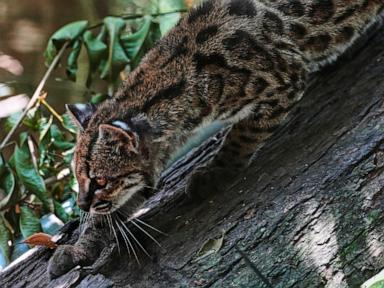
Science just proved that we still know shockingly little about the planet's ecosystems. Researchers recently used genetic sequencing to confirm a brand-new living species of wild cat hiding out in Bolivia's cloud forests, marking the first time a living feline species has been formally described in over a century. Meet the tilcayo cat. Weighing a mere 3 pounds and measuring just 18 inches long, this diminutive predator is smaller than your average house cat. Yet, its impact on conservation is massive.
If you are wondering how a creature this small slipped past science for so long, you aren't alone. Tiger cats across South America have historically been lumped into a single, messy category. Researchers long suspected regional variations existed, but physical traits alone weren't enough to settle the debate. That changed when a team led by National Geographic Explorer and biologist Paola Nogales-Ascarrunz examined genetic data from dozens of specimens across the continent, comparing museum bones, skins, and modern DNA. The results were definitive. The tilcayo lineage split from other tiger cats roughly 1.4 million years ago, making it an entirely distinct evolutionary branch.
The story behind how this discovery went public makes it even more fascinating. Back in 2017, a local family in Bolivia tried keeping one of these tiny wild cats as a pet. Unsurprisingly, it didn't work out. They surrendered the animal to the Senda Verde Wildlife Sanctuary, where it has lived ever since. Visitors now flock to the sanctuary to catch a glimpse of the famous feline, affectionately known as Tigrino, as he paces through his enclosure and sniffs the mountain air. He has inadvertently turned into a global ambassador for wildlife protection.
The habitat hosting this tiny marvel is the Yungas forest. It's a rugged, mountainous region shrouded in dense fog and heavy humidity. It is also deeply threatened by human encroachment and deforestation. Scientists point out that classifying the tilcayo as its own separate species changes its conservation status entirely. Instead of being grouped with more widespread populations, it stands alone as a hyper-localized endemic species facing distinct regional threats. When conservationists can point to a tangible, adorable face like Tigrino, public interest spikes immediately. People care about what they can see.
Discovering a new mammalian carnivore in the twenty-first century shatters the illusion that our planet's biodiversity has been fully mapped. You don't need to look to the deep ocean or remote trenches to find the unknown. It's prowling right under our noses in the misty canopies of the Andes. Protect the cloud forests before the next hidden wonder disappears for good.
New Wild Cat Species Identified In Bolivia For First Time In Over 100 Years
This video provides an up-close look at the newly identified tilcayo cat species and the sanctuary where it lives.