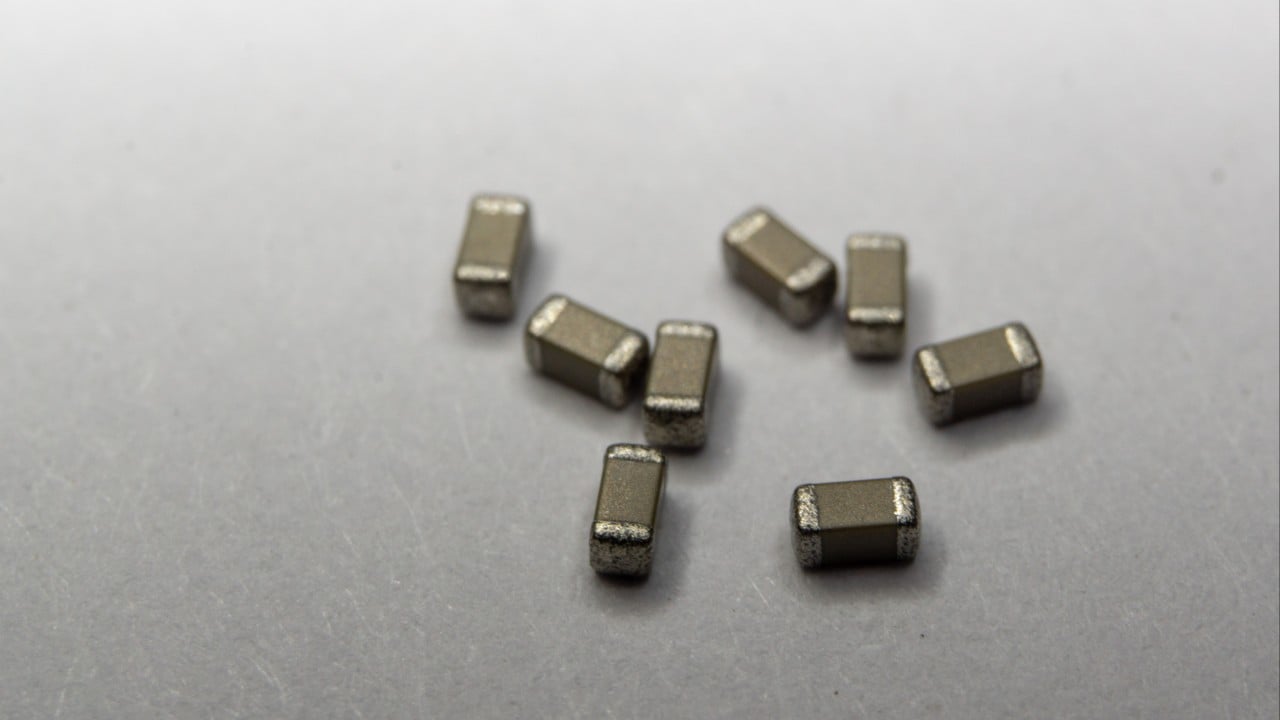
You rarely hear ordinary people talk about multilayer ceramic capacitors. They aren't flashy like high-end GPUs or massive data center clusters. Yet, without them, modern electronics simply stop working. Known widely in engineering circles as the "rice of the electronics industry", these microscopic passive components regulate electrical flow across nearly every circuit board on Earth. Right now, they're driving a massive financial wave across Chinese markets.
If you look at recent financial reports from top domestic manufacturers like CCTC (Chaozhou Three-Circle) and Guangdong Fenghua Advanced Technology, the story is impossible to ignore. CCTC hauled in 6.4 billion yuan in revenue during the first half of the year, marking a 55 percent jump. Their net profit climbed by 56 percent to hit 1.9 billion yuan. Meanwhile, Guangdong Fenghua posted a 74 percent increase in net profit alongside a 26 percent rise in sales. Share prices have naturally reacted to these numbers with intense upward momentum.
Why are these mundane components suddenly printing money? You can trace the entire phenomenon back to artificial intelligence infrastructure.
The AI Server Bottleneck Nobody Talks About
Building a cluster of AI servers requires immense electrical power. As processors work harder to train models and handle complex inference queries, they demand extreme stability in voltage and current regulation. Standard consumer-grade capacitors can't handle the thermal and electrical stress of high-density server racks.
This reality has triggered a structural shift in global demand. Chip designers and cloud service providers are scrambling for high-capacitance, high-temperature-resistant components. Traditional heavyweights like Murata Manufacturing, Samsung Electro-Mechanics, and Taiyo Yuden have seen their production lines push past 90 percent utilization rates. When global supply tightens at the top, buyers look elsewhere.
Chinese manufacturers stepped into that exact gap. They've spent years upgrading domestic production capabilities, moving away from low-margin consumer electronics parts and shifting toward server-grade and automotive specifications. CCTC has already signaled plans to scale up mass production of ultra-high-capacitance, large-format products for enterprise servers.
What the Stock Market Reacts To
The market response hasn't been subtle. When companies post mid-year earnings showing double-digit or triple-digit profit expansions, institutional investors take notice. Equity values for domestic suppliers have seen explosive rallies over the past year, reflecting a broader belief that hardware localization and AI infrastructure spending will continue to prop up industrial manufacturing.
It's easy to dismiss this as standard market hype, but the fundamentals tell a different story. Spot prices for specialized high-end components have crept upward across major electronics hubs. Lead times for constrained orders have stretched out to several months. When lead times lengthen, pricing power shifts directly to the factories holding the inventory.
Where the Industry Goes From Here
If you're watching the hardware space, don't just track the companies making the headline-grabbing processors. Look further down the supply chain at the passive component makers. The real test for these Chinese manufacturers won't be capturing initial market enthusiasm; it will be maintaining execution quality as they scale up production lines for advanced high-end configurations.
Demand for computing power shows no signs of slowing down, meaning the underlying pressure on electronic components remains locked in. Watch the capacity expansion announcements over the next two quarters. The winners will be those who successfully transition from volume producers into specialized, high-margin enterprise suppliers.