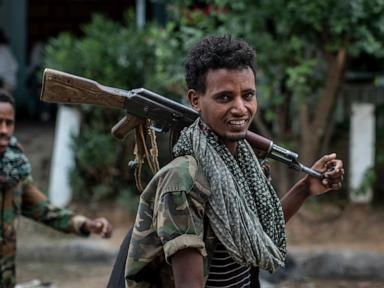
When the Tigray People's Liberation Front decided to abandon Mekelle, they weren't just stepping back from a city. They were signaling a dangerous new phase in a conflict that everyone hoped had ended with the 2022 Pretoria agreement. If you've been watching northern Ethiopia, you know the fragile peace collapsed the moment fighting erupted on September 23, following rebel attacks into neighboring states. Now, federal forces are pressing their advance, and the regional capital sits largely empty and vulnerable.
Let's look at what's actually happening on the ground. TPLF leaders and fighters packed up and left Mekelle as pro-government militias and federal troops closed the distance, following the capture of the city's airport. Local journalists and residents paint a tense picture. Government offices and police stations stand abandoned without security personnel, leaving locals terrified of looting and lawlessness. You can't blame them for worrying. When authority vanishes overnight, chaos fills the vacuum.
The Strategy Behind the Retreat
Why would the TPLF abandon their stronghold without a massive conventional defense? TPLF leader Debretsion Gebremichael dropped heavy hints in a video message released late last week. He pointed straight to a guerrilla-style playbook, noting that they operate under a strategy to strike the enemy wherever they choose.
We saw this exact movie play out back in late 2020. Federal forces took Mekelle quickly, only to get bogged down in a grueling, protracted insurgency that eventually forced them out by mid-2021. By pulling back now, the TPLF is trading urban defense for rural mobility. They're betting that federal troops will struggle to hold a hostile city while chasing elusive fighters into the rugged highlands.
A Wider Regional Chessboard
This isn't just a localized spat anymore. The crisis is bleeding outward, pulling in broader geopolitical tensions that make a stable resolution look remote. Debretsion explicitly framed the current fighting as a regional war tied to control of the Red Sea.
Add to that the friction between Ethiopia and Eritrea, where Asmara accuses Addis Ababa of eyeing coastal access, plus a bizarre diplomatic expulsion spat with Egypt, and you have a volatile recipe for disaster. The 2022 peace deal, brokered by African institutions and Washington, is looking less like a permanent settlement and more like a brief ceasefire.
What Comes Next for the Region
Right now, federal forces are securing key infrastructure, but holding Mekelle is only half the battle. The real test is whether Addis Ababa can prevent a complete humanitarian collapse and establish a credible administration before insurgent attacks start wearing down supply lines.
If you're tracking this conflict, don't expect a quick cleanup. Guerrilla campaigns don't end with a signed treaty or a single troop movement. The TPLF has gone to ground, and the federal government is locked into an expensive, open-ended security commitment in the north. Watch how local civilian administration handles the vacuum in Mekelle over the coming days—that will tell you whether stability has a fighting chance or if the cycle has simply reset to zero.