The Middle East just crossed a terrifying point of no return. After seven continuous nights of American airstrikes pounding Iranian infrastructure, Tehran isn't backing down. Instead, they've dropped all diplomatic pretense. Major General Mohsen Rezaei, a top military adviser to Iran’s supreme leader, announced on state television that if US strikes continue for another 48 to 72 hours, Iran will pivot to a "full-scale offensive".
His most chilling words? "No political border will be safe."
This isn't the usual state-sponsored saber-rattling you're used to hearing from the region. We're witnessing the complete collapse of the February 2026 memorandum of agreement—the fragile framework meant to halt a broader US-Iran war. For six days, Washington and Tehran traded what were supposed to be measured, proportional blows. That era of restraint is dead.
If you want to understand why global energy markets are panicking, look no further than Brent crude skyrocketing past $85 a barrel. This conflict isn't confined to a map anymore; it's knocking on everyone's front door.
The Brutal Reality of No Safe Borders
What does an Iranian full-scale offensive actually look like? It means the proxy war is over, and a direct regional conflict has begun. For years, western analysts assumed Iran would rely exclusively on its network of regional proxies to do its dirty work. That calculus failed this week.
Tehran was struck directly on July 16, marking the first time the capital itself became a target in this cycle. Iranian health officials report at least 38 dead and over 400 wounded across the country since the latest escalation began. In the eyes of the Islamic Revolutionary Guard Corps (IRGC), the gloves are completely off.
Look at what happened immediately after Rezaei's warning. Iran didn't just target American warships. They launched drone and missile attacks directly into neighboring Gulf states.
- Kuwait: Iranian drones hit a vital power and water plant, knocking out utilities and wounding several Kuwaiti soldiers.
- Qatar: Tehran fired ballistic missiles and targeted US military radar systems and aircraft at bases inside Qatari territory.
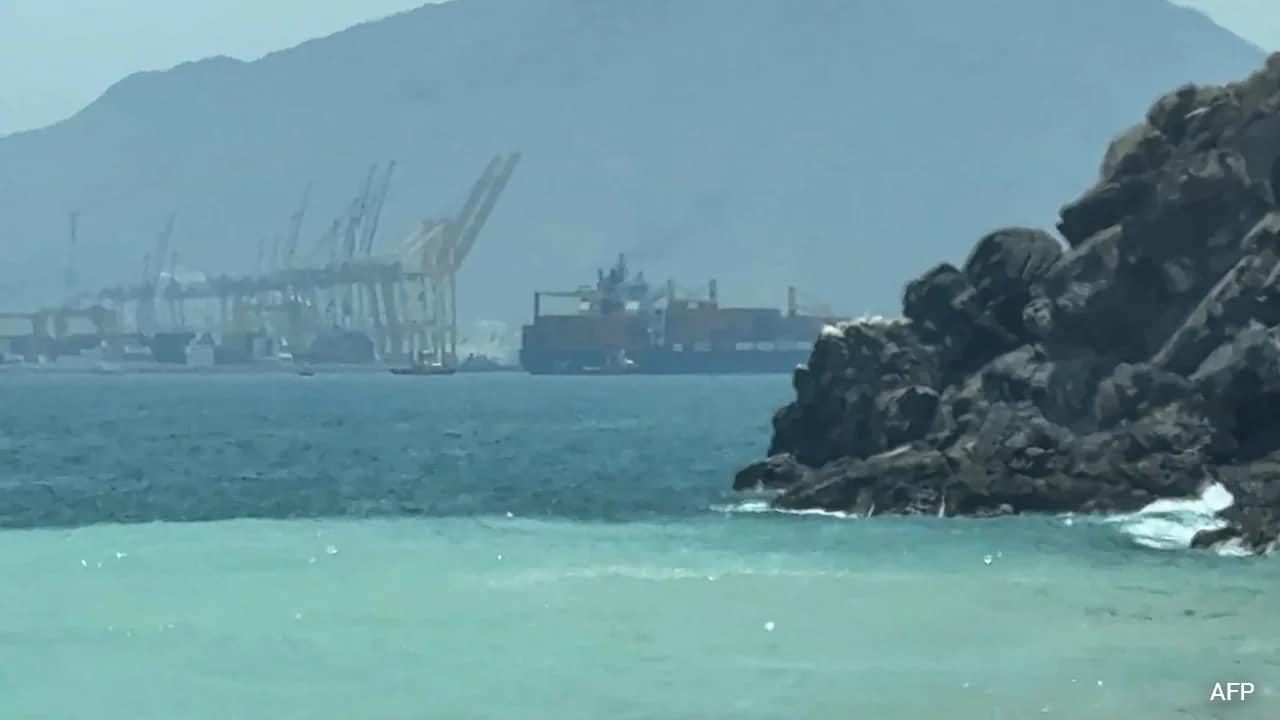
- The Strait of Hormuz: Entirely shut down by Iran, cutting off a fifth of the world's daily oil supply.
This is the manifestation of the "no safe borders" doctrine. Iran is telling its neighbors a simple, brutal truth: if you host American forces, you're a combatant.
What the US Gets Wrong About the Strait of Hormuz
Washington’s current strategy relies on a major miscalculation. The US military launched Hellfire missiles at disabled tankers and continuous airstrikes against southern Iranian coastal facilities. The stated goal of US Central Command (CENTCOM) is to force open the Strait of Hormuz and degrade Iran's maritime capabilities.
It won't work that easily. Iranian Army Spokesman Brigadier General Mohammad Akraminia explicitly pointed out that the Western military mindset assumes Iran can only control the strait from its coastline or immediate islands. In reality, Iran’s updated military doctrine relies on long-range ballistic missile systems, mobile drone launchers, and asymmetric warfare assets buried deep within its mountainous interior. They can shut down the strait from almost anywhere inside their territory.
Worse yet, intelligence reports indicate Tehran has already instructed the Houthi movement in Yemen to target the Bab el-Mandeb strait in the Red Sea. If the US tries to break the chokehold on Hormuz by force, Iran can effectively close the secondary global trade artery simultaneously. It’s a logistical nightmare that Western planners haven't fully prepared to counter.
The Escalation Trap and What Happens Next
We're trapped in a classic escalatory cycle where neither side can afford to blink. The White House believes stopping the strikes now looks like a capitulation to Iranian threats. Tehran believes that accepting American strikes on its infrastructure without an overwhelming, asymmetric response signals weakness to its enemies.
Diplomatic efforts from Beijing and Islamabad are currently falling on deaf ears. The core issue is that the fundamental rules of engagement have changed. Iran's military leadership announced that they will no longer limit themselves to like-for-like, proportional responses. Their new operational framework dictates striking enemy targets at a minimum ratio of two to one.
If the Biden administration continues its nightly bombing runs past the 72-hour ultimatum, expect an immediate, multi-front barrage. This won't just hit military outposts; it will target commercial ports, desalination plants, and energy infrastructure across the entire Arabian Peninsula.
Keep a close eye on regional energy markets and local embassy advisories. If you have supply chains linked to the Gulf or depend on stable maritime shipping lanes, start executing your contingency plans right now. The window for a diplomatic off-ramp is rapidly closing.