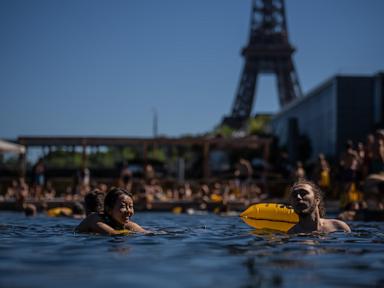
You can finally dive into the Seine without worrying about growing a third arm. Honestly, for about a century, jumping into Paris's iconic river would get you a hefty fine and probably a stomach virus. But things changed after the multibillion-euro cleanup for the 2024 Olympics. Now, for the second summer in a row, the city has officially opened three supervised Seine swimming spots.
If you are planning a trip to the French capital this summer, swimming in the river should be at the top of your list. It is free, it is legally sanctioned, and the views are unmatched. But before you throw on your swimsuit and sprint to the nearest riverbank, you need to understand how this system actually works. It is not a free-for-all wild swimming setup. The city runs a tight ship to keep everyone safe and healthy.
Here is the breakdown of what is happening right now on the water, where you can go, and what you actually need to know before taking the plunge.
The Three Official Seine Swimming Spots
The city did not just open up the whole riverbank. They picked three specific locations where lifeguards monitor the water and barriers keep the boat traffic away.
The Grenelle Site Near the Eiffel Tower
This is the spot everyone wants to visit. Swimmers get to look directly at the Eiffel Tower while floating around. Because of the view, it gets incredibly crowded. Clemence Donazzan, the deputy manager of the Grenelle site, confirmed that the maximum capacity is capped at 200 people at any given time. They use a strict waiting system at the entrance and monitor numbers in real time. If you show up at 2:00 PM on a scorching Saturday, expect a wait.
The City Hall Location
Located right in the center of Paris near the Hôtel de Ville, this spot serves locals and tourists who want a quick break from walking the historic streets. It offers a totally different vibe than the Eiffel Tower location, surrounded by classic Parisian architecture and stone embankments.
The Eastern Paris Spot
If you want to escape the heaviest tourist crowds, head east. This location attracts more actual Parisians and fewer influencers looking for a selfie. It feels a bit more like a local neighborhood hangout, though the strict safety rules still apply.
How the Testing System Works and Why It Matters
You cannot just assume the water is clean every single day. The city conducts daily water quality testing early every morning. If the bacteria levels spike, they close the pools instantly.
The biggest enemy of a clean Seine is heavy rain. When a massive rainstorm hits Paris, the city's older sewer system can get overwhelmed. Even with the massive rainwater storage tanks built before the Olympics, heavy downpours cause runoff to head upstream, raising the levels of E. coli and enterococci bacteria. Last summer, officials had to cancel several swimming days because of sudden summer storms.
If you plan to swim, you should always check the official Paris municipal website or local notices before heading out. A beautiful sunny day might still be closed for swimming if it poured rain the night before.
What the Clean River Effort Actually Cost
Paris spent roughly 1.4 billion euros to make the Seine swimmable again. The project started years before the 2024 Olympic games to ensure athletes could compete in the triathlon and marathon swimming events.
The money went toward massive engineering projects. Workers upgraded old wastewater networks, connected thousands of homes whose sewage previously pumped straight into the river to the main city lines, and constructed an enormous subterranean water storage basin near the Austerlitz train station. This basin holds the equivalent of 20 Olympic-sized swimming pools of dirty water during storms, preventing it from overflowing into the river.
It was a massive gamble that faced plenty of skepticism. Yet, the infrastructure works. It turned a polluted shipping lane into a viable public park space.
Real Swimmer Experiences on the Water
People who have actually gone into the water say the experience changes how you view the city. Stewart Talbot, a visitor from Melbourne, Australia, noted that while it might not compete with an ocean beach, it beats typical urban river swimming by a mile. The mix of people makes the atmosphere unique. You will see young kids, teenagers, and local grandmothers all sharing the same cordoned-off water space.
It offers a welcome relief during summer heatwaves. Paris gets incredibly hot in July and August, and the stone buildings trap heat efficiently. Having free, clean water access right in the center of the city changes the dynamic of a summer trip.
Misconceptions About Swimming in Paris
A lot of people think you can just jump in anywhere along the banks of the Seine. Do not do that. Swimming outside of the designated, supervised zones remains illegal and highly dangerous. The Seine is a commercial highway filled with heavy barge traffic, tourist cruise boats, and strong currents. The official spots use heavy-duty floating barriers to completely isolate swimmers from boat lanes.
Another misconception is that the water is perfectly crystal clear. It is a natural river with a silt bed. The water looks greenish-brown, which makes some people nervous. But color does not equal pollution. The daily lab tests check for harmful bacteria, not clarity. If the gates are open, the health department has verified the water is safe.
If you want a different vibe, Paris has also allowed swimming in the Canal Saint-Martin and the Bassin de la Villette in northeastern Paris during the summer months. Those spots have their own distinct community feel and offer alternatives if the river spots hit their capacity limits.
Your Actionable Next Steps for Swimming in the Seine
If you want to successfully swim in the Seine without wasting your afternoon, follow these steps.
- Check the weather history: Look at the weather for the previous 24 hours. If it rained heavily, find an alternative activity for the day because closures are highly likely.
- Arrive early or late: The Grenelle site near the Eiffel Tower fills up its 200-person capacity quickly during peak afternoon hours. Aim for the morning opening or late afternoon to avoid long lines.
- Pack light: These are urban swim spots, not expansive beach resorts. Bring a towel, your suit, and sun protection. There is minimal space to store large bags or valuables while you are in the water.
- Monitor the official Paris city site: Look for the "Paris Plages" updates on the official Paris.fr website each morning to see the exact opening status and daily water test results.