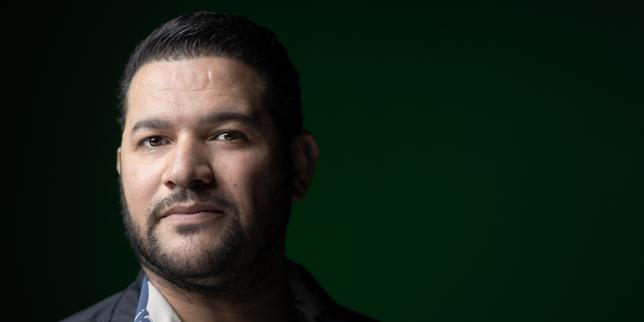
Political campaigns are fragile. They look unstoppable until a single headline shatters the illusion. That is exactly what just happened in Maine, where the Democratic party found itself staring into an abyss. Graham Platner, the populist oyster farmer who captured national attention and secured a staggering 72% of the primary vote, suspended his campaign.
The collapse was swift. It came after devastating allegations of sexual assault surfaced from a former girlfriend, Jenny Racicot. Platner denied the claims, but the political damage was absolute. High-profile progressives who had championed his outsider movement, including Bernie Sanders and Ro Khanna, pulled their endorsements within hours. National party leaders threatened to cut off funding. Platner had no choice but to step aside. Discover more on a connected topic: this related article.
Now, Maine Democrats face a frantic scramble. State law gives the party until July 27 to pick a new nominee to face Republican incumbent Susan Collins. The panic among party operatives is tangible. Replacing a nominee this late feels like a political death sentence.
But history tells a very different story. Additional analysis by Wikipedia explores related views on the subject.
When you look at the rare occasions where major parties swapped their candidates at the eleventh hour, a fascinating pattern emerges. Giving up on an embattled nominee is painful. It is messy. Yet, doing so frequently increases the party's chances of winning. Getting rid of political baggage works.
The Brutal Reality of the Platner Meltdown
Platner was supposed to be the candidate who could finally unseat Susan Collins. He was a Marine veteran, an organic outsider, and a fierce critic of the political establishment. His platform focused on housing affordability and corporate greed, a message that resonated deeply in rural Maine. He ran a campaign so powerful that he forced the sitting governor, Janet Mills, to suspend her own primary bid.
The problem is that his campaign was a ticking time bomb from day one.
Before the latest assault allegations, Platner was already weighed down by a steady stream of self-inflicted controversies. Old Reddit posts containing bigoted language leaked. Then came the revelation that he had a tattoo closely resembling a Nazi symbol, which he hastily covered up while claiming he didn't know its origin. Next were the explicit text messages sent outside his marriage.
Through it all, Platner maintained a loyal base. Voters who were desperate for change chose to overlook his character flaws because they liked his message. A late June poll conducted by the New York Times and Siena Research showed him in a dead heat with Collins. But that same poll contained a warning sign. Over half of the respondents viewed Platner unfavorably. Voters knew about his scandals, and they were exhausted by them.
When the new allegations broke, the dam burst. The coalition evaporated. Platner released an 11-minute video blasting the political establishment and corporate media, declaring that he was suspending operations so his movement could survive. He was bitter. He blamed backroom deals. But his departure solved a massive problem for his party. It took a radioactive candidate off the board.
The New Jersey Blueprint for Last Minute Success
To understand why Maine Democrats shouldn't give up hope, look back to the legendary 2002 midterms. The state was New Jersey, and the incumbent Democratic senator was Robert Torricelli, widely known as "The Torch."
Torricelli was a formidable politician, but he was drowning in an ethics scandal involving illegal campaign gifts from a businessman. His poll numbers were tanking. He was trailing his Republican challenger, Douglas Forrester, in a state that should have been safely Democratic.
Just 35 days before the general election, Torricelli dropped out.
Republicans celebrated. They believed the race was over. New Jersey law stated that candidate changes had to happen at least 51 days before the election, so the GOP sued to lock the ballot. The case went to the New Jersey Supreme Court, which ruled unanimously that the Democratic party could substitute a candidate in the interest of giving voters a real choice.
Democrats drafted Frank Lautenberg, a retired senator who had served three terms and possessed high name recognition. He was clean. He didn't have any of Torricelli’s ethical stains.
The dynamic of the election changed instantly. Forrester had built his entire campaign around attacking Torricelli’s character. Suddenly, those attacks were completely useless. Lautenberg didn't have to defend a single thing. He spent the final month talking about policy, and he won the election comfortably.
The lesson from 2002 is clear. Voters are capable of separating a political party from a flawed individual. When you remove the scandal, you remove the opponent's strongest weapon.
Why Some Ballot Swaps Fail
We have to look at the failures too. Swapping a candidate doesn't guarantee a victory, and the historical counterexamples show exactly where things can go wrong.
Consider the tragic case of Minnesota in 2002. Just days before the election, incumbent Democratic Senator Paul Wellstone died in a plane crash. The party was devastated. They selected former Vice President Walter Mondale to take his place on the ballot.
Mondale lost to Republican Norm Coleman.
The failure in Minnesota wasn't due to scandal cleanup. It was a race defined by intense grief and a sudden structural shock. Mondale was a figure from a past era, and the campaign had no time to build a forward-looking message.
Another famous mess occurred in Illinois in 2004. The Republican primary winner for the Senate race, Jack Ryan, dropped out after his divorce records leaked, revealing scandalous details about his personal life. The Illinois Republican Party panicked. They spent weeks searching for a replacement and eventually brought in Alan Keyes, an aggressive conservative commentator from Maryland.
Keyes was a disaster. He didn't live in Illinois. He was seen as a carpetbagger brought in to save a sinking ship. He ended up losing in a historic landslide to a young state senator named Barack Obama.
These failures show that a late-stage replacement requires two things to succeed. The swap must occur because a flawed candidate is being removed, not because of a tragedy. And the replacement must be a credible local figure, not an outsider dropped in from another state.
The Field to Replace Platner
Maine Democrats don't have to look outside their borders. They have a deep bench of local leaders who are already making moves to secure the nomination before the July 27 deadline.
Troy Jackson, a logger and former state senate president, announced his candidacy almost immediately after Platner’s video dropped. Jackson is a well-known progressive with deep roots in Maine’s working class. He had previously run for governor with the backing of Bernie Sanders. He has already filed exploratory paperwork.
Then there is Nirav Shah, the former director of Maine's Center for Disease Control and Prevention. Shah became a household name in the state during the pandemic, praised for his clear communication and steady leadership. He represents a more moderate, technocratic option. He has called for an open, transparent selection process, including televised debates.
Other names are circling the race. Shenna Bellows, the secretary of state who previously ran against Collins in 2014, has thrown her hat in the ring. State Representative Valli Geiger claimed that Platner personally called her to offer his backing, though the state party has made it clear that Platner’s campaign has no authority to choose the successor.
The choice before the 600 party delegates who will vote at the upcoming nominating convention is a strategic one. They can lean into the progressive, populist energy that Platner tapped into by choosing someone like Jackson. Or they can pivot to a trusted, scandal-free brand like Shah.
Either way, Susan Collins suddenly faces a much harder path to reelection. Her campaign spent a year preparing to destroy Graham Platner. They had endless opposition research on his past behavior, his texts, and his associations. Now, all of that data is worthless. They have to rebuild their entire strategy in less than four months.
How to Navigate a Political Reset
Replacing a nominee is an extraordinary maneuver. If you are a campaign operative, a volunteer, or a donor dealing with a sudden ballot crisis, survival requires a specific playbook.
First, purge the baggage completely. The new candidate cannot spend any time defending the actions of the person who dropped out. Use direct, blunt language to close that chapter and pivot immediately to the future.
Second, salvage the infrastructure. Platner raised millions of dollars and built a massive volunteer network across Maine. The state party must move quickly to reassure those donors and volunteers that their hard work wasn't for nothing. The message must be that the movement is bigger than any single man.
Third, force the opponent to play defense. Susan Collins is a political survivor, but she is vulnerable on policy issues like healthcare and judicial appointments. The new Democratic nominee must immediately go on the attack, forcing Collins to defend her record instead of letting her talk about Democratic dysfunction.
The panic in Maine is understandable. The timeline is incredibly tight, and the stakes for control of the United States Senate couldn't be higher. But history proves that voters aren't afraid of a late-stage change. Sometimes, cutting your losses is the smartest thing a political party can do.