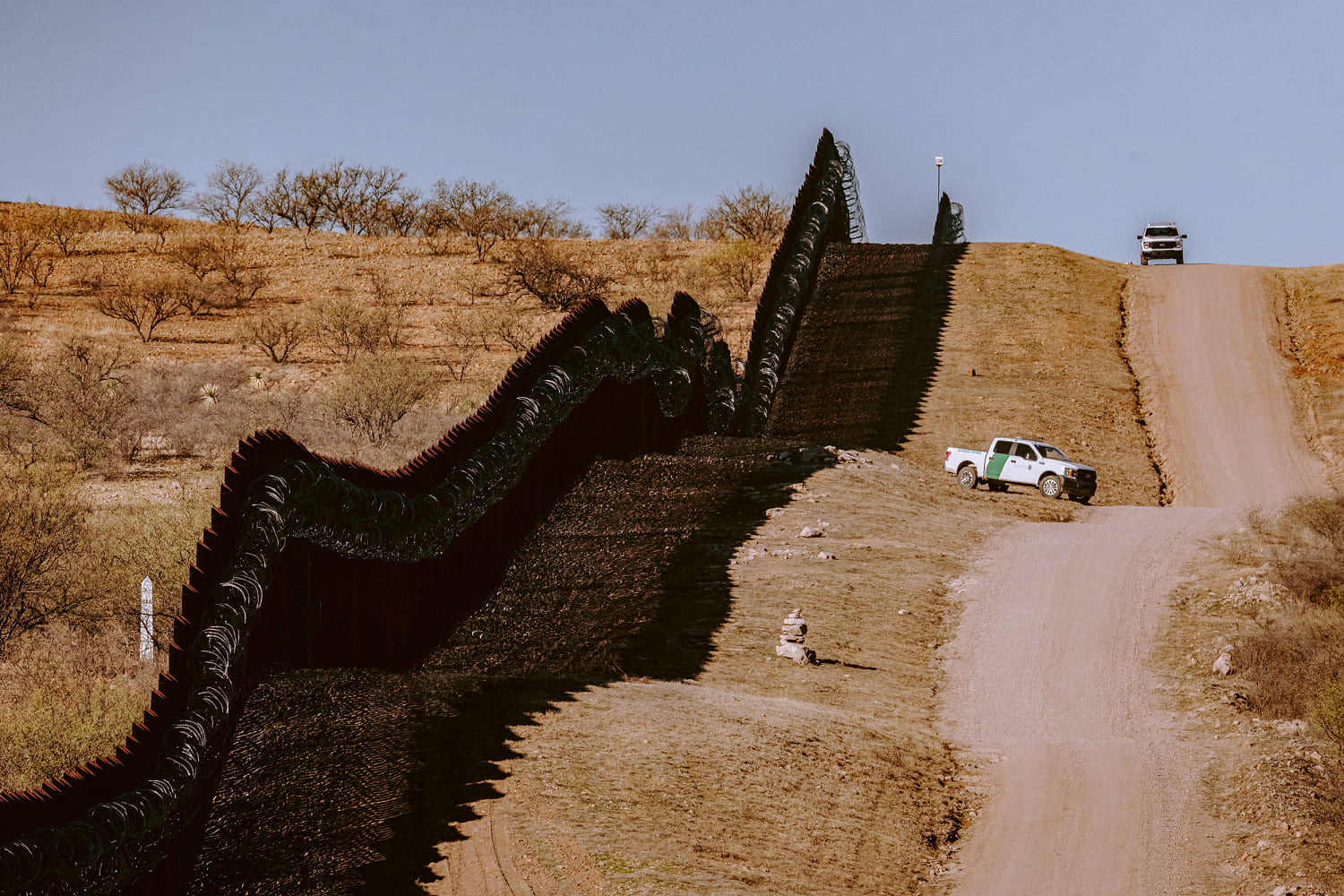
The rules of the game just changed at the southern border. In a major legal victory for the Trump administration, the Supreme Court handed down a massive decision that fundamentally alters how the United States handles asylum seekers at ports of entry. This isn't just a minor technical tweak to immigration law. It is a sweeping validation of executive power that will block thousands of migrants before they even step foot on American soil.
The high court just dropped its highly anticipated decision in Mullin v. Al Otro Lado. By a 6-3 vote, the conservative majority reversed a lower-court ruling that had threatened to upend border enforcement. The core issue sounds deceptively simple. When does an asylum seeker actually arrive in the United States? The court's answer is blunt. If you are standing on the Mexican side of the line, you haven't arrived.
The Core Defeat for Border Activists
For nearly a decade, immigration rights groups have fought a practice known as metering. This is where U.S. Customs and Border Protection officials tell migrants waiting at ports of entry to turn back and wait in Mexico because the facility is at capacity. It started back in 2016 and expanded dramatically under the first Trump administration.
The strategy was simple. Keep them on the other side.
Advocates sued, arguing that turning people away violates the Immigration and Nationality Act. Under that law, any migrant who arrives in the United States has a right to be inspected and to apply for asylum. The Ninth Circuit Court of Appeals agreed with the advocates. They ruled that migrants standing at the threshold of a port of entry had effectively arrived, meaning border agents had a legal duty to process them.
The Supreme Court just tore that legal theory to shreds.
Justice Samuel Alito wrote the majority opinion. He focused heavily on the plain text of the statute. To arrive means to actually enter a physical location, not just get close to it. If you are physically on Mexican soil, you cannot claim the protections of U.S. domestic law.
The Devastating One-Two Punch for Migrants
To understand why this ruling matters so much, you have to look at how different immigration policies stack on top of each other. This ruling does not exist in a vacuum. It acts as a gatekeeper for even harsher rules.
When migrants are forced to wait in Mexico under metering, they frequently run face-first into other policy roadblocks. One of the biggest is the Asylum Transit Rule. This policy requires non-Mexican migrants to first seek and be denied asylum in a country they passed through before they can ask for protection in the United States.
If you didn't apply for asylum in Guatemala or Mexico on your way up, you are automatically disqualified when you finally reach the U.S. line.
The Ninth Circuit tried to protect migrants from this trap. The lower court ordered the government to exempt migrants who were metered before the transit rule ever took effect, and even told the government to undo past asylum denials.
Alito's opinion kills that remedy completely. Because those migrants never legally arrived in the country while waiting on the bridge or the sidewalk in Mexico, they cannot complain about being subjected to tougher rules later.
Why the Liberal Justices Lost the Argument
The court's liberal wing did not hold back in their dissent. Justice Ketanji Brown Jackson led the charge, questioning the logic of the majority. The dissenters argued that the ruling creates a bizarre loophole where the government can completely evade its legal duties simply by blocking people a few inches away from the official line.
How can a refugee ever ask for inspection if federal agents build a human wall to prevent them from reaching the desk?
The administration's legal team, led by Vivek Suri, hammered home a different reality during oral arguments back in March. They argued that the border system is facing an unprecedented, overwhelming burden. Processing everyone instantly is physically impossible. Giving legal rights to millions of people standing outside the country would completely paralyze domestic border infrastructure.
The conservative majority bought that argument hook, line, and sinker. They chose physical geography over legal abstraction.
Real Consequences on the Ground Right Now
So what happens tomorrow morning at the border?
First, the ruling provides absolute legal cover for the administration to ramp up metering whenever ports of entry get crowded. Border Patrol agents no longer have to worry about a federal judge monitoring their daily capacity numbers or accusing them of illegal turnbacks.
Second, it completely halts the massive effort to unwind thousands of past asylum rejections. Human rights organizations like Al Otro Lado will no longer be able to force the Department of Homeland Security to reopen old cases for migrants who were turned away years ago. Those doors are shut for good.
Third, this solidifies executive control over the physical border. The executive branch now has explicit judicial permission to use the international boundary line as an absolute shield against domestic legal claims.
The Path Forward for Border Enforcement
This ruling is a clear roadmap for how the administration will handle future border surges. Expect to see an immediate tightening of access points at major crossings like San Ysidro and El Paso.
If you are tracking the legal fights over immigration, your immediate next step should be monitoring the pending challenges to the broader executive orders issued earlier this year. While today's ruling settles the issue of metering at ports of entry, the separate battles over total asylum suspensions between ports of entry are still moving through the lower courts. Watch the D.C. Circuit and the Ninth Circuit over the next few weeks, as those courts will use this Supreme Court ruling as a baseline to evaluate just how far the president can go in shutting down the border completely.