For centuries, science treated insects as mindless biological machines. They flew, they collected pollen, they built hives, and they died, all driven by hardwired chemical reflexes. If you pinched one, it reacted, but nobody assumed it actually felt anything. It was just code running on a tiny organic computer.
A groundbreaking study published in the Proceedings of the National Academy of Sciences (PNAS) completely shatters that view.
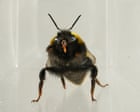
Researchers using high-speed, slow-motion cameras have captured bumblebees displaying distinct facial expressions that mimic the "liking" and "disliking" responses seen in mammals. When a bee tastes something delicious, it sticks out its tongue long after it finishes eating, almost like a toddler licking their lips. When it encounters something bitter, it violently shakes its head and wipes its mouth.
This isn't just a basic mechanical reaction to food. It is a window into the inner lives of bees, proving they possess a level of subjective experience we usually reserve for dogs, cats, or humans. If you still think insects are just mindless bugs, you are flat-out wrong.
The Slow Motion Video that Changed Everything
To understand how massive this discovery is, you have to look at how the experiment was built. A collaborative team from Macquarie University in Australia and Southern Medical University in Guangzhou, China, decided to look at bumblebees closer than anyone had before. Led by professors Andrew Barron, Fei Peng, and Cwyn Solvi, the researchers set up ultra-high-definition cameras to track the microscopic movements of bee mouthparts.
They tested bumblebees from 18 different colonies, presenting them with five distinct fluids:
- A high-concentration 60% sugar solution
- A mild 20% sugar solution
- Plain water
- A salty 5% salt solution
- A highly bitter 1 millimolar quinine solution
When the videos were slowed down, the results were unmistakable.
When a bumblebee drank the high-concentration sugar water, it didn't just move on to the next task. It exhibited a behavior the researchers call "post-consumption glossa protrusion." The glossa is the insect tongue. The bee repeatedly extended and retracted its tongue well after the liquid was gone. It was a lingering expression of pure satisfaction.
On the flip side, the reactions to the salt and quinine were pure disgust. The bees didn't just stop drinking; they aggressively shook their heads from side to side and used their front legs to physically wipe their mouths.
Moving Beyond Simple Chemical Reflexes
Skeptics will immediately argue that this is just a reflex. After all, a Venus flytrap closes when touched, but it doesn't "enjoy" eating a fly. The plant is just reacting to a physical trigger.
The researchers anticipated this objection and systematically dismantled it. They didn't just feed the bees; they altered the context of the feeding to see if the behaviors changed based on internal states. This is where the science gets truly fascinating.
They exposed the bees to various environmental stressors and internal shifts. They tested bees that were already entirely full. They tested bees under severe heat stress. They even administered compounds that interact with the endocannabinoid system, which is the exact same chemical pathway that regulates pleasure, appetite, and emotional processing in mammals.
The results showed that these mouth movements were completely dependent on context. A full bee or a heat-stressed bee didn't show the same lingering lip-licking behavior when given sugar. The expression changed because their internal state changed. The endocannabinoid system drugs directly altered how much the bees reacted to the sweet solutions.
If these movements were simple, automated reflexes, the bees would do them every single time their mouthparts touched sugar, regardless of how they felt or how hot the room was. Because the behavior shifted based on context and brain chemistry, it proves the bees are performing an affective evaluation. In plain English, they are deciding whether they like or dislike an experience based on how they feel in that exact moment.
The Myth of the Insect Machine
We have a long history of minimizing the consciousness of creatures that don't look like us. It is easy to feel empathy for a chiming chimpanzee or a crying whale. Their expressions mirror our own, and their brains are structurally familiar.
Insects have always been the ultimate outsiders. They have compound eyes, exoskeletons, and brains smaller than a grain of rice. Because of this alien anatomy, Western science spent decades treating them as simple input-output loops. You provide a stimulus, and you get a predetermined behavior.
This study adds to a growing mountain of evidence that this perspective is completely obsolete. Over the last few years, we have watched bees learn how to roll small balls to get rewards, share knowledge with their hive mates, use primitive tools, and even show signs of optimism after receiving a surprise treat.
Now we know they have a subjective point of view. They don't just detect the world; they experience it. They have an internal ledger of what feels good and what feels bad.
Why This Matters for the Future of Conservation
Understanding bumblebee behavior isn't just an academic exercise. It fundamentally alters our ethical obligations to the natural world. Right now, global bee populations are plummeting due to habitat loss, heavy pesticide use, and climate shifts. If we view them as expendable little biological drones, it is easy to shrug off their decline as a minor economic inconvenience for agriculture.
When you realize that these creatures have an inner life, that they can experience forms of distress, comfort, pleasure, and aversion, the conversation changes. Protecting them becomes a matter of direct animal welfare.
We can no longer design agricultural systems that treat pollinators as disposable assets. Every time a pesticide disrupts a bee's neurological function, it isn't just breaking a machine; it is altering the subjective experience of a living creature that is fully capable of feeling the world around it.
What You Should Do Next
The science is clear, and the way we interact with the environment needs to catch up. Here are the immediate steps we need to take based on this new reality:
Rethink Urban Spaces
Stop treating backyard lawns like sterile green carpets. Plant native wildflowers and leave patches of untamed dirt where bumblebees can nest. If these insects are experiencing their lives, we should make those experiences vastly less stressful.
Support Targeted Pesticide Restrictions
Advocate for policies that ban systemic neurotoxic pesticides. These chemicals don't just kill bees directly; they scramble their brains, ruining their ability to evaluate their surroundings and navigate back to their hives.
Pay Attention
The next time you see a bumblebee hovering over a flower in your garden, don't just look past it. Watch it closely. It is navigating a complex world of choices, preferences, and internal feelings. It is evaluating its life one drop of nectar at a time.