Cramps and sore muscles don't care about your schedule. One minute you're fine, and the next, your lower back feels like it's locked in a vice or your uterus is staging a violent rebellion. You reach for a heating pad, plug it in, and wait. Half the time, it barely gets lukewarm, or worse, it dies after three months of light use.
Let's fix that.
Finding a reliable heating pad for muscle aches and menstrual cramps shouldn't require reading fifty tech specs or gambling your money on anonymous online storefronts. The market is flooded with cheap electronics that either burn your skin or stop working entirely. You need something that actually holds heat, fits your body properly, and won't short out when you move around.
The Reality of Heat Therapy for Pain
Heat works because it dilates blood vessels, boosts circulation, and tells your nervous system to calm down. When you deal with severe menstrual cramps or tight lifting knots in your traps, localized warmth relaxes those contracting muscle fibers.
Dry heat is convenient. You plug it into the wall or throw it in the microwave, and you're good to go. But moist heat penetrates deeper. If you've ever used a hydrocollator pack at a physical therapist's office, you know that deep, soaking warmth feels entirely different from a standard dry electric pad.
Most people don't want to boil water or use clinic-grade equipment at home on a Tuesday night. That means choosing between electric convenience and therapeutic performance.
What Actually Matters When You Shop
Marketing teams love to throw around words like "therapeutic grade" or "advanced thermal tech." Ignore them. Look at these three actual factors instead:
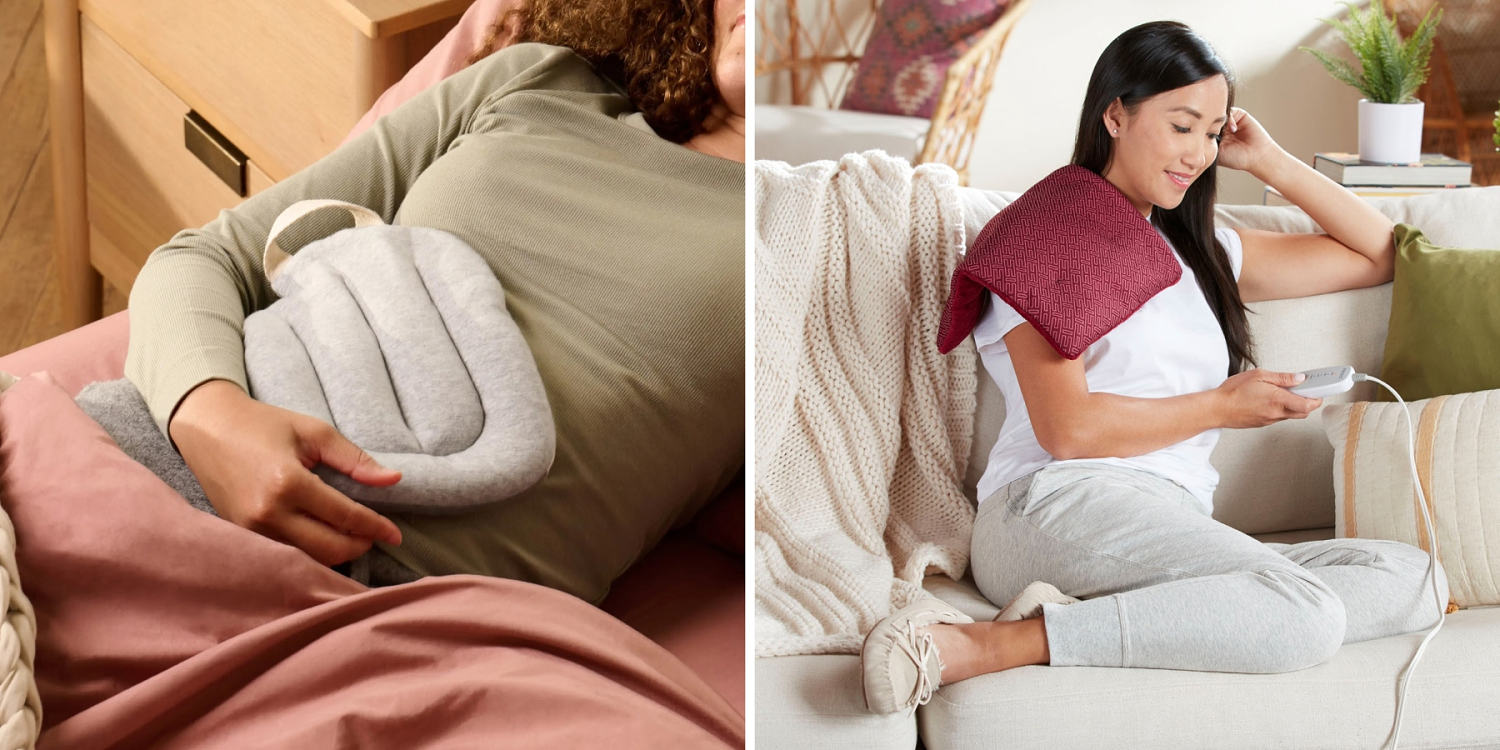
- Weight and flexibility: A stiff pad that bridges over your lower back or abdomen is useless. It needs to drape over your curves or wrap around joints. Weighted options filled with clay beads or flaxseed often beat rigid electric panels for contouring.
- Moist heat capability: Look for pads that allow a light water mist or feature flannel layers that draw moisture from the air. This single feature changes a mediocre heating session into actual relief.
- Control and safety shutoffs: If you fall asleep with a heating pad, you risk low-temperature burns. Auto-shutoff features aren't optional features; they are safety requirements.
Electric Versus Microwaveable Models
Electric heating pads give you continuous warmth without reheating. Brands like Walgreens and Sunbeam dominate this category because they offer massive surface areas and precise control settings. If you have widespread back pain or need sustained heat for hours while working at a desk, a corded electric pad with multiple heat settings makes sense.
The downside? You're tethered to a wall socket. If you want to move around your house or deal with cramps while pacing your apartment, a corded pad gets annoying fast.
Microwaveable options solve the mobility problem. Filled with millet, flaxseed, or rice, these pads mold tightly to your body. Bearaby and UNCN make popular weighted versions that double as cold compresses. You heat them up for a couple of minutes, and they stay hot for up to an hour. They cool down gradually, which naturally lowers your burn risk.
The catch is temperature control. If you overheat a grain-filled pad in the microwave, you have to wait for it to cool down. You can't just click a button to lower the intensity.
Avoiding Common Burn Mistakes
People burn themselves with heating pads all the time. It usually happens because they fall asleep with an electric pad on high or skip the cloth barrier.
Never place a bare heating pad directly against your skin, especially if you use a microwaveable pack straight out of the appliance. Always keep at least one fabric layer or towel between the heat source and your skin. Limit your sessions to twenty minutes at a time if the temperature runs high.
More importantly, never sleep with an electric heating pad turned on. Even with auto-shutoff timers, internal wires can bunch, overheat, and cause minor burns or fire hazards while you're unconscious.
Making Your Choice
If you want set-and-forget warmth for your desk chair, grab a standard large electric pad with an auto-off switch and moist-heat misting options. If you want portable, weighted pressure that hugs your abdomen during a brutal cycle, look toward a quality microwaveable wrap or a battery-operated portable option that fits under your clothes.
Stop settling for low-heat disappointment. Get a pad that fits your routine, protect your skin with a proper barrier, and take control of your recovery.