You can't fly over rural Africa without realizing how vast it is. For decades, traditional telecom giants like Orange, MTN, and Airtel looked at these massive, sparsely populated spaces and saw a financial black hole. Laying thousands of miles of fiber-optic cables through jungles or putting up cell towers in remote villages just didn't make business sense. The return on investment wasn't there.
Then came Elon Musk.
By sending thousands of low-Earth-orbit (LEO) satellites into space, SpaceX completely flipped the script. As of July 2026, Starlink is officially live or licensed in nearly 30 African countries, with Côte d'Ivoire being the latest to join the club. The service has fundamentally altered how the continent connects to the web. It didn't happen smoothly, though. It required navigating a messy mix of bureaucratic roadblocks, protectionist local telcos, and a thriving black market.
Bypassing the Traditional Gatekeepers
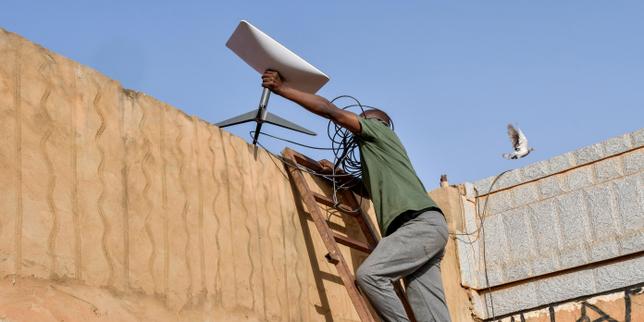
The real reason Starlink is winning in Africa isn't just about fast download speeds. It's about freedom from terrestrial constraints. If you want internet in a village outside of Nairobi or a mining camp in the Democratic Republic of Congo, you don't wait for a local telecom company to dig trenches. You buy a kit, point it at the sky, and you're online in ten minutes.
That simplicity terrified established internet service providers (ISPs). For years, local operators held a functional monopoly, charging high prices for mediocre, urban-centric connectivity. When Starlink started showing up, these companies didn't try to out-compete the technology. Instead, they ran straight to government regulators.
We saw this play out clearly in countries like Zimbabwe, Cameroon, and Kenya. Local incumbents lobbied hard for strict licensing rules and steep fee hikes to keep the American satellite giant out. In South Africa, the service hit a massive wall due to Broad-Based Black Economic Empowerment (B-BBEE) ownership rules, which require local equity ownership. Instead of backing down, Starlink users simply bought kits in neighboring countries like Mozambique or Eswatini and used roaming features to bypass the bans entirely.
The black market became so massive that governments realized they were losing millions in tax revenue while failing to stop the influx of hardware. One by one, the dominoes fell. Regulators had to adapt because their citizens demanded the access.
The Reality of the Urban Capacity Crunch
Don't buy into the myth that Starlink is a perfect, flawless fix for everything. It has a glaring bottleneck: density.
The system shines in rural areas where you're the only person for miles utilizing a specific satellite beam. Put that same dish in a dense urban center like Lagos, Lusaka, or Harare, and the experience changes. Musk himself acknowledged that the company is scrambling to increase capacity in dense African cities.
Data from Ookla's Speedtest Intelligence highlights a fascinating trend. While rural users are seeing massive, life-changing jumps in speed—DR Congo saw download speeds shoot up to over 80 Mbps—some urban areas are experiencing performance drops as more users crowd the network.
"Starlink's main advantage is providing internet where there's no good ground-based internet."
— Professor Sylvester Kaczmarek, Space Robotics Expert💡 You might also like: lower video size for discord
In big cities, local fiber networks and expanding 5G infrastructure are still cheaper and more reliable. Starlink was never meant to replace your city fiber line; it was built to fill the massive gaps where fiber will never go.
If You Can't Beat Them, Partner With Them
The narrative is shifting from bitter rivalry to survival-driven collaboration. Local telecom companies are realizing that fighting Starlink is a losing battle. The smart ones are choosing to collaborate.
Look at Airtel Africa. Instead of trying to build competing satellite arrays, they signed a massive partnership with SpaceX to integrate Starlink's LEO technology directly into their own service offerings. Mobile operators are now planning to use Starlink for cellular backhaul. Basically, they'll use satellite links to connect remote cell towers back to their core networks, saving them the insane costs of running physical cables through difficult terrain.
We're also seeing this evolution with MTN in Zambia. This dual model—where Starlink acts as both a direct-to-consumer product and an infrastructure backbone for existing telcos—is how the continent achieves true digital inclusion.
What This Means For the African Digital Economy
The economic impact here isn't theoretical. It's felt immediately by businesses that were previously cut off from the global market.
- Agriculture: Remote farms can now use IoT sensors to monitor crop health and access real-time global pricing data.
- Education and Healthcare: Governments are using pilot programs to connect thousands of rural schools and clinics to online learning and telemedicine.
- Mining and Energy: Remote extraction sites no longer operate in communication blackouts, drastically improving safety and operational efficiency.
The initial hardware cost remains a steep hurdle. Spending $200 for a Starlink Mini or nearly $400 for a Standard kit is a massive investment in countries where the average monthly income is low. But for communities, schools, and local businesses, that upfront cost pays for itself almost instantly.
Your Move
If you're operating a business in Africa or managing operations in remote regions, relying purely on traditional terrestrial networks is a major risk.
- Audit your current connectivity vulnerability. Identify which of your regional hubs or remote sites suffer from frequent fiber cuts or poor cellular coverage.
- Evaluate the regulatory status. Check the live availability map for your specific country, as licensing status changes fast. If you're in a newly approved market like Côte d'Ivoire or Uganda, look into official local distributors to avoid customs headaches.
- Consider a hybrid setup. Use local fiber or 5G as your primary line in major cities, but deploy Starlink as an immediate, un-cuttable backup system.