Governments love to claim they were caught off guard. It is the oldest playbook in politics, and Prime Minister Pedro Sánchez just tried to use it again.
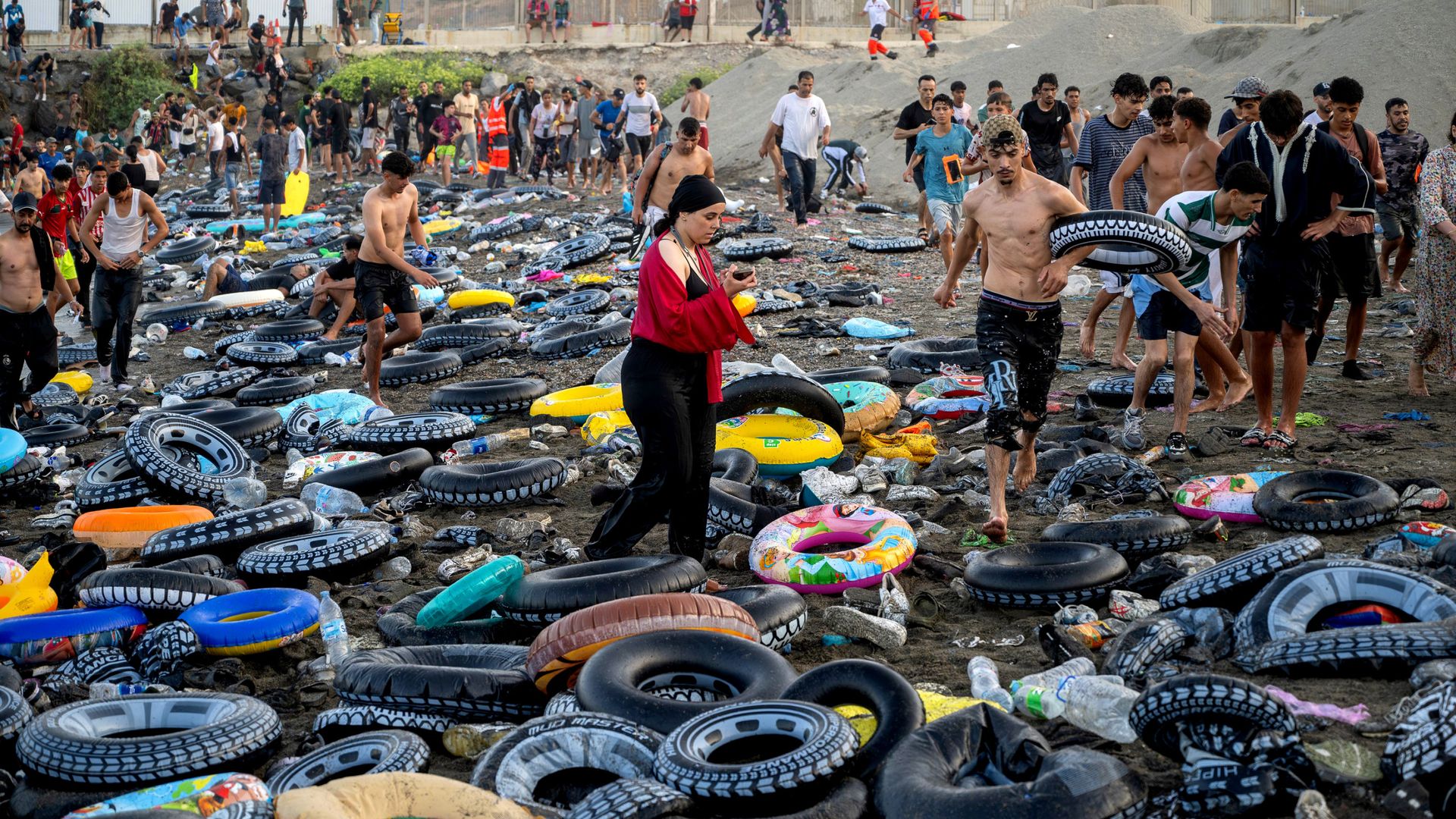
Newly declassified documents reveal that Spain's national intelligence agency explicitly warned Madrid and local authorities about a massive planned border crossing into the exclave of Ceuta a full day before thousands of people breached the fences. On July 29, the CNI sent urgent alerts via WhatsApp and official channels detailing social media calls for an assault on the border. They even pointed out specific groups boasting a combined following of 180,000 users.
Yet, when the crisis hit on July 30, politicians shrugged and claimed nobody could have predicted the scale. Let’s look at what the files actually show, why the government's defense falls apart, and what this means for border security going forward.
What the Declassified Files Actually Prove
The release of 40 internal documents—featuring intelligence reports, law enforcement chats, and operational updates—shatters the official narrative.
On July 29, Spain's intelligence services did not just send a casual heads-up. They transmitted direct warnings to the government's delegation in Ceuta, Moroccan intelligence, and the Civil Guard police force. The messages warned that groups on Facebook and WhatsApp were organizing a two-pronged attack: climbing the border fences and swimming around them by sea.
They even highlighted that the breach would coincide with Morocco's national Throne Day on July 30, a period historically prone to heightened movement.
Defense Ministry reports drafted as the border was being overrun pointed an accusing finger outward, noting that Moroccan security forces stood by passively, acting with outright negligence. One internal report warned that Morocco might be exploiting the chaos to advance its own geopolitical leverage.
The Politics of Blame and Accountability
Sánchez has fought hard to contain the fallout. He took to social media to defend his administration, arguing that while online campaigns were monitored, the intelligence did not accurately forecast the sheer magnitude of the crisis.
Critics aren't buying it. Opposition politicians accuse the prime minister of playing defense for Rabat and shielding Morocco from diplomatic blowback. If intelligence agencies are spelling out the exact date, the methods, and the social media mobilization channels, claiming you didn't know the exact head count is weak governance.
Local officials in Ceuta are dealing with the messy reality of the fallout. While the national government claims about 5,000 migrants remain trapped in the small city, local authorities place the number closer to 10,000. It is a chronic humanitarian strain on an exclave with finite resources.
Why Intelligence Failures Keep Repeating
When security agencies sound the alarm and political leaders fail to act, it points to a systemic breakdown between intelligence gathering and crisis preparation.
- Information Silos: Intelligence reports often sit on desks or vanish into bureaucratic channels instead of triggering immediate operational lockdowns.
- Geopolitical Hesitation: European nations frequently walk on eggshells when dealing with North African migration partners, fearing diplomatic freezes more than border vulnerabilities.
- Underestimating Digital Organizing: Social media mobilization moves faster than traditional border defenses can adapt, turning localized online chatter into physical crowds of thousands overnight.
If you are tracking how border policies break down, the lesson is clear. The warning signs are almost always there in the open. The failure is rarely a lack of intelligence; it's a lack of political willingness to prepare for the worst-case scenario before it arrives at your doorstep.