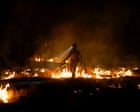
You can smell the smoke from miles away, and honestly, the situation across Western Europe right now is terrifying. Spanish Prime Minister Pedro Sánchez just warned that the next 12 hours are completely decisive. Firefighters are racing against the clock as a fresh, punishing heatwave sweeps across Spain and France, threatening to undo days of grueling progress on the ground.
If you're wondering why these wildfires are so impossibly hard to stop, you have to look at the numbers. This year alone, blazes have scorched over 172,400 hectares in Spain and close to 50,000 hectares in France. Over 330,000 people have been forced to flee their homes or lock down over the past week as flames roar through parched pine forests.
The Reality on the Ground
Visiting the forward command post in Navalcarnero near Madrid, Sánchez gave a cautious update. Things are moving in a favorable direction, but nobody is celebrating yet. Temperatures are climbing past 40 degrees Celsius again, creating a volatile trap of low humidity and dry winds.
Fire crews are dealing with a nightmare scenario born from weather extremes. Winter left behind an unusually heavy carpet of grass and vegetation. Then, consecutive summer heatwaves baked that green growth into absolute tinder. When fires spark in these conditions, they don't just burn—they explode.
- Over 200,000 people have faced evacuation orders or confinement across both countries at peak moments.
- The largest recorded fire in Ávila swallowed 50,000 hectares alone.
- Hundreds of thousands of tourists and locals have been rushed out of coastal hotspots like the Cap Ferret peninsula in France.
Why the Next Few Hours Matter Most
Consolidating a wildfire perimeter is brutal work. When flames die down temporarily, smoldering roots and deep forest litter can reignite instantly if a sudden gust of wind picks up. That is why officials are treating these critical hours as a make-or-break window.
Local emergency services are focusing entirely on securing perimeters and drowning out hidden hotspots before the afternoon heat peaks. While some evacuated residents near Madrid have thankfully been allowed back home, emergency coordinators are warning everyone to stay alert.
You also have to contend with the digital noise. Misinformation spreads fast on social media during crises, prompting authorities to constantly urge residents to trust official meteorological data rather than internet hoaxes.
Moving Forward Through the Smoke
We are past the point of treating these summers as anomalies. Scientists point out that Europe is warming at twice the global average rate, turning seasonal heat into recurring national emergencies.
If you live in or are traveling through affected regions in Southern Europe, keep your emergency bag packed, follow local civil protection updates closely, and obey evacuation orders immediately. Lives depend on acting before the wind turns.