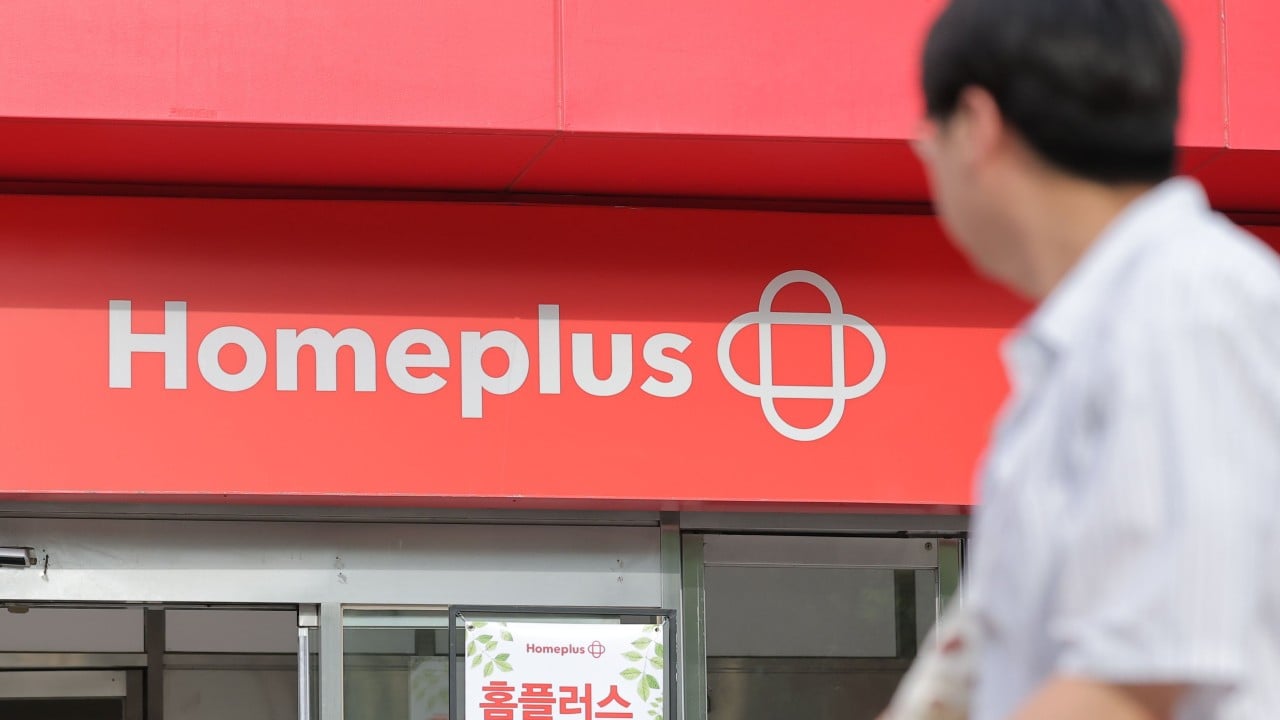
Big-box retail in South Korea is hitting a brick wall. The recent collapse of Homeplus, once the country's second-largest hypermarket chain, isn't just a corporate bankruptcy story. It's a flashing red warning light for the entire traditional retail industry.
When the Seoul Bankruptcy Court terminated Homeplus's corporate rehabilitation proceedings in July 2026, it marked the end of an era. The company, which boasted over 140 massive stores at its peak, has been hacked down to just 67 locations, staring directly into liquidation. While it’s tempting to blame this entirely on the company’s private equity buyout debt, the reality is much harsher. South Korean consumers simply don't have the time or patience for giant suburban supermarkets anymore.
The Death of the Weekend Shopping Trip
For decades, the standard routine for a Seoul family involved driving to a massive hypermarket on Saturday morning, fighting for parking, and loading up a giant cart with enough groceries to last two weeks. Today, that routine feels ancient.
South Koreans are intensely time-poor. The combination of grueling work hours, long commutes, and a massive surge in single-person households has shifted the consumer mindset from "buying in bulk" to "buying for tonight." When you live alone in a studio apartment, buying a 20-kilogram bag of rice or a twin-pack of giant detergent bottles makes zero sense.
The numbers tell a brutal story. According to the National Data Agency, South Korea's hypermarket retail sales totaled 36.41 trillion won in 2025, contracting 1.9% year-on-year. Retail sales growth at large formats has basically flattened to a standstill, dropping from double-digit growth a few years ago to a near-frozen 0.01% in 2025. Once you account for inflation, big-box retail is actively bleeding out.
The Coupang Effect and the Rise of Quick Commerce
So, where did all those shoppers go? They didn't stop eating. They just outsourced the physical labor of shopping to their smartphones.
E-commerce giants like Coupang have effectively weaponized convenience. Why spend two hours navigating crowded supermarket aisles when Coupang's Rocket Delivery can drop fresh milk and pre-cut vegetables at your front door before 7:00 AM? The moment consumers realized they could get high-quality fresh food delivered overnight without lifting a finger, the traditional hypermarket lost its primary anchor.
Every 1% rise in online spending directly slashes hypermarket sales by an estimated 0.264%. While hypermarket sales dropped more than 5% in mid-2026, online sales jumped nearly 9%. It’s a structural migration, not a temporary dip.
The Split Battleground: Under 1,000 Won vs. Pure Experience
Surviving players like E-Mart and Lotte Mart aren't sitting still while Homeplus burns. They are radically shifting their strategies to adapt to this new "short-form" society, splitting their focus into two extreme ends of the spectrum: absolute cheapness and premium distraction.
The Sub-1000 Won Battleground
With persistent inflation squeezing wallets, E-Mart and Lotte Mart are aggressively targeting one- and two-person households by shrinking package sizes and slashing prices to the absolute bone. The newest warfare is happening on the "1,000 won shelf" (about 66 cents). E-Mart has rolled out its "5K Price" private-label line, offering essentials like single-serve beef bone broth and small food ingredients for 980 won. Lotte Mart has matched this with its own ultra-low-priced lines.
Experiential Spaces
If retailers want people to actually leave their apartments, they have to offer something a screen can't replicate. Giant aisles of cardboard boxes don't cut it. Retailers are turning physical locations into content hubs and experiential spaces. Look at the massive success of The Hyundai Seoul or the trendy pop-up districts in Seongsu-dong. Stores are transitioning from transactional warehouses into places built around social media engagement, exclusive dining, and immediate entertainment.
A Two-Horse Race for the Windfall
With Homeplus clearing out of the market, its annual sales of roughly 6 trillion won are up for grabs. Short-term data shows a synchronized uptick for the survivors. When Homeplus shuttered a massive batch of stores, nearby E-Mart and Lotte Mart branches saw sales jumps between 9% and 11%, with some specific locations surging past 20%.
But analysts agree that this windfall won't land evenly. E-Mart stands to win the lion's share of departing customers.
- Footprint Dominance: Out of the remaining Homeplus stores, about half are packed into the Seoul metropolitan area. E-Mart operates 90 stores in this crucial region compared to Lotte Mart's 55.
- Scale Advantage: Nationwide, E-Mart leads with 157 locations, while Lotte Mart sits at 112. E-Mart's warehouse club chain, Traders, provides an immediate alternative for the remaining bulk-buyers.
Lotte Mart recognizes its domestic footprint deficit and is placing its chips elsewhere. Instead of building more giant stores, it’s investing heavily in automated logistics, utilizing AI-powered fulfillment tech through its new Zeta Smart Center in Busan to fight Coupang on its own turf.
What Retailers Must Do Next
The collapse of Homeplus proves that being big is no longer a defense mechanism; it’s a liability. If you're managing a retail brand or investing in consumer spaces, the playbook has completely changed.
First, audit your physical footprint immediately. Identify underperforming large-format space and aggressively downsize or convert it into neighborhood-level micro-fulfillment centers. You need to be closer to where the consumer lives, not where they have to drive.
Second, stop selling commodities offline. If a customer can buy an item on their phone while sitting on the toilet, do not dedicate premium shelf space to it. Reallocate that square footage to high-margin private label goods under the 1,000 won mark, or pivot the space entirely toward sensory experiences, fresh dining, or exclusive brand partnerships. The future belongs to retail spaces that treat consumers like guests looking for a break, not pack mules looking for groceries.