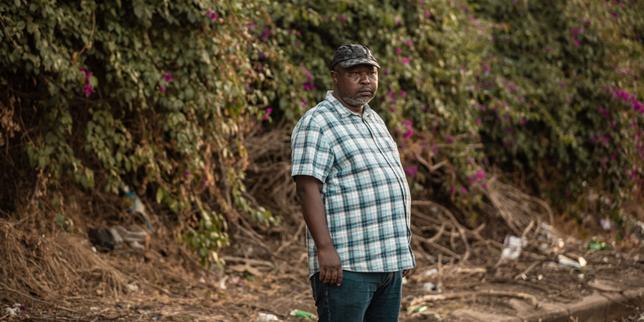
In Pietermaritzburg, living like a ghost isn't a choice—it's a survival tactic. Thabiso Zulu has been sleeping in different beds, dodging suspicious cars, and looking over his shoulder for years. Locals refer to him as a "walking corpse," a tag he earned simply by refusing to keep quiet while public funds disappeared into private pockets.
If you want to understand how deep local corruption runs in KwaZulu-Natal, you don't need a thick academic report. You just need to look at what happens to the people who dare to point it out.
The Price of Exposing Fraud in Municipal Tenders
Back in 2017, Zulu and his close friend Sindiso Magaqa—a former ANC Youth League Secretary-General—stumbled upon a massive scam in the uMzimkhulu Local Municipality. Millions of rands set aside for public infrastructure, including the renovation of a local memorial hall, were being funneled into fake contracts. Companies that didn't do a single hour of actual work were getting paid millions.
Magaqa demanded a forensic audit. Shortly after, in July 2017, hitmen ambushed him. He died months later from his injuries.
At Magaqa's funeral, televised live across the nation, Zulu didn't hold back. Standing in front of top party leaders, he declared publicly that his friend was murdered for exposing thieves inside the ruling party. That moment marked the end of Zulu's normal life.
Testifying at the Moerane Commission and the Fallout
Zulu didn't back down. He brought his evidence directly to the Moerane Commission of Inquiry, which was set up to investigate the wave of political assassinations across KwaZulu-Natal.
He gave names. He handed over dossiers showing how municipal officials, politicians, and contract syndicates worked together. His testimony led to charges against eight municipal officials for fraud and money laundering.
The reaction from those in power was swift and brutal.
- No police protection: In 2018, the Public Protector issued a report confirming an immediate threat to Zulu's life and ordered the police service to provide him with bodyguards.
- State pushback: Instead of assigning security, the Police Minister and the presidency went to court to challenge the Public Protector's findings.
- An ambush in Pietermaritzburg: In October 2019, gunmen pulled up beside Zulu while he was walking in Copesville and opened fire. Bullet wounds sent him to the hospital, but he checked himself out early, terrified that hitmen would finish the job in his hospital room.
Key Milestones in the Thabiso Zulu Case

2017: Sindiso Magaqa assassinated after exposing uMzimkhulu municipal fraud.
2018: Public Protector orders state security for Zulu; government appeals in court.
2019: Zulu survives a shooting in Pietermaritzburg, goes into hiding.
2020: Police raid Zulu's home and arrest him on trumped-up charges later dropped.
2026: Zulu continues testifying before inquiries on criminal justice interference.
When Law Enforcement Becomes the Threat
You'd think the police would focus on hunting down the hitmen who shot an unarmed activist. That's not what happened.
Instead of protecting him, law enforcement officers turned their attention onto Zulu himself. In mid-2020, after he led a peaceful community protest over missing basic services like water and electricity in Ward 29, police kicked down his door in a midnight raid. They pepper-sprayed him, beat him, and dragged him into a cell on charges of inciting violence. The state had to drop the charges later because they had zero evidence.
A year later, they arrested him again on dubious assault allegations right before political rallies. Zulu called it what it was—an organized campaign to destroy his reputation and confiscate his phone to access his contacts.
When the state refuses to protect whistleblowers and actively uses law enforcement to harass them, it sends a loud message to everyone else: keep your mouth shut.
The Flawed Protection System in South Africa
The legal structure for protecting whistleblowers in South Africa is broken. The Protected Disclosures Act looks great on paper, but it offers almost no real physical safety when hitmen enter the picture.
If you blow the whistle in South Africa, you face three main hurdles.
First, witness protection programs are designed primarily for court witnesses inside criminal trials, not for public activists exposing political syndicates.
Second, the state agency assigned to protect you might be run by the very politicians you're exposing. That creates an obvious conflict of interest.
Third, the legal battles drag on for years. While politicians use taxpayers' money to appeal protective orders in court, whistleblowers pay out of pocket just to stay alive.
What Needs to Change to Protect Truth-Tellers
We can't keep asking individuals to sacrifice their lives to keep public officials honest. Real reform requires immediate, structural changes.
- Independent Security Assessment Bodies: Threat assessments should be handled by non-political, independent security agencies rather than political appointees.
- Emergency Funding for Activists: Whistleblowers need immediate access to legal funds, secure housing, and living stipends the moment a verified threat is identified.
- Severe Penalties for Retaliation: Officials who use police power or state resources to harass whistleblowers must face mandatory prison sentences.
- Fast-Tracked Audits: When a whistleblower exposes tender fraud, financial intelligence units must automatically freeze the contested bank accounts within 48 hours.
Thabiso Zulu's ongoing struggle isn't just one man's fight against local municipal thieves in KwaZulu-Natal. It's a test case for whether democratic institutions can protect the citizens who risk everything to hold power accountable. Until the state stops treating truth-tellers like enemies, corruption will continue to thrive in the shadows.