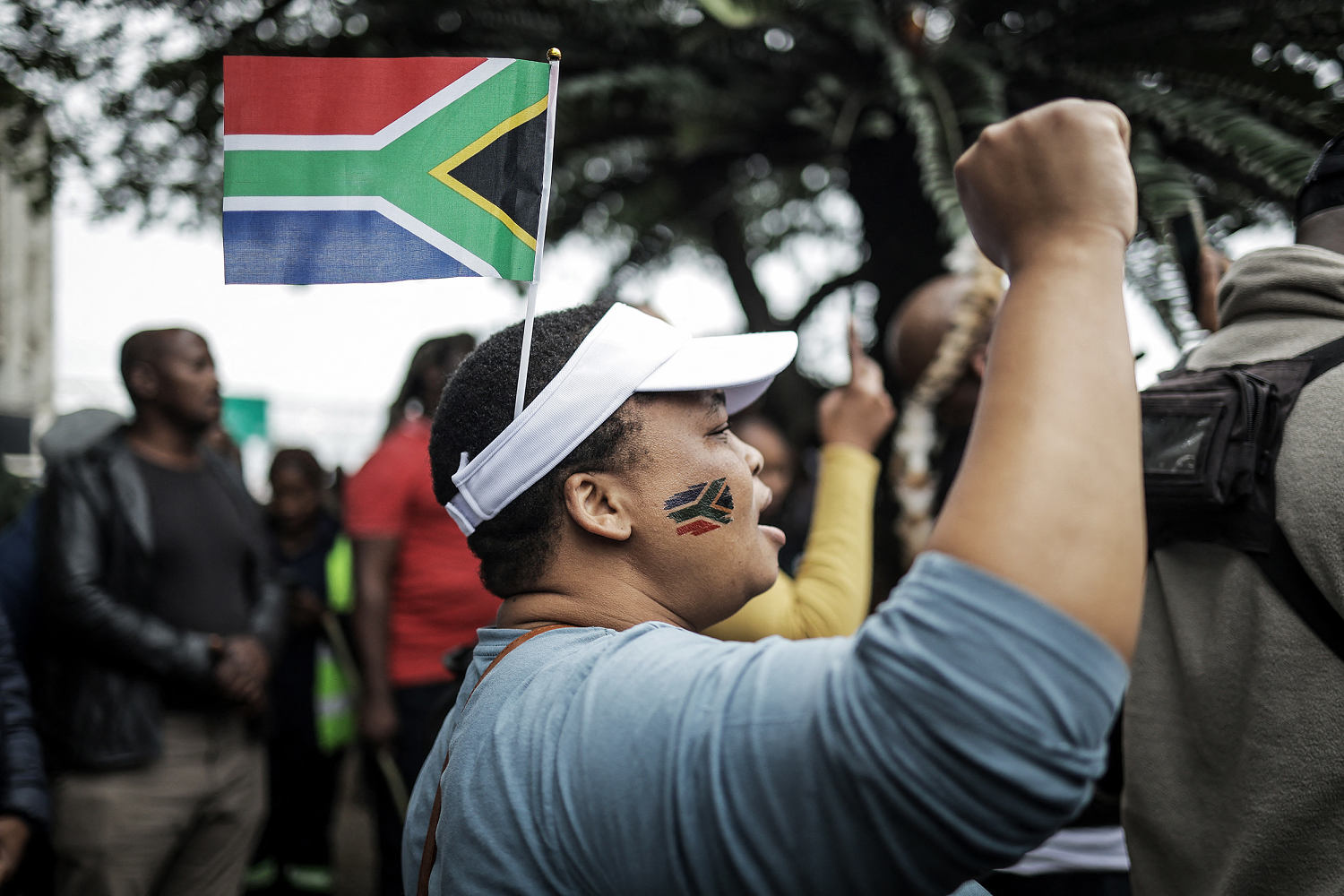
South Africa just hit a boiling point. On June 30, 2026, the country woke up to shuttered storefronts, heavily armed police patrols, and thousands of demonstrators marching through major urban hubs. By the time the sun went down, law enforcement had processed more than 900 arrests nationwide.
This was not a sudden, random outburst. It was the climax of a coordinated campaign by anti-immigration groups who issued an ultimatum to undocumented foreign nationals to pack up and leave.
If you are looking at the headlines from the outside, it is easy to misinterpret what is happening. Some international outlets portray it as sheer chaos, while others downplay the severity. The reality on the ground is far more complicated, driven by deep economic anxieties, political finger-pointing, and a growing sense of desperation among local citizens and foreign residents alike.
Inside the Numbers of a Nationwide Crisis
The scale of the June 30 demonstrations caught many off guard. Deputy National Police Commissioner Tebello Mosikili confirmed that organizers staged 120 separate protest marches across the country's nine provinces.
While the official police report stresses that 108 of those marches proceeded peacefully, the remaining 12 required immediate tactical intervention. When things went wrong, they went wrong fast. Law enforcement spent the day and night fighting back localized pockets of property destruction, looting, and targeted assaults.
The 900 arrests tell a mixed story. Police did not just round up protesters. The stack of charges shows how chaotic the environment became. Officers detained individuals for public violence, business robbery, and arson. At the same time, immigration officials used the heavy police presence to round up and detain hundreds of undocumented migrants for violating national immigration laws.
In the Eastern Cape alone, authorities booked nearly 250 people, including 200 undocumented foreign nationals. This highlights the double-edged nature of the day. It was a protest against the presence of undocumented individuals, but it also became an enforcement dragnet.
Bloodshed in the Streets of Johannesburg
The most dangerous flashpoints ignited in Gauteng, the country's economic heartland. In Johannesburg's high-density Hillbrow neighborhood, the situation turned bloody.
Gunfire erupted directly into a crowd of protesters. Three suspects allegedly opened fire, wounding two people. One of those victims was a 17-year-old bystander caught in the crossfire. Police later tracked down the three suspects, confiscated two licensed firearms, and initiated attempted murder charges. The state even deployed military units to Hillbrow overnight to prevent total anarchy.
A few miles north, Alexandra township faced a grimmer night. Mobs moved through the streets under the cover of darkness, targeting foreign-owned small businesses, known locally as spaza shops.
Arsonists set multiple buildings ablaze. Shopfronts were smashed open and picked clean. By morning, authorities confirmed that the violence in Alexandra had claimed at least one life. This brings the death toll from localized xenophobic flare-ups over the past three months to at least ten people.
The Triggers Behind the Outburst
To understand why thousands of South Africans took to the streets, you have to look past the political rhetoric and examine the daily fight for survival. This is not just about prejudice. It is about a severe scarcity of resources.
South Africa struggles with one of the highest unemployment rates in the world. Walk into any major township or urban center, and you will meet young people with university degrees sitting on street corners. They cannot find work. They feel abandoned by their own government.
When people are hungry and hopeless, they look for someone to blame. Right now, a significant portion of the population blames undocumented immigrants.
Local communities frequently complain that undocumented migrants take informal jobs, undercut local wages, and operate unregistered spaza shops that do not pay taxes. There is a widespread belief that the country's borders are porous and that the department of home affairs has completely lost control of immigration tracking.
Anti-immigration groups like March and March capitalised on this anger. They set June 30 as a hard deadline, spreading false claims on social media that the government would launch mass deportations on that day. They created a false sense of official backing, which pushed thousands of ordinary, frustrated citizens to join the marches.
Vigilantism vs State Control
President Cyril Ramaphosa did not mince words when addressing the nation about the unrest. He made it clear that while citizens have a constitutional right to peaceful protest, that right does not extend to intimidation, vandalism, or violence. He stated plainly that taking the law into your own hands is vigilantism, and the state will not tolerate it.
The problem is that many citizens feel the state left a vacuum. When communities believe that local police are corrupt or indifferent to illegal immigration, vigilante groups step in.
We are seeing a dangerous disconnect. The government insists it is fixing the immigration system, but the people living in working-class neighborhoods say they see zero change on the ground. They hear promises, but they experience the same daily economic stagnation.
This lack of trust makes the situation incredibly volatile. When a group like March and March sets a random deadline, people follow them because they feel nobody else is doing anything.
What This Means for Residents and Foreign Nationals
If you are living or working in South Africa right now, you cannot afford to ignore these shifting dynamics. This is no longer a minor political debate. It is an operational risk for businesses and a safety concern for families.
Foreign nationals, particularly those from neighboring African countries, are living in a state of constant fear. Thousands have already fled their homes or shuttered their shops in anticipation of further violence. The threat of targeted attacks remains high in informal settlements and high-density urban areas.
For local business owners, the threat of collateral damage is real. Riots do not always discriminate. When a mob starts looting spaza shops, standard commercial properties frequently get caught in the wake. Supply chains get disrupted, public transport grinds to a halt, and workers cannot get to their jobs safely.
Immediate Safety Steps to Take Now
Navigating this tense environment requires practical awareness. You should not panic, but you absolutely must prepare.
Monitor Hyper Local News
National news broadcasts are often too slow to report sudden blockades or neighborhood confrontations. Use verified local community groups, regional security alerts, and real-time traffic apps to track unrest. If you see reports of gatherings in areas like Hillbrow, Alexandra, or specific townships, avoid them entirely.
Secure Informal and Retail Operations
If you operate a retail business in an area prone to protests, install reinforced shuttering and establish an early-closing protocol. Do not try to defend property at the expense of personal safety. Ensure your commercial insurance policies specifically cover civil unrest and rioting through the South African Special Risks Insurance Association.
Verify Legal Documentation
If you are a foreign national working or living in South Africa, ensure your permits and visas are fully up to date and physically accessible. Carry certified copies of your identification documents. Avoid areas with high political tensions, and do not engage with informal community patrols or self-styled immigration inspectors.
The events of June 30 proved that South Africa's immigration debate is no longer confined to parliament. The streets have taken ownership of the issue, and until the underlying economic misery is resolved, the threat of further disruption remains a daily reality. Stay informed, protect your operations, and put personal safety ahead of everything else.
:quality(85)/Mp/Yp/2p5ae8FJtFWypSo8rM/6f889f29-54f6-453d-a332-41914679edeb.jpg)