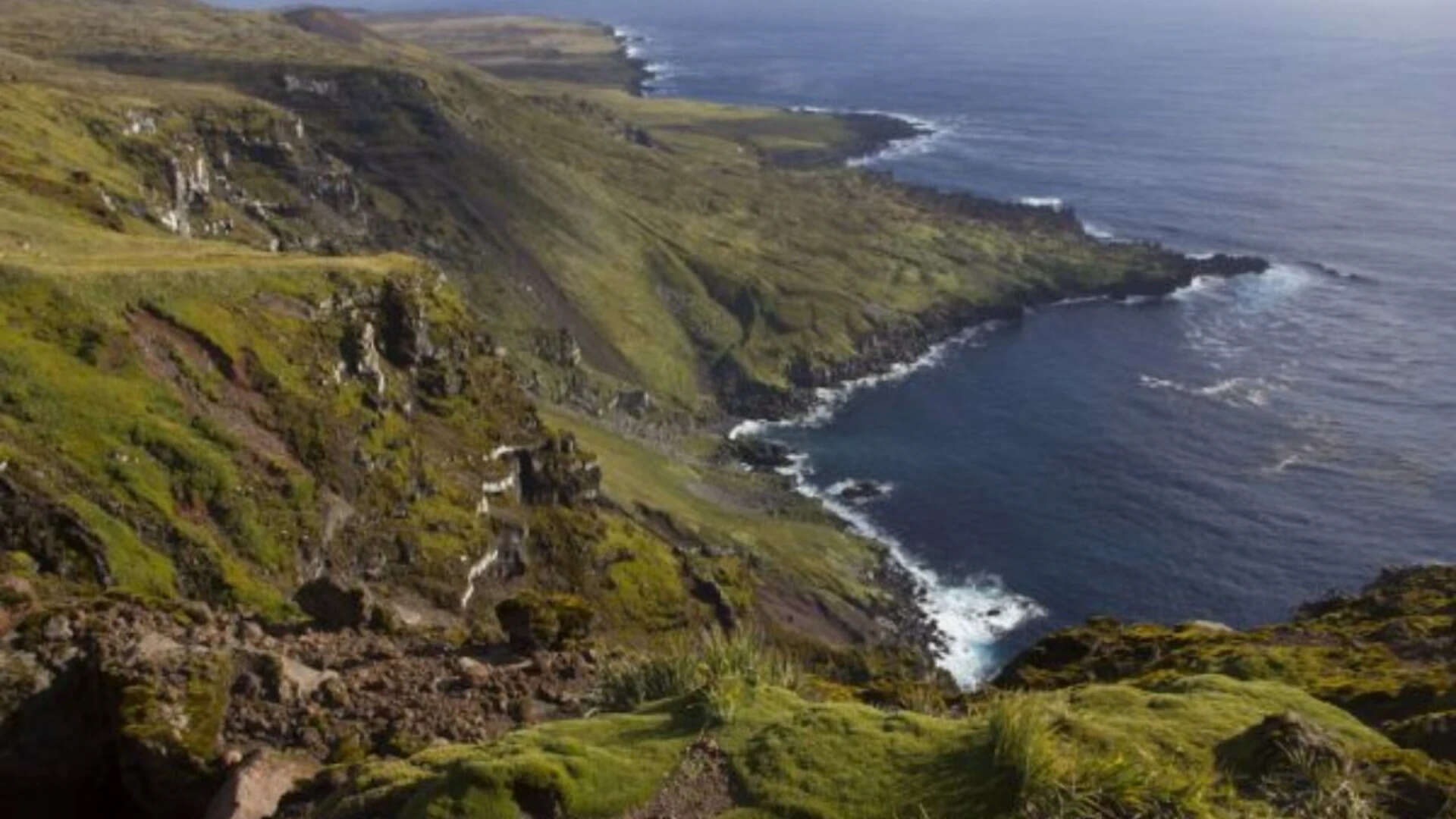
Imagine an island so remote that it takes days by ship across some of the roughest seas on Earth just to catch a glimpse of its rocky shores. This is Marion Island. Located about 1,900 kilometers southeast of Cape Town, this subantarctic patch of land serves as a vital sanctuary for millions of breeding seabirds, including the iconic wandering albatross. For centuries, these birds nested safely, far away from land-bound predators.
Today, a horrific nightmare unfolds on these dark volcanic beaches. A massive population of ordinary house mice is eating these giant birds alive.
To stop an ecological catastrophe, conservationists and the South African government are preparing one of the most aggressive environmental interventions in history. The plan sounds insane. They intend to deploy six helicopters to drop 550 tons of rodenticide bait across every square meter of the island. The operation carries a $10 million price tag, and its success hinges on a brutal truth. If they miss even one pregnant mouse, the entire mission fails.
The Island Where Mice Became Monsters
House mice don't belong on Marion Island. They arrived in the early 19th century, hitching a ride on the wooden ships of European seal hunters. For a long time, the mice lived relatively quiet lives, feeding on local seeds and tiny invertebrates. The island was cold, wet, and unforgiving.
Things changed. Climate change has fundamentally altered the environment of the southern Indian Ocean. Over the past few decades, Marion Island has become warmer and drier. This subtle shift gave the mice a massive advantage. Their breeding season stretched out, allowing females to produce multiple litters a year with up to eight pups per litter.
Soon, the mouse population exploded to over a million individuals. As winter hits and the local insect populations plunge, these million-plus mice run out of food.
They looked around and found a new food source: nesting seabirds.
Because seabirds evolved on islands completely devoid of land predators, they have zero defense mechanisms against rodents. An albatross chick sits on its nest and ignores a mouse because it doesn't recognize the tiny mammal as a threat. The mice realized they could walk right up to a nesting bird and start chewing.
Researchers on the island began documenting stomach-churning scenes. Mice attack in groups at night, literally eating the flesh off the heads and backs of live albatross chicks. The helpless birds sit still, protecting their nests, while being eaten alive. Without intervention, scientists estimate that 19 of the 29 seabird species breeding on Marion Island could face local extinction within decades.
The Tragic History of Human Interventions
This isn't the first time humans have tried to fix the ecological mess they created on Marion Island. In fact, the current mouse crisis is the direct result of a previous conservation disaster.
In 1948, South Africa officially annexed the island and set up a meteorological station. The staff quickly grew miserable because mice overran their living quarters. Sailors even nicknamed their shelter "Mouse Inn" after finding rodents floating in their soup. To combat the pest problem, humans brought four domestic cats to the island in 1949.
They didn't fix the cats.
By the 1970s, those four companion pets bred out of control, turning into a feral army of over 2,000 wild cats. The cats quickly realized that catching fast-moving mice in the dense vegetation was hard work. Harvesting helpless, ground-nesting seabirds was incredibly easy. The feral cats began slaughtering an estimated 455,000 birds every single year, driving entire species like the common diving petrel to local extinction on the island.
South Africa had to launch a massive, grueling 19-year campaign to eradicate the cats. They used a combination of a feline panleukopenia virus, traps, hunting dogs, and night-time spotlight shooting. The last cat was finally eliminated in 1991.
While the birds got a temporary reprieve from the cats, the apex predator of the island was gone. With the cats out of the picture and the climate warming up, the mouse population exploded exponentially. The island fell back into chaos.
Inside the $10 Million Aerial Assault
You can't catch a million mice with traditional traps, especially not across 30,000 hectares of rugged, volcanic terrain. That's why the Mouse-Free Marion project—a massive partnership between BirdLife South Africa and the Department of Forestry, Fisheries and the Environment—is going all-in on an aerial bombardment.
The logistics are mind-boggling. The team has to charter a ship to transport six helicopters, pilots, mechanics, and 550 tons of customized poison bait across the treacherous "Roaring Forties" ocean corridor.
The strategy relies on absolute precision. The helicopters will utilize advanced GPS tracking systems to fly perfectly overlapping paths across the entire island. They will use specialized underslung buckets to scatter the rodenticide pellets evenly.
Every single cliff, valley, and beach must receive bait. If the helicopters miss a single pocket of land, a few mice will survive. Because mice reproduce so quickly, a handful of survivors could rebuild the entire million-strong population in just a few years, wasting the entire $10 million budget.
Dr. Anton Wolfaardt, the manager of the Mouse-Free Marion project, openly admits there is no perfect solution. Dropping hundreds of tons of poison into a protected nature reserve is a massive environmental gamble. However, the bait is specifically engineered to resist breakdown by rain just long enough for the mice to consume it, without dissolving into the soil or contaminating the island's pristine water sources.
Managing the Collateral Damage
Whenever you drop poison from the sky, non-target species face serious risks. Skuas, gulls, and lesser sheathbills might look at the bait pellets or the carcasses of poisoned mice and decide to take a bite.
The project organizers are executing the operation during the depths of the austral winter to minimize this risk. During these freezing months, the mice are starving, making them highly likely to eat the bait immediately. Crucially, many of the island's migratory bird species leave the area entirely during the winter, drastically reducing the number of animals exposed to secondary poisoning.
For the birds that stay year-round, the risk of losing a few individuals to accidental poisoning is a price scientists are willing to pay. A brief, controlled loss is far better than watching 19 entire species get slowly wiped out by an unstoppable rodent plague.
What Happens Next
A large-scale operation like this takes years of meticulous preparation. The team is currently raising the remaining funds needed to cover the immense operational costs, boosted by a recent $10 million pledge from an international foundation based in Switzerland.
Before the full-scale bombardment begins, the project is launching an aerial test scheduled for April and May 2027. This preliminary phase will use a single helicopter to drop bait over a 1,000-hectare trial zone. The test will allow team leaders to evaluate how the equipment holds up against the brutal subantarctic winds and ensure the flight paths are perfectly calibrated.
If the 2027 test succeeds and funding holds, the main eradication effort will follow. It will stand as the largest single island rodent eradication attempt in human history.
If you want to track the progress of this massive conservation effort or support the mission, you can visit the official Mouse-Free Marion project website. They run a "Sponsor a Hectare" campaign where citizens can fund the eradication of specific zones of the island. Saving an island ecosystem requires moving past good intentions; it demands precision, funding, and the stomach to make incredibly difficult ecological choices.