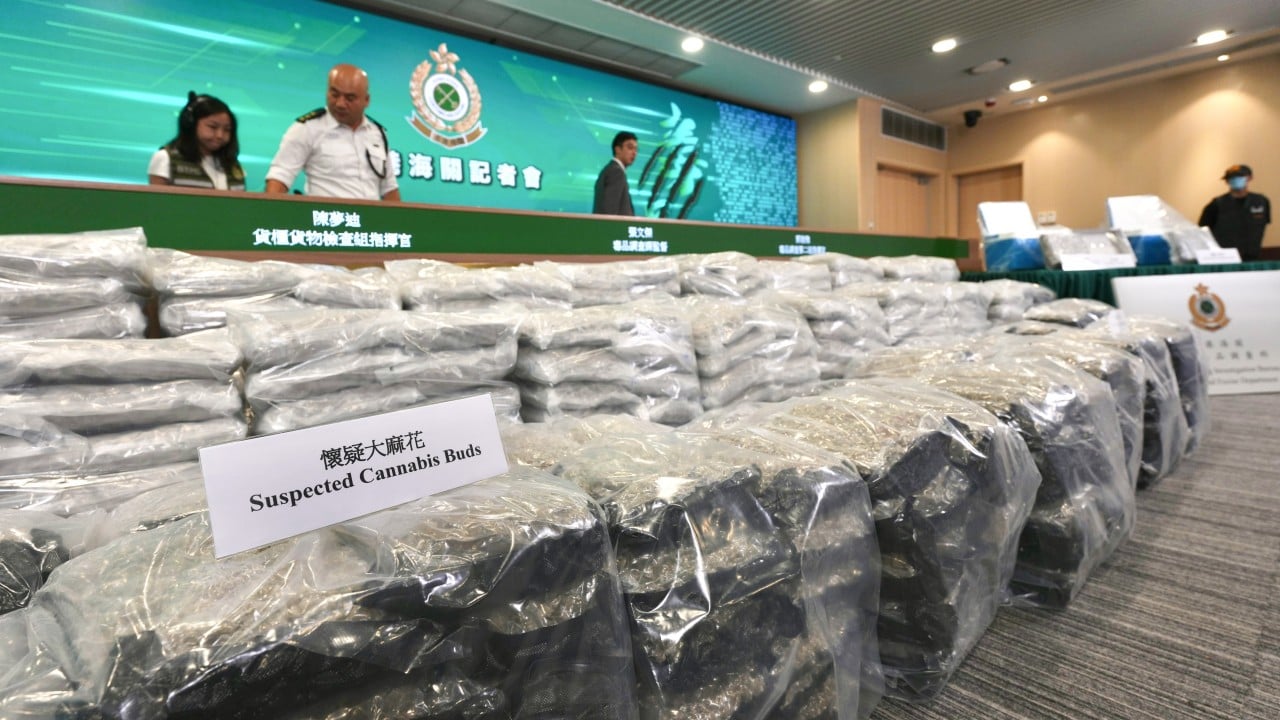
Drug syndicates keep trying new smuggling tricks. Hong Kong customs officials just smashed their biggest seaborne cannabis bust ever. They intercepted 535 kilograms of cannabis buds packed into a single 40-foot container arriving from Thailand. The street value hit a staggering HK$125 million.
If you think cartels just throw bags of illegal cargo into shipping crates, you're missing how sophisticated modern logistics crime has become. This massive seizure exposes the precise, high-tech methods traffickers use to move millions across international waters.
The Setup Inside the Seaborne Container
The operation started with risk assessment and intelligence analysis at the Kwai Chung Customhouse Cargo Examination Compound. Customs officers flagged a 40-foot container that arrived from Thailand on September 2, declared as a routine shipment of insulated thermal cooling boxes.
When officers ran the container through a mobile X-ray vehicle scanning system, the density readings didn't match standard commercial goods. Out of 1,340 cooler boxes inside, 442 featured distinct blue lettering. Frontline personnel weighed the units and found that 364 of them were one to two kilograms heavier than normal factory specs.
Inside those heavy boxes lay vacuum-sealed bags of cannabis buds. Smugglers packed the narcotics in multiple layers of thick plastic to crush the strong, pungent aroma. But weight discrepancies and X-ray imaging gave them away instantly.
High Tech Tracking and the 16 Day Trap
What makes this particular case stand out isn't just the sheer volume of drugs. It's the surveillance technology embedded inside the cargo.
Customs officials discovered that multiple functioning satellite positioning devices were hidden directly among the shipment cartons. Syndicates rarely go to these lengths for standard runs. Traffickers placed these live GPS trackers inside the cooling boxes to monitor the cargo every second of its journey. They watched it move from the maritime vessel out of Thailand, through local road transport, and right up to the warehousing phase.
Instead of raiding the container terminal immediately, investigators played the long game. They launched a patient 16-day controlled delivery operation. They let the syndicate think everything went according to plan.
The trap snapped shut on September 17. Two men arrived at a storage facility in a truck, picked up 54 boxes, and drove them to a curbside unloading spot in Mong Kok. A third man received the cargo and started carting the boxes into a nearby tenement apartment.
Customs officers swarmed the building. They arrested three men aged between 21 and 47. Two turned out to be local residents, while the third was a Vietnamese national holding a recognizance document. Officials noted that the unit served purely as a temporary storage and transit point before a wider distribution network could kick into gear.
Why Sea Smuggling is Surging Right Now
This record bust highlights a broader trend shifting across global law enforcement. Authorities point out that the volume of cannabis seized has climbed steadily since 2024. Total seizures rose from roughly 2,800 kilograms back then to over 3,500 kilograms so far this year.
Why the sudden spike? Relaxed regulations and plummeting production costs in certain overseas jurisdictions have created an abundant global supply. Traffickers are constantly looking for new exit routes. They exploit legitimate maritime freight lines, hoping that the sheer volume of global trade containers will swallow up their illicit cargo.
Customs officials are now urging logistics workers, shipping companies, and warehouse operators to stay vigilant. If you handle commercial freight, watch out for unusual weight variations, strange labeling, and suspicious delays in pickup schedules. Syndicates rely on third-party logistics firms to mask the true identities of senders and recipients. Don't let your business become an unwitting accomplice to organized crime.