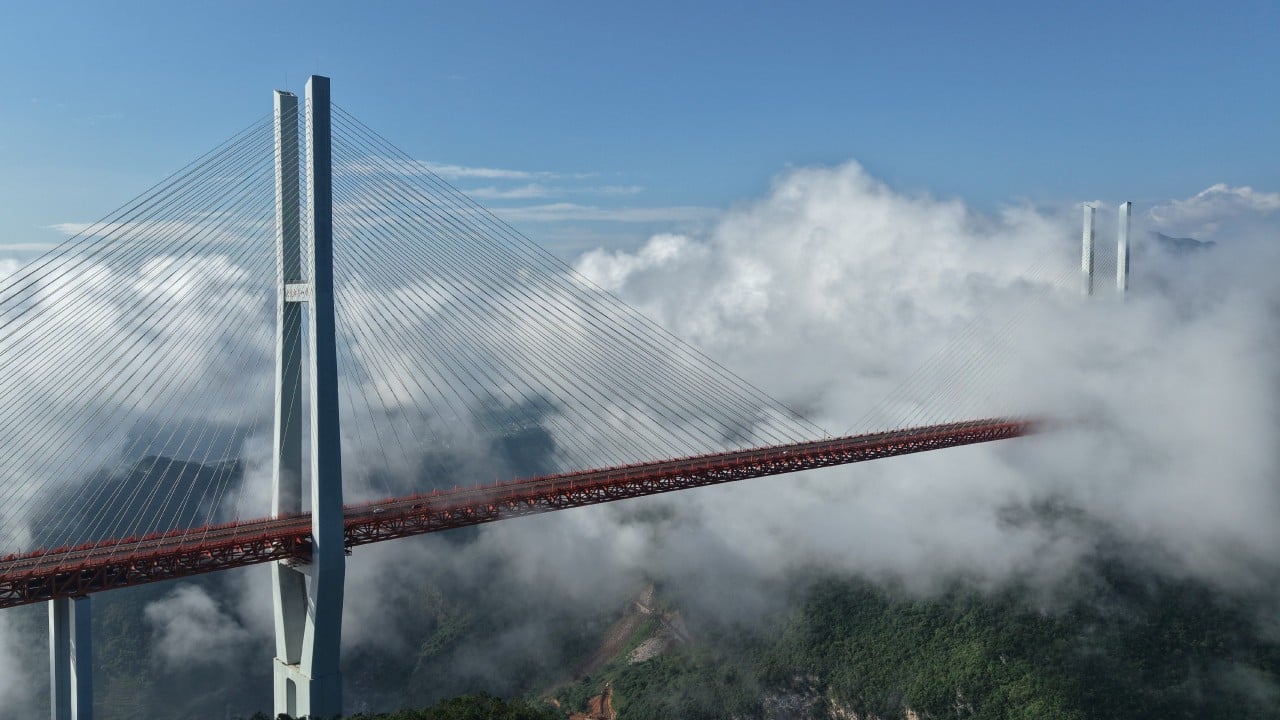
Engineering marvels are rarely as indestructible as they look. When you stare up at a towering suspension bridge, you see thick steel cables and millions of tons of reinforced concrete designed to weather earthquakes, typhoons, and heavy freight traffic. But a recent study out of China highlights a terrifying vulnerability hiding in plain sight: small, commercially available drones.
China boasts over 11,000 mega bridges, serving as vital arteries for its massive economy. Yet, researchers simulating targeted attacks found that a swarm or a precisely guided strike from a lightweight unmanned aerial vehicle could trigger catastrophic structural failures. It turns out that building structures to withstand massive natural forces doesn't automatically protect them from tiny, highly maneuverable aerial threats.
The Physics of Small-Scale Vulnerability
Why would a multi-million-dollar mega bridge care about a drone that weighs less than a bag of groceries? Structural integrity is all about load distribution. Suspension and cable-stayed bridges rely on an intricate balance of tension and compression across specific, sensitive nodes.
If you hit a random spot on a massive concrete pier with a small explosive payload, nothing much happens. But modern research shows that precision targeting changes the math entirely. A small drone can fly directly into critical junction points, expansion joints, or cable anchorages where stress is already concentrated.
Think of it like a human body. You can take a heavy blow to a thick muscle and walk it off, but a tiny needle precisely striking a vulnerable nerve bundle will take you down. Bridge architecture has similar pressure points. When researchers simulated localized impacts on typical suspension bridge designs, the results proved that kinetic energy delivered with pinpoint accuracy can initiate structural resonance or localized fracturing that cascades through the entire span.
Why Traditional Defense Systems Fail
Protecting a sprawling infrastructure network is an operational nightmare. Traditional anti-air defenses are built to spot fighter jets, commercial airliners, or ballistic missiles. They rely on radar signatures that are entirely wrong for catching a plastic quadcopter buzzing a few meters above the water line.
Small drones present a unique detection challenge:
- They fly low, blending into ground clutter and the visual noise of urban environments or river valleys.
- Their composite and plastic frames produce tiny radar cross-sections.
- They are cheap, meaning an adversary could deploy dozens simultaneously to overwhelm security protocols.
If you rely on human guards scanning the horizon, you're already losing. By the time a security team spots a rogue drone approaching a bridge pylon, the flight time is measured in seconds.
Securing the Megastructures of Tomorrow
Engineers can't just tear down thousands of bridges and start over. Civil infrastructure is built to last for generations, meaning these thousands of mega bridges are here to stay. Instead, the focus has to shift toward active airspace denial and localized hardening.
Civil defense agencies are starting to test localized jamming systems, acoustic sensors, and net-capturing interceptors designed specifically for critical transit hubs. At the same time, structural engineers are looking at adding protective shielding around vulnerable cable anchorages and digital monitoring sensors that can detect micro-fractures instantly.
We spent decades making our bridges strong enough to fight nature. Now we have to redesign them to fight back against the future.