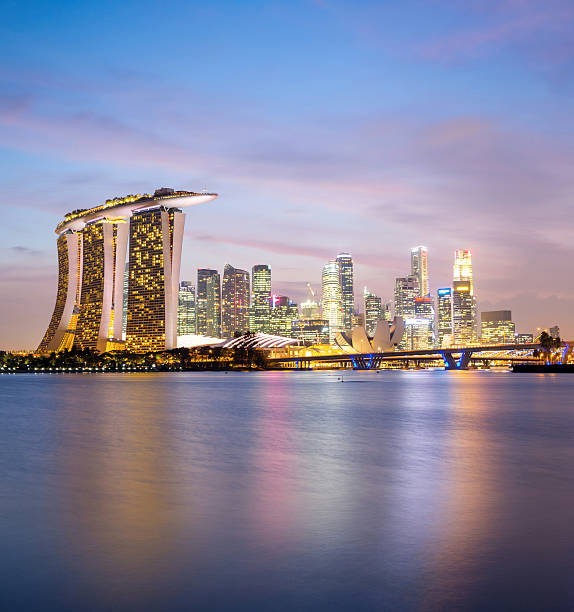
Money flows where the future is built. Right now, that gravity points squarely toward the Gulf. Singapore's state-owned investment giant, Temasek, just made its move official. By the first half of 2027, Temasek will open brand-new offices in Abu Dhabi and Riyadh.
This isn't a casual footprint expansion. It marks a structural pivot for a $400 billion portfolio looking beyond traditional Western markets and traditional Asian tech plays. If you want to understand where global capital is shifting, look at how Singapore treats the Middle East. Read more on a connected topic: this related article.
What Temasek's Move Means for the Gulf
Temasek isn't arriving empty-handed or blind. CEO Dilhan Pillay Sandrasegara pointed straight at the breakneck pace of regional economic transformation. Saudi Arabia and the United Arab Emirates are aggressively rewriting their economic DNA. They are moving away from pure hydrocarbon reliance and plowing billions into tech, energy transition, logistics, and digital infrastructure.
For Temasek, having boots on the ground in Riyadh and Abu Dhabi means direct access to deal flow. It changes everything. Instead of managing regional investments from Singapore or London, dealmakers will sit elbow-to-elbow with sovereign wealth funds like the Abu Dhabi Investment Authority and Saudi Arabia's Public Investment Fund. More analysis by The Motley Fool delves into comparable perspectives on the subject.
Several portfolio companies are expected to co-locate in these new hubs. That creates a mini-ecosystem. When Temasek moves, its network moves with it.
Beyond Oil and Gas
People still mistakenly view the Gulf through a 1990s lens of oil extraction. That's a massive blind spot. The strategic ambition driving Riyadh and Abu Dhabi targets advanced manufacturing, artificial intelligence, renewable infrastructure, and connectivity corridors stretching into Central Asia and Africa.
Temasek sees the Middle East as a crucial bridge. The upcoming offices will bring the firm's global network to 15 offices across 11 countries. They aren't just looking at local Gulf consumption. They are utilizing the UAE and Saudi Arabia as launchpads into fast-growing frontier markets in East Africa and South Asia.
This follows a trail already blazed by other parts of the ecosystem. Seviora, Temasek's asset management arm, opened an Abu Dhabi office in 2025. Major infrastructure pacts—such as the massive multi-billion-dollar joint targets involving BlackRock's Global Infrastructure Partners, ADNOC, and regional funds—have primed the pump for institutional heavyweights to drop anchor.
The Strategy Behind the Timing
Why 2027? Regulatory approvals take time, but the bigger driver is momentum. The Gulf is spending aggressively on diversification while Western capital markets remain choppy and heavily regulated. Sovereign wealth in the Middle East has dry powder, massive ambition, and an urgent need for technological expertise. Temasek has the portfolio depth, tech-forward mindset, and patient capital required to partner on multi-decade nation-building projects.
Look at leadership, too. Temasek appointed a chairman specifically for the Middle East and Africa to oversee long-term growth. They aren't treating this as a side project. It's a core pillar of their upcoming decade of deployment.
What This Tells Smart Investors
If a $400 billion disciplined state investor is establishing permanent physical hubs in Riyadh and Abu Dhabi, retail and mid-market investors should take note. The Gulf's transition is real, funded, and attracting the smartest institutional money on earth.
Watch how these offices operate once doors open in 2027. Pay attention to which portfolio companies co-locate and what joint ventures pop up in logistics and clean energy. The capital playbook for the next ten years is being written right now in the deserts of the UAE and Saudi Arabia.