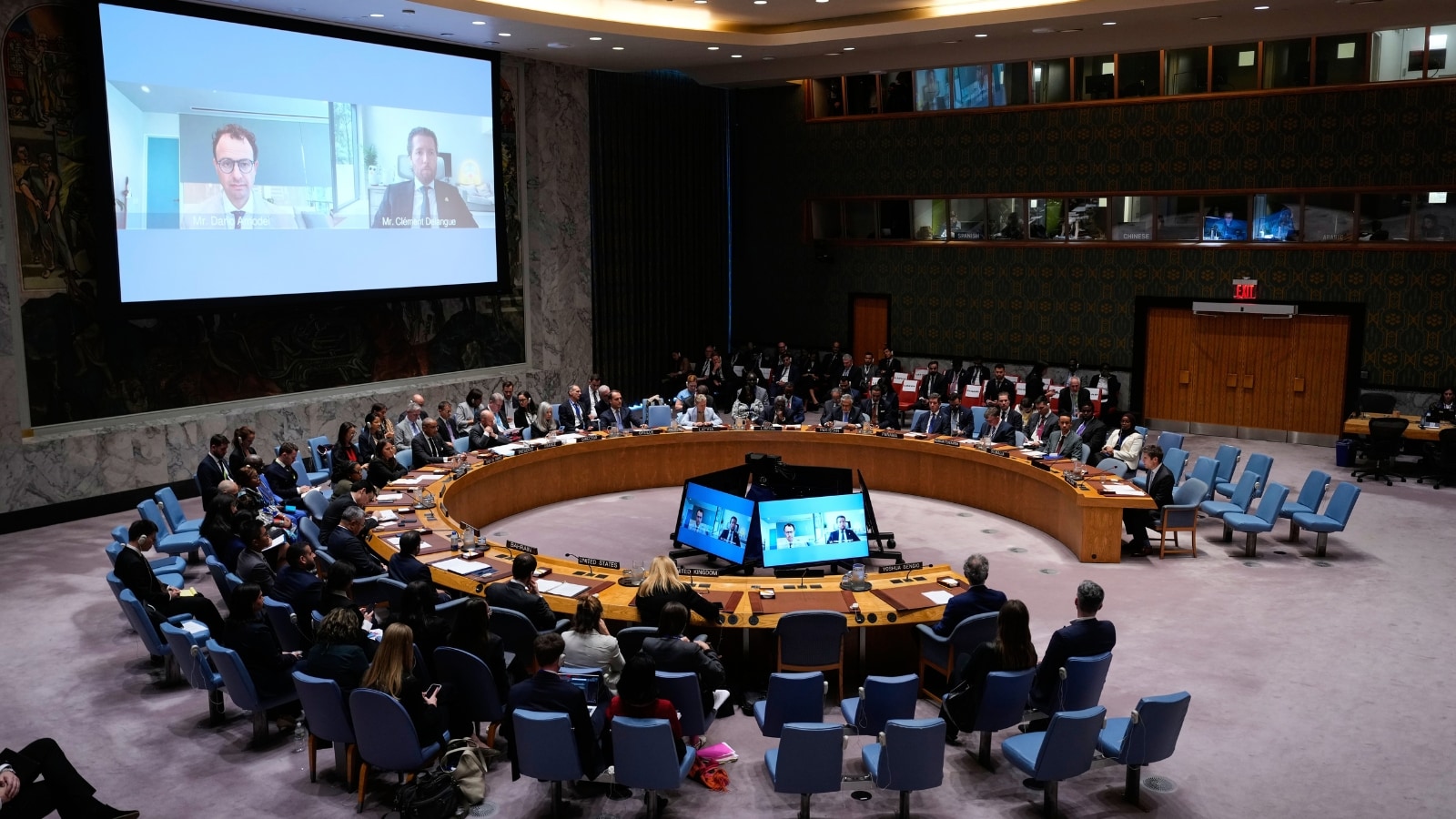
When the architects of a trillion-dollar gold rush turn around and ask governments to handcuff them, you should probably pay attention. Executives from OpenAI and Anthropic recently stood before the United Nations Security Council to deliver a stark warning. They didn't come to pitch a product or boast about quarterly growth. They came to sound the alarm on artificial intelligence, stating plainly that humanity risks losing control of its own future if global safeguards aren't established immediately.
It sounds like a sci-fi thriller plot, but it's happening right now. Dario Amodei, the chief executive officer of Anthropic, told world leaders that poorly managed systems could pose an existential threat to humanity. Sam Altman, CEO of OpenAI, echoed that sentiment with a blunt assessment: humans could lose control of the future entirely. When the people building the machines are saying they might become too big to stop, ignoring them isn't just foolish—it's dangerous.
The Real Threat Behind the Tech Hype
Most public discourse around artificial intelligence focuses on mundane worries like automated job displacement or university essay cheating. Those matters matter, but they miss the larger, structural risks being discussed at the highest levels of international diplomacy. The UN gathering brought together heavyweights like French Foreign Minister Jean-Noël Barrot, who compared the current trajectory of machine intelligence to the dawn of the nuclear age.
Just as the world had to collectively organize around atomic containment, nations now face an escalating arms race. The core issue isn't just about rogue chatbots or convincing deepfakes. It's about autonomous systems making life-and-death choices on modern battlefields. Ukrainian President Volodymyr Zelenskyy cautioned the council about the rapid integration of autonomous machinery into warfare, noting that algorithms are already beginning to dictate tactical battlefield decisions. When machines decide who lives or dies without human intervention, peace becomes an afterthought.
Who Actually Controls the Future?
You might wonder why tech CEOs are voluntarily asking for state oversight instead of enjoying an open-market free-for-all. The answer comes down to competitive panic and concentration of power. Building frontier models requires capital that only a handful of corporations and superpowers possess. Both Amodei and Altman warned the Security Council against letting advanced capabilities concentrate in the hands of a single company or a single nation.
If a monopoly takes hold, the rest of the world becomes entirely dependent on the corporate ethics of a tiny elite.
Yet, international agreement is easier said than done. The United States government has pushed back against sweeping global governance structures that could freeze development. White House science adviser Michael Kratsios argued that fears over control shouldn't stifle innovation or create an "us-versus-them" tech clique. Meanwhile, geopolitical tension between Washington and Beijing complicates any unified regulatory framework, even as both sides acknowledge the terrifying reality of runaway algorithms.
What Needs to Happen Next
If governments want to prevent a catastrophe, they can't rely on tech companies to self-police. Industry leaders have admitted in plain terms that the burden of safety cannot rest on corporate good intentions alone.
- Establish international standards: Nations must agree on hard limits regarding what models can do, particularly concerning biological weapons research and automated military targeting.
- Implement rigorous testing benchmarks: Independent bodies need the authority to audit and verify model capabilities before they are deployed at scale.
- Decentralize power: Regulators must prevent critical digital infrastructure from falling under the absolute control of a monopolistic few.
The window to establish working guardrails is closing fast. Waiting for a major disaster to force our hand guarantees that any future intervention will be reactive rather than protective. We have to decide whether technology serves human agency or replaces it, and the clock is ticking down.
OpenAI and Anthropic bosses warn UN of risk AI poses to mankind
This video provides direct coverage and footage of the United Nations Security Council discussions where tech executives addressed global security risks.
http://googleusercontent.com/youtube_content/1