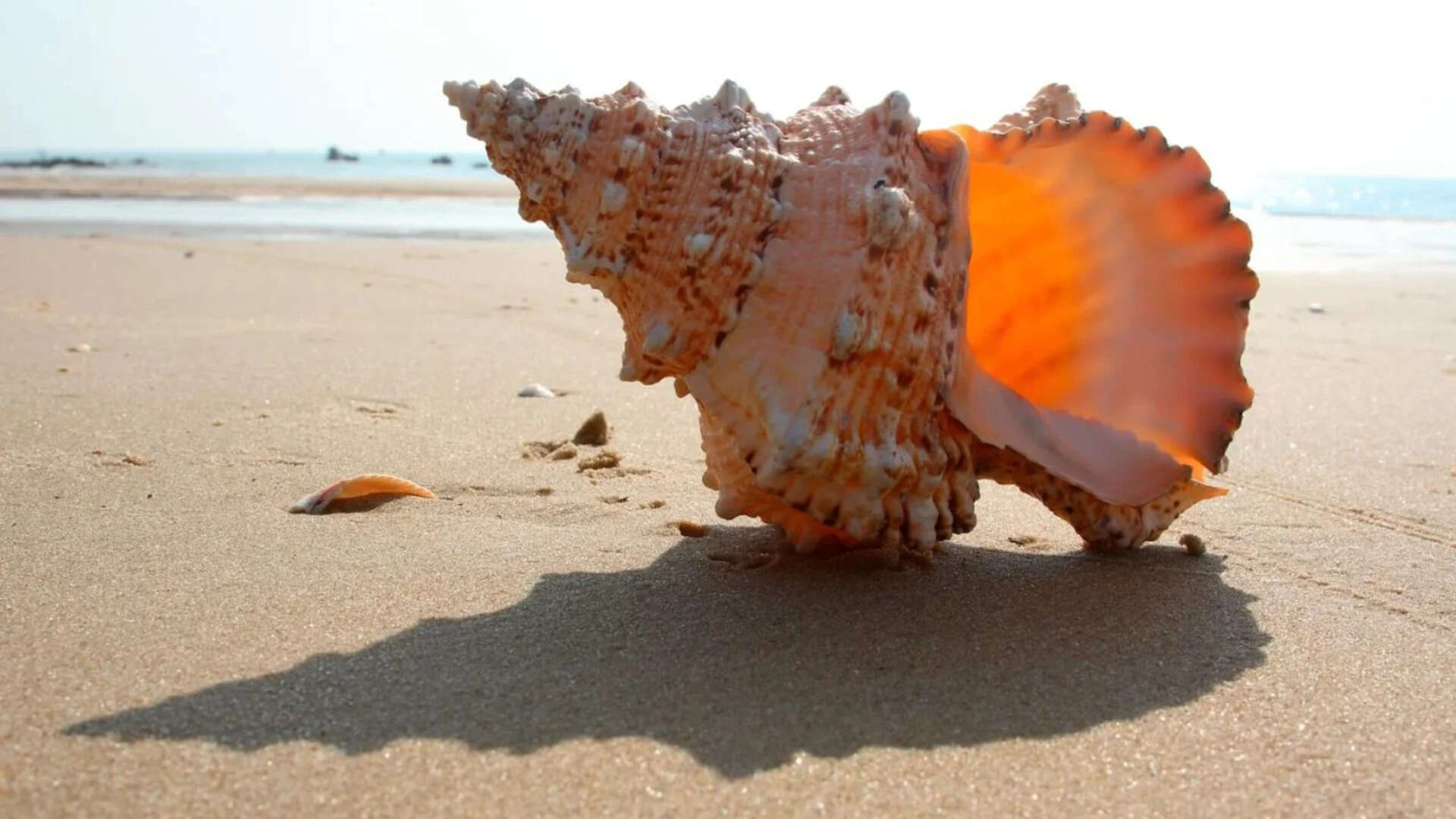
Walk along any beach today and pick up a dead snail shell. Look closely inside. You'll likely see small barnacles, tiny worm tubes, or miniature moss-like organisms clinging to the inner curves. In modern oceans, empty hard shells don't stay vacant for long. Space is precious down there. The moment an animal dies and soft tissue vanishes, small creatures swarm in to claim the exposed shelter.
It wasn't always like this. Don't forget to check out our previous coverage on this related article.
For tens of millions of years during the early history of complex animal life, empty shells sat completely abandoned on the sea floor. Nobody moved in. They just accumulated in the sediment like discarded plastic cups.
That strange pattern changed around 470 million years ago during the Ordovician Period. A fresh study led by researchers Olev Vinn, Oive Tinn, Liisa Lang, and Mare Isakar from the University of Tartu, published in Scientific Reports, reveals that marine life suddenly discovered a brand-new way to live. Tiny ocean creatures began moving into empty mollusk shells, inventing the planet's first ready-made housing market. If you want more about the context of this, BBC News provides an in-depth breakdown.
This single shift transformed how seafloor ecosystems worked forever.
The Long Ocean Silence Before Anyone Moved In
Go back 500 million years to the Cambrian Period. Ocean waters were full of strange creatures like trilobites and early soft-bodied worms.
You might assume animals back then snatched up any shelter they could find. That wasn't what happened. Fossils from the Cambrian show something puzzling. Animals capable of living in dark, hidden cracks were already around. They hid beneath ledges or inside natural rock cavities. Yet the hollow interiors of dead mollusks remained entirely clean and empty.
Why did creatures ignore these free homes for so long?
It wasn't a lack of opportunity. Millions of shells rested on the seabed. Instead, it was a lack of evolutionary pressure. In the Cambrian ocean, the fierce competition for surface area hadn't reached a boiling point yet. Predators were fewer, and animals filtering food from the water hadn't multiplied to dense crowding levels. Shelters existed, but no one felt forced to rethink how to use them.
Dead shells were just trash on the ocean floor.
Who Moved Into the Shells First
Everything changed during the Middle Ordovician, roughly 460 to 470 million years ago. Ocean life underwent a massive surge in variety known as the Great Ordovician Biodiversification Event.
As the sea grew crowded, the first brave tenants moved into vacant shells.
The early pioneers didn't pick just any shell. They targeted the giants of their era: nautiloids. These ancient relative of modern squids and cuttlefish possessed long, straight or coiled chambered shells. When a nautiloid died, its large open living chamber offered a spacious, hard-walled cavern.
Small filter-feeding animals quickly attached themselves to these inner walls. The pioneers included:
- Bryozoans: Tiny colonial creatures that built moss-like crusts inside the shell walls.
- Brachiopods: Shell-bearing animals that anchored themselves with fleshy stalks.
- Sponges: Simple organisms that pumped water through their bodies to extract food.
- Cornulids: Extinct creatures that constructed hard, tiny tube-shaped homes directly onto the inner shell surface.
- Graptolites: Colonial organisms that filtered floating organic matter.
Once these organisms mastered living inside nautiloids, they expanded. By the Late Ordovician, around 450 million years ago, creatures moved into the much smaller, tightly coiled interiors of snails and double-shelled clams. What started as an unusual habit became standard survival behavior across global oceans.
How Shell Shape Dictated Ancient Real Estate Values
Not all shells made good homes. The Tartu University research team found that shell geometry directly controlled how well its inhabitants grew.
Think of it like urban apartment design.
Nautiloid shells were the penthouses of the Ordovician seafloor. Their wide openings and roominess let seawater flow freely back and forth. Fresh water brought high levels of dissolved oxygen and floating organic particles to eat. The current also washed away metabolic waste. Because of this high-flow ventilation, creatures living inside nautiloid shells grew bigger, survived longer, and formed densely packed, diverse communities.
Snails offered a very different story.
A snail's shell coils into a narrow spiral with a tiny opening. Water circulation inside those tight twists was terrible. Oxygen ran low, and food particles barely trickled in. Fossils recovered from inside ancient snail shells show that the inhabitants stayed stunted and small. Organisms that needed strong currents to feed couldn't survive in snail shells at all.
Architecture mattered, even 470 million years ago.
The Three Triggers That Forced Creatures Indoors
Why did ocean animals suddenly start moving indoors after millions of years of ignoring shells? The study points to three big factors that hit the oceans at the exact same time.
First, predators got much smarter and hungrier. Ordovician seas saw a rapid rise in hunting animals with tough jaws and crushing claws. Small, soft-bodied filter-feeders living out in the open on the seabed were sitting ducks. Crawling inside a hard mineral tube gave fragile creatures a natural shield against getting eaten.
Second, the seafloor ran out of space. A massive boom in sessile filter-feeders—animals that stay anchored in one spot—meant every flat rock and ledge was quickly claimed. Ocean creatures faced an housing shortage. Looking inside an empty shell was the obvious solution to find unused surface space.
Third, shells themselves got much bigger. As mollusks evolved larger bodies throughout the Ordovician, their dead shells created larger inner cavities. A tiny shell from the early Cambrian was too small to fit a colony of animals, but a half-meter Ordovician nautiloid shell offered plenty of space.
Combined, these pressures turned empty shells into hot property.
What This Means for How Ecosystems Evolve
The earliest fossil evidence of this shell-dwelling habit turns up in the Baltica region, which covers modern-day Estonia and Scandinavia. Scientists think Baltica's shallow, warm seas may have been the cradle for this biological strategy.
It didn't stay local for long. Within a few million years, shell-colonizing communities appeared in fossils from Laurentia (modern North America), southern China, and Gondwana. The behavior spread rapidly across the entire globe.
This finding changes how paleontologists understand ecological shifts. Huge evolutionary steps don't always require brand-new physical organs or drastic genetic mutations. Sometimes, all it takes is a clever change in habit. By learning to reuse existing biological waste, ancient organisms unlocked an entire hidden layer of marine life.
It created a blueprint for modern coral reefs and coastal waters, where almost every piece of organic debris gets recycled into shelter.
How to Explore Ancient Marine Life Yourself
If this piece of deep history sparks your curiosity, you don't need a doctorate in paleontology to engage with it.
- Check local geological maps: Find exposed Ordovician or Silurian limestone formations in your region. Areas like the American Midwest, parts of the UK, and Northern Europe are loaded with these ancient marine beds.
- Look for encrustations: When fossil hunting, don't just look at the outside of fossilized shells. Examine broken cross-sections under a hand lens. Look for tiny, rib-like ridges or delicate honeycomb patterns along the inner walls.
- Visit local university museum collections: Major natural history museums frequently showcase Ordovician sea floor exhibits where you can see preserved nautiloids and brachiopods up close.