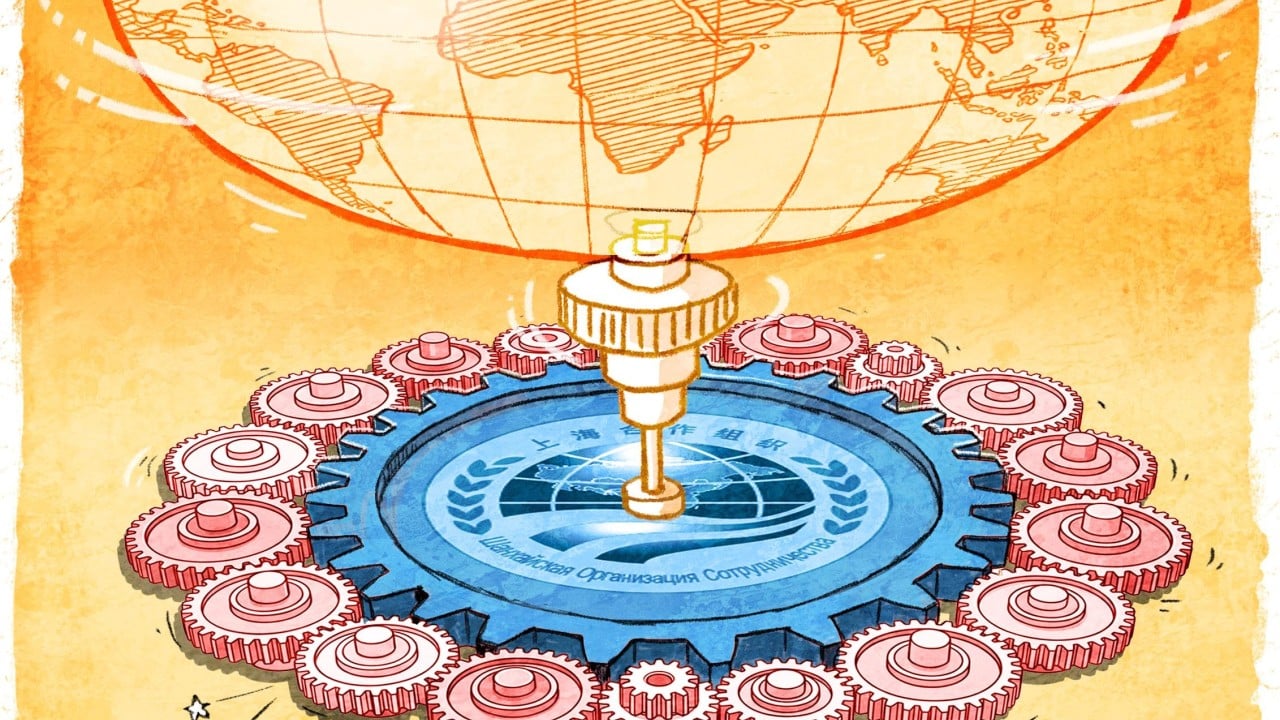
Everybody loves talking about the Shanghai Cooperation Organisation as an anti-Western superpower waiting in the wings. With India, China, Russia, and Iran under one umbrella, headlines routinely paint the bloc as an unstoppable force ready to rewrite global rules. But reality is far messier. If you look past the grand summits and red carpets, you will find an organization weighed down by internal friction, conflicting national ambitions, and a structural inability to make tough decisions.
Can the Shanghai Cooperation Organisation become a more influential force globally? The short answer is yes, its geopolitical footprint is massive. The long answer requires a hard look at why owning a huge chunk of the Eurasian landmass doesn't automatically translate into effective global power.
The Myth of Monolithic Unity
The biggest mistake analysts make is treating the bloc like a Eurasian version of NATO. It isn't. NATO functions on a shared ideological commitment and a clear command structure. The Shanghai Cooperation Organisation functions on convenience and a shared desire to curb American hegemony.
Beyond that, the member states are often at each other's throats. Take the relationship between India and China. Their disputed Himalayan border remains a flashpoint, and their economic competition across South Asia is fierce. Then look at India and Pakistan. Bringing historical rivals into the same room doesn't magically erase decades of military distrust. When two of your core founding heavyweights and newer members spend half their diplomatic energy checkmating each other, launching a unified global agenda becomes nearly impossible.
Consensus Paralysis and the Veto Problem
Institutions gain global influence through decisive action. The bloc operates on strict consensus. Every single member holds an implicit veto over everything.
If Kazakhstan objects to a trade proposal or if New Delhi blocks a security initiative, the entire mechanism grinds to a halt. It is built to prevent anyone from dominating the room, which sounds fair in theory. In practice, it means the organization rarely moves faster than its slowest or most suspicious member. You get plenty of polished joint communiques about mutual trust and stability, but very few binding economic agreements that actually reshape international trade.
Economic Ambition Versus Financial Reality
Proponents love to point out that the bloc accounts for a staggering share of the world's population and GDP. It controls vital energy corridors, pipelines, and massive shipping routes linking East Asia to Europe. Yet, translating those numbers into financial clout is harder than it looks.
Western financial systems still dominate global banking, swift codes, and reserve currencies. While Beijing and Moscow push hard for local currency settlements to bypass Western sanctions, smaller member states are hesitant to anchor their economies entirely to the ruble or the yuan. They want Chinese infrastructure money through the Belt and Road Initiative, but they also want to keep their options open with the West. That balancing act limits how hard the organization can push against established global financial architectures.
Where the Bloc Actually Wins
It would be wrong to dismiss the organization as a total talkingshop. Its security cooperation and intelligence sharing on counter-terrorism, separatism, and drug trafficking have genuinely stabilized parts of Central Asia. When regional governments need to coordinate border security without Western lectures on human rights, the bloc provides a frictionless venue.
It also gives the Global South a platform to voice frustration with a Washington-dominated financial and political order. For nations tired of being told how to run their domestic affairs by Western institutions, the mere existence of a non-Western power bloc offers psychological and diplomatic breathing room.
The Road Ahead
To truly scale up its global influence, the organization has to fix its plumbing. It needs stronger institutional frameworks, a functioning development bank that can actually deploy capital without endless political wrangling, and a mechanism to mediate disputes between its own members before external crises spill inward.
Until it transitions from a diplomatic sounding board into a tightly integrated economic and security engine, its global impact will remain more symbolic than structural. Size alone doesn't win the future. Cohesion does.
SCO Summit | New World Order rising from Tianjin: Should US worry amid Trump's trade 'bullying'?
This video provides an in-depth look at how the Shanghai Cooperation Organisation is positioning itself as a geopolitical counterweight to Western institutions amidst shifting global trade dynamics.