You thought she was done. When Serena Williams walked off the court at the 2022 US Open, the narrative was neatly packaged. She was "evolving away" from tennis, focusing on her family and her venture capital firm. It felt like the definitive end of an era.
Then came the shocking announcement, and suddenly, the 44-year-old icon was standing on the pristine grass of the Queen's Club. If you liked this article, you should read: this related article.
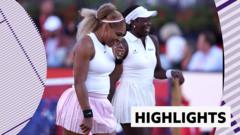
She didn't just show up to wave to the crowd. On Tuesday at the HSBC Championships in London, Serena hit a blistering 120mph serve and locked down a straight-sets doubles victory alongside 19-year-old Canadian sensation Victoria Mboko. They took down the third-seeded powerhouse duo of Nicole Melichar-Martinez and Erin Routliffe 7-6 (2), 6-2.
If you're wondering whether this is just a quick publicity stunt or a legitimate competitive return, you're asking the wrong question. This comeback completely rewrites the rules of athlete longevity, and honestly, it changes everything we expect from a retired legend. For another look on this story, check out the latest update from NBC Sports.
The Reality of the 1,376-Day Hiatus
Let's look at the raw numbers because they tell the real story here. Serena hadn't played a professional tennis match in exactly 1,376 days. Stepping back onto a court after nearly four years away is hard enough on any surface. Doing it on grass—a surface that requires lightning-fast reflexes, low bending, and zero tolerance for poor footwork—is almost masochistic.
The opposition wasn't some soft first-round wildcard pairing either. Melichar-Martinez and Routliffe are elite doubles specialists. Routliffe is a two-time US Open doubles champion. Melichar-Martinez has made finals at both Wimbledon and Flushing Meadows.
Yet, there was Serena, shaking off the rust under the unpredictable, windy skies of west London. She admitted after the match that the butterflies hit her hard about 30 minutes before walking out onto the Andy Murray Arena.
"I got nervous right before the match, like, maybe 30 minutes before, and then I just let it go," Williams said.
She gave her performance a modest "C-minus" grade in the press conference. Don't believe her self-deprecation. You don't serve out a match against top-tier pros with two consecutive aces and a unreturnable service winner if you're playing like a C-minus student.
The Cross-Generation Chemistry With Victoria Mboko
The most fascinating dynamic of this return isn't just Serena's presence. It's the partner she chose. Victoria Mboko was born in 2006. By the time Mboko was learning to walk, Serena already had a career's worth of Grand Slam trophies.
Mboko, the 2025 WTA Newcomer of the Year and current singles world No. 9, didn't look starstruck. She held her own, hitting massive shots from the baseline and showing why Serena publicly stated that the teenager reminds her of a young version of herself.
The partnership looked completely organic. When Serena fired a rapid-reaction backhand winner at 4-4 in the first set, she burst into a massive grin and high-fived Mboko. The teenager was equally complimentary, noting that Serena's movement looked sharp despite the long absence.
Why Serena is Doing This Now
The biggest misconception about this comeback is that Serena is chasing records or trying to prove something to her critics. She shut that down immediately.
"I don't need to win," she pointed out before the tournament started. "I've won more than most people have in their whole lives, so it's not that important to me."
So what changed? It boils down to two things: boredom and motherhood.
Serena joked that her kids are out of school for the summer, she got tired of sitting at home, and she basically just had nothing better to do. But more meaningfully, she wanted her younger daughters, Olympia and Adira, to see their mother compete on the professional stage with their own eyes. Both daughters were sitting in the stands at Queen's Club, witnessing a piece of sports history that seemed impossible just a few months ago.
There's also a historic element to the venue itself. Queen's Club only recently brought back elite women's tennis to its lawns. For decades, it was a men-only warmup event. Getting to play on these iconic courts was an opportunity Serena never had during the peak of her singles career.
What Lies Ahead in the Grass-Court Season
Predictably, everyone wants to know if this leads to an appearance at the All England Club later this month. Serena remains incredibly noncommittal about Wimbledon, stating she's taking it one day at a time.
However, her immediate schedule proves this isn't a one-off performance. She has already confirmed she will fly to Germany next week to play doubles at the Berlin Open.
We can expect a few things moving forward:
- Physical Adaptation: Grass will test her knees and lower back. The quick two-set victory at Queen's was ideal for saving energy, but longer matches will reveal how her stamina holds up.
- Targeted Strategy: By sticking to doubles, Serena maximizes her weapons—her unmatched serve and net presence—while reducing the grueling baseline coverage required in singles.
- The Quarterfinal Test: Next up at Queen's, Williams and Mboko face Leylah Fernandez and Laura Siegemund. This match will provide an even clearer indicator of how deep this comeback run can go.
Don't overthink the semantics of retirement versus evolution. Serena Williams is back on a tennis court because she loves the game, has the physical capability to still hit 120mph serves at 44, and wants to share that magic with her children. Enjoy the show while it lasts.