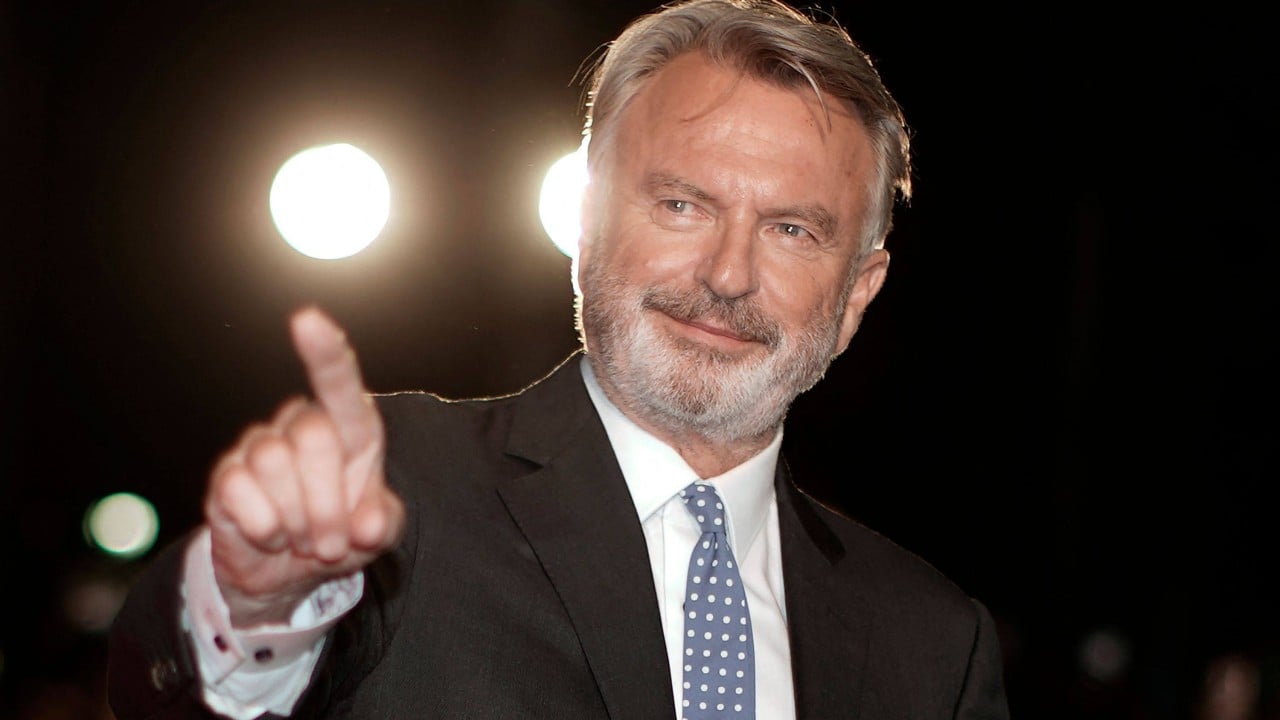
Hollywood rarely knows what to do with an actor who refuses to fit into a neat, commodified box. The sudden and unexpected passing of Sam Neill on Monday, July 13, 2026, at the age of 78, marks the end of a unique era in global cinema. He was an international leading man who completely lacked the typical vanity of a movie star. He could anchor a multi-billion-dollar franchise just as easily as he could play a terrifyingly unhinged villain in a psychological horror flick. When his family confirmed he died peacefully in Sydney, surrounded by loved ones, the collective grief across the film world was immediate. What makes this loss sting even sharper is that he was recently declared completely cancer-free following a grueling battle with non-Hodgkin lymphoma.
He didn't care about the traditional paths to fame. He didn't chase the spotlight, choosing instead to split his time between film sets and his beloved Two Paddocks winery in Central Otago, New Zealand. Film fans aren't just mourning the loss of Dr. Alan Grant from the classic Jurassic Park series. They're mourning a master of quiet intensity. He was a performer who could convey a universe of menace, sorrow, or dry wit with nothing more than a slight shift in his posture or a steady gaze from beneath a fedora. Don't forget to check out our earlier post on this related article.
The Sudden Loss of Sam Neill and His Final Triumphs
The news hit the wires early Monday morning, catching the industry completely off guard. His family issued a statement via social media noting that while his passing at St. Vincent's Private Hospital was sudden, it was blessed by the fact that he remained entirely free of the blood cancer that had threatened his life a few years earlier. He fought that stage three angioimmunoblastic T-cell lymphoma with the exact same quiet resolve he brought to his cinematic roles. He even wrote a brilliant, witty memoir during his treatments, titled Did I Ever Tell You This?, because he simply needed something to do while sitting through hospital infusions.
Prime Ministers from both sides of the Tasman Sea immediately weighed in. New Zealand Prime Minister Christopher Luxon rightly pointed out that when Sam Neill started acting, the country barely had a film industry to speak of. He single-handedly helped build it into a major global cultural export. Australian Prime Minister Anthony Albanese called him wry, dry, and laconic. Those terms fit perfectly. He wasn't an actor who chewed the scenery. He was an anchor. If you want more about the context here, GQ provides an excellent breakdown.
The misconception floating around mainstream obituaries today is that he was just the guy who ran away from velociraptors or played the stern husband in The Piano. He was so much more than that. He was a chameleon who spent five decades defying expectations.
Breaking Ground in Down Under Cinema
To truly understand his impact, you have to look back to the late 1970s. Born Nigel John Dermot Neill in Northern Ireland in 1947, he moved to New Zealand as a young boy. By the time he hit his twenties, he was directing documentaries and trying to find his footing in a creative environment that had almost no infrastructure.
Then came Sleeping Dogs in 1977. It was the first proper New Zealand feature film made in over a decade. He took the lead role, and his performance immediately caught the attention of international directors. Take a look at his work in Gillian Armstrong's My Brilliant Career in 1979 opposite Judy Davis. He played a wealthy suitor with an understated charm that felt deeply authentic.
He didn't stay comfortable in those romantic, period-piece archetypes for long. He jumped headfirst into intense, avant-garde projects that showed just how far he was willing to stretch his talents. His performance in Andrzej Żuławski's 1981 cult horror masterpiece Possession is a masterclass in psychological disintegration. Playing opposite Isabelle Adjani, he pushed his character to the absolute brink of madness. It remains one of the rawest, most unsettling performances of the 1980s, proving that he had a dark, volatile edge that Hollywood blockbusters would only occasionally tap into later on.
Blockbusters and the Masterclass of Underplaying
By the time Steven Spielberg came calling for Jurassic Park in 1993, he had already built a reputation as a reliable, highly versatile character actor. He had played real-life spy Sidney Reilly, went toe-to-toe with Sean Connery in The Hunt for Red October, and survived the tense, claustrophobic thriller Dead Calm alongside Nicole Kidman.
But Jurassic Park changed everything. It transformed him into a globally recognized face, even if he never quite viewed himself as a traditional action hero.
Look at how he plays Dr. Alan Grant. A lesser actor would have tried to compete with the massive, groundbreaking CGI dinosaurs. He did the exact opposite. He played Grant with a grounded, grumpy realism. He was a man who preferred fossils to people, a guy who genuinely didn't want to deal with children, and someone whose primary instinct was survival rather than bravado. When he holds up that flare to distract the T-Rex, you believe his terror because he spent the entire movie establishing himself as a real, flawed human being.
That same year, he starred in Jane Campion's The Piano. He played Alisdair Stewart, a rigid, emotionally stunted colonial frontiersman who buys a mute bride. It is a deeply complex, unsympathetic role. He manages to show the tragic, pathetic isolation of a man completely incapable of understanding art, passion, or love. He could chop off a character's finger in one movie and become the ultimate relatable hero in another. That range is incredibly rare.
Villains and Cult Classics Later in Life
If you only know him from his mainstream Hollywood hits, you are missing out on some of his best work. He loved playing villains because he understood that the most terrifying monsters don't scream; they speak softly.
His turn as Major Chester Campbell in the hit BBC series Peaky Blinders is genuinely chilling. He played a corrupt, sadistic lawman sent to Birmingham to clean up the streets. He went toe-to-toe with Cillian Murphy's Tommy Shelby, using a cold, calculated Irish brogue that dripped with self-righteous malice. He didn't need physical size to threaten the Shelby clan. He used pure psychological intimidation.
Then there is Event Horizon, Paul W.S. Anderson's 1997 sci-fi horror film. It was dismissed by critics at the time but has since rightfully attained legendary cult status. He plays Dr. William Weir, the scientist who designs a spacecraft that accidentally travels to a hellish dimension. His transformation from an obsessive, grieving creator to a possession-driven, self-mutilating madman is spectacular.
He always treated genre filmmaking with absolute respect. He never phoned it in. Whether he was playing Cardinal Wolsey in The Tudors, a grumpy foster uncle in Taika Waititi's brilliant Hunt for the Wilderpeople, or a retiring small-town sheriff in the sci-fi series Invasion, he showed up ready to do the work.
Farm Life, Conservation, and Legitimate Integrity
What made him so widely loved by his peers wasn't just his filmography. It was his attitude toward life outside the frame. He was a passionate conservationist. Just last December, he openly used his platform to fight against a massive, controversial open-cast mine planned near Cromwell in Central Otago, arguing passionately for the protection of New Zealand's natural landscapes.
His social media presence was a source of pure joy for millions. He regularly posted videos of himself playing the ukulele, drinking wine, and hanging out with his farm animals. He famously named his livestock after his famous co-stars. There was Laura Dern the chicken, Jeff Goldblum the ram, and Helena Bonham Carter the cow. He had a brilliant sense of humor about his status, once telling an interviewer that dying would be incredibly irritating simply because he had too many things left to do on his farm.
He wasn't afraid of dying. He just loved living too much to want to stop.
Your Plan for Revisiting His Greatest Work
Don't just watch the clips of him holding a raptor claw that will inevitably flood your social media feeds over the next few days. Dig deeper into his catalog to appreciate the sheer scope of what he accomplished. Here is how you should run through his essential performances to see the full range of his talent.
Start with My Brilliant Career to see him as the romantic lead he easily could have spent his whole life playing if he wanted easy money.
Move immediately to Possession to watch him completely shred that clean-cut image in an explosion of psychological horror.
Watch Dead Calm to see how he builds tension through pure vulnerability, then follow it up with The Hunt for Red October to watch him steal scenes from legendary actors using nothing but quiet dignity.
Finish your marathon with The Piano and Hunt for the Wilderpeople. This double feature perfectly showcases his ability to transition from an unlikable, tragic figure of colonial repression to a deeply moving, comedic, and tender father figure in the New Zealand bush.
He left behind over fifty years of incredible stories. He helped build a national film industry from scratch and walked away from the Hollywood machine whenever it suited him, preferring the quiet company of his vines and his animals. He was an absolute original. We won't see anyone like him again. Splendid work, Sir Sam. Rest in peace.