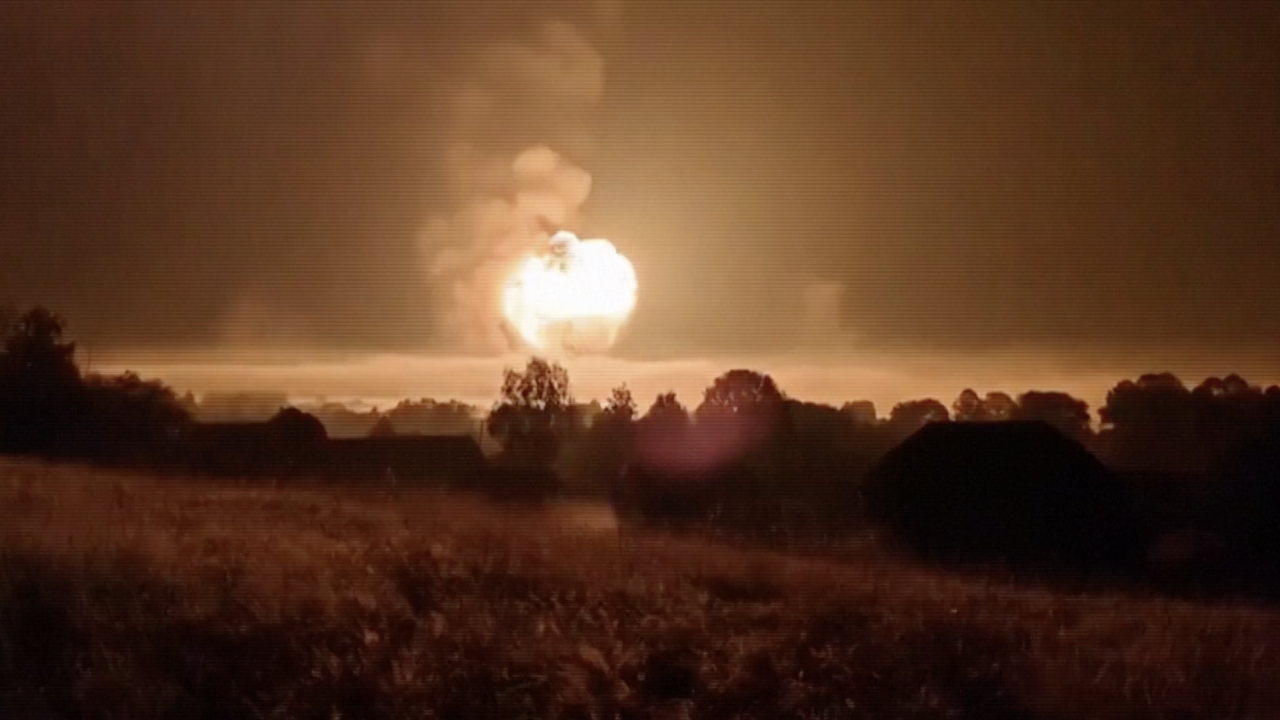
The night sky over the outskirts of Kyiv lit up with violent, rolling secondary explosions that rattled windows for miles. A precision Russian strike hit a major munitions depot near the capital, triggering a catastrophic chain reaction. Ukrainian authorities confirmed that 38 people died and dozens more sustained severe injuries in the blast zone.
This wasn't an isolated incident. In fact, it marks the second time in under two months that a critical arms storage facility near Kyiv has been successfully targeted. When secondary detonations turn a military logistics hub into an apocalyptic firestorm, the immediate casualties tell only part of the story. The long-term strain on military logistics and civilian safety creates an entirely different crisis.
What Went Wrong With Capital Defense Infrastructure
Air defense systems around Kyiv remain among the most dense and sophisticated networks on the continent. Yet, munitions depots keep blowing up. Why?
Defense analysts point to a brutal logistical reality. Storing massive volumes of heavy artillery shells, rockets, and small arms ammunition close enough to the front or capital to matter makes them prime targets. Dispersing these stockpiles takes time, fuel, and secure transport infrastructure that is constantly under surveillance from overhead drones and satellite tracking.
When a facility takes a direct hit, the sheer kinetic force unleashes secondary blasts that can level surrounding infrastructure. Homes shake. Windows shatter. First responders face the terrifying prospect of unexploded ordnance cooking off for hours while trying to pull survivors from the rubble.
The Immediate Aftermath on the Ground
Emergency services rushed into the danger zone while shockwaves were still rolling across the region. Hospitals near Kyiv quickly filled with wounded civilians and military personnel suffering from shrapnel wounds, severe burns, and blast trauma.
Local residents described the initial impact as a massive earthquake.
"The ground just heaved," one local witness shared immediately following the blasts. "Then the sky turned orange and the secondary explosions started going off like a chain of artillery fire that wouldn't stop."
Search and rescue operations faced immense hazards. Munitions depots don't just burn out quietly. They throw lethal fragments across a wide perimeter, making every square inch of the surrounding countryside a potential death trap until explosive ordnance disposal teams clear the sectors.
The Strategic Fallout for Military Supply Lines
Logistics win wars. Everyone knows this, but few appreciate how fragile supply lines become when high-value storage hubs are compromised.
Losing 38 lives in a single secondary explosion event is a devastating human tragedy. From a tactical perspective, wiping out large batches of munitions puts an immediate squeeze on frontline units who rely on a steady flow of supplies.
Military planners now face a harsh choice. Consolidate supplies for efficient distribution, or scatter them to minimize the impact of individual strikes. Consolidation makes facilities vulnerable to high-precision missiles. Dispersion drains fuel reserves and slows down delivery times to active combat zones.
Protecting the Home Front
Civilians living on the periphery of military installations bear the brunt of these supply chain vulnerabilities. As the conflict grinds on, the buffer zones between civilian populations and strategic military assets continue to shrink out of pure geographic necessity.
Local governments are pushing for better early-warning protocols and faster evacuation corridors when strikes hit industrial or military zones. But when secondary blasts happen within seconds of an initial missile impact, warning systems are practically useless. The danger arrives before the siren finishes its first cycle.
Keep a close eye on how defense ministries adapt their storage protocols in the coming weeks. The vulnerability of regional arms depots is forcing a complete rethink of how military hardware is stored, guarded, and moved across contested airspace.