The Black Sea isn't a theater of war just for naval fleets anymore. It's a hunting ground where civilian merchant workers are paying the ultimate price.
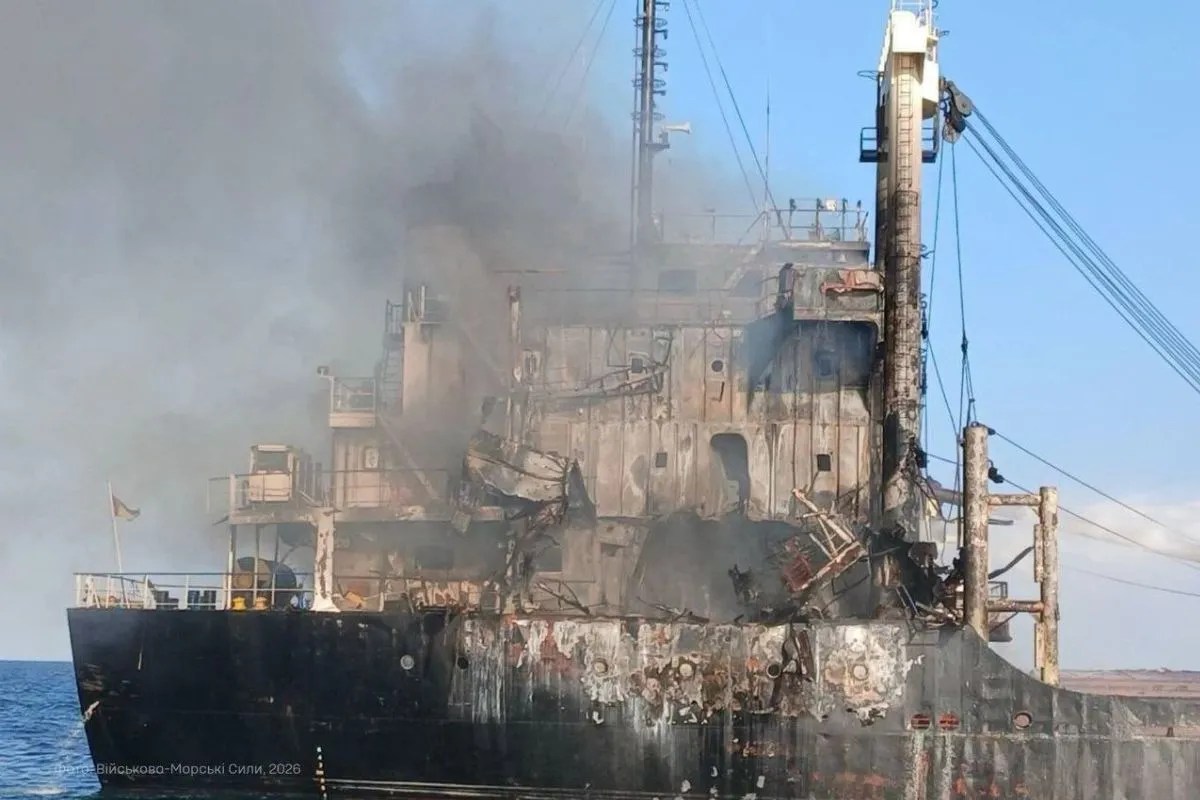
Over the weekend, three Russian Kh-59/Kh-69 cruise missiles slammed directly into the right side of the Golden Leo, a Turkish-owned bulk carrier flying the Guinea-Bissau flag. It wasn't carrying weapons. It wasn't a military vessel. It was loaded with corn and trying to navigate its way out of Ukraine’s maritime corridor.
Initially, Ukrainian officials reported five crew members dead and five missing. After a night of desperate search-and-rescue operations in burning, smoke-choked waters, the grim reality became clear: the death toll jumped to 10. Among the dead was a local Ukrainian marine pilot from the Delta Pilot branch, who was on board to guide the vessel safely through the treacherous waters.
Eight crew members survived, pulled from the flames and rushed to hospitals in Odesa. The crew was a mix of Indian and Syrian nationals—ordinary sailors caught in a brutal geopolitical crossfire.
This isn't an accident, it's a deliberate shipping blockade
Let's drop the diplomatic politeness. This wasn't collateral damage or a case of mistaken identity. Russia's strategic bombers, including Tu-22M3s and Su-57 fighters, unleashed a coordinated aerial assault on the Odesa region. They knew exactly what they were hitting.
The strategy here is obvious, and it's terrifyingly simple. By striking foreign-flagged civilian vessels, Moscow wants to drive insurance rates through the roof and scare commercial shipping lines away from Ukraine entirely. If a shipping company knows its crew might get incinerated by a cruise missile, they won't send their vessels, no matter how desperately the world needs Ukrainian grain.
The Golden Leo wasn't even an isolated incident this week. Just days prior, another strike hit a vessel flying the flag of Antigua and Barbuda, killing one person. A few days before that, a Togo-flagged cargo ship was struck while unloading fertilizer, leaving five dead.
Russia is trying to choke off Ukraine's economic lifeblood by terrorizing global trade routes.
What this means for global food security
You might think a missile strike in the Black Sea doesn't affect you, but it absolutely does. When grain corridors get choked, global food supply chains contract. The immediate result? Food prices spike in places thousands of miles away from the conflict, particularly in regions across Africa and Asia that rely heavily on agricultural exports out of Europe's breadbasket.
Ukraine's acting Foreign Minister, Andriy Sybiha, called the recent wave of attacks a calculated strike on international trade and freedom of navigation. The intentional targeting of civilian supply lanes shows how far Moscow is willing to go to break Ukraine's economic resilience, even if it means starving vulnerable populations globally.
The dangerous next steps for maritime logistics
If you operate in global trade, logistics, or supply chain management, you can't ignore the escalating volatility in the Black Sea. Expect the following shifts to hit the maritime sector immediately:
- Skyrocketing War Risk Premiums: Insurance underwriters are going to reassess Black Sea transit risks, making commercial voyages into Odesa economically prohibitive for small to mid-sized operators.
- Crew Refusals: Seafarer unions and international crew agencies are already voicing extreme safety concerns. Expect a sharp drop in qualified crews willing to sail into these high-risk areas.
- Rerouting Stress: Agricultural logistics will have to lean even heavier on overland rail and Danube river port alternatives, both of which are slower, costlier, and already bottlenecked.
The burning hull of the Golden Leo proves that the Black Sea maritime corridor is no longer just a passive trade route—it's an active, highly volatile front line. Commercial operators need to diversify their sourcing lines immediately because the regional reality isn't getting safer anytime soon.