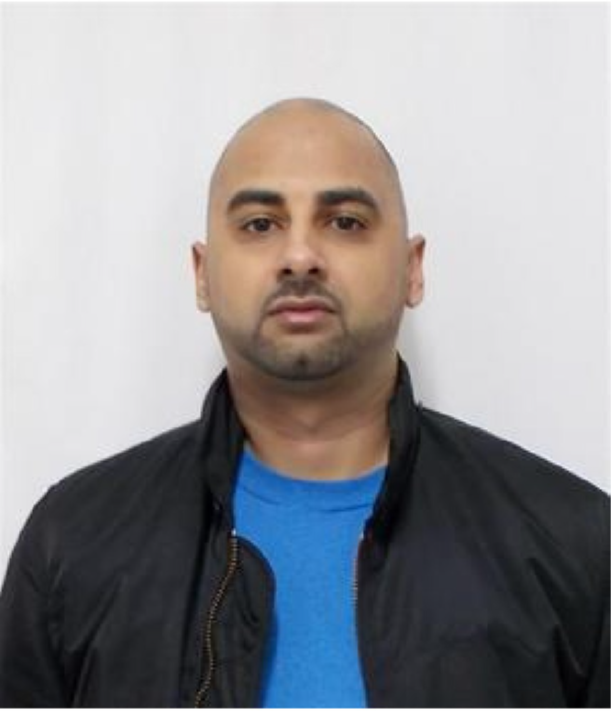
Running from the law is a full-time job that almost always ends the same way. You look over your shoulder at every coffee shop, second-guess every casual glance from a stranger, and eventually, the trap snaps shut. That's exactly what happened to 39-year-old Ontario resident Arif Jhuman. He thought putting thousands of miles between himself and the Ontario Provincial Police would buy him a lifetime of freedom. He was wrong.
Earlier this week, heavily armed Colombian security forces and Interpol agents swarmed a high-end gym inside a luxury shopping mall in Medellín. Jhuman was mid-workout when the raid went down. He didn't have time to react. Within minutes, the man who had been a federal fugitive for more than three years was being marched out of the building in handcuffs.
Medellín Mayor Fico Gutiérrez made the city's stance explicitly clear on social media. He stated plainly that Medellín is not a sanctuary for criminals.
The Escape from Ontario
Jhuman's status as a wanted man didn't start with the dramatic gym raid. It began back on January 24, 2023. That was the day he went unlawfully at large. At the time, he was serving a federal sentence of nine years and eleven months.
His rap sheet involved serious drug offenses. The conviction included possession of Schedule I and II substances for the purpose of trafficking, direct drug trafficking, and conspiracy to commit an indictable offense. He was known to frequent the Toronto area, but when the Repeat Offender Parole Enforcement squad came looking for him, he had vanished.
A Canada-wide warrant went out in April 2023. For months, local authorities hit a brick wall. Jhuman had slipped through the cracks, leaving behind his old life for a completely new identity.
Entering Colombia on Fake Documents
Living as an international fugitive requires a lot of moving parts. Colombian national police revealed that Jhuman managed to sneak into their country sometime in 2025. He didn't use his real name. He carried counterfeit identification documents and went by the alias Gillani.
He blended into the affluent crowds of Medellín. He frequented upscale neighborhoods and stayed active. He assumed that a Canadian drug conviction wouldn't register on the radar of local South American police.
That assumption ignored the reach of international law enforcement. Interpol had already issued a red notice for his arrest. A red notice functions as a global alert, notifying police forces worldwide that a suspect is wanted for extradition. Once your name hits that list, your world shrinks fast.
The Massive American Twist
If Jhuman thought he only had Canadian authorities to worry about, his problems multiplied significantly in late 2025. The United States Department of Justice unsealed a massive indictment in Tampa, Florida. Jhuman was named as one of five main suspects in a highly organized, cross-border gun-smuggling network.
The U.S. Bureau of Alcohol, Tobacco, Firearms and Explosives described the group as a sophisticated transnational criminal organization. The allegations are heavy. Prosecutors claim the ring trafficked more than 100 firearms from Florida directly into Canada between 2023 and 2024.
This wasn't just low-level smuggling. These weapons had real, deadly consequences on Canadian streets. U.S. prosecutors noted that Canadian law enforcement recovered 29 of those specific smuggled firearms from various crime scenes across the country. Some of those weapons were directly linked to active homicide investigations in Ontario.
American investigators started looking into the Florida side of the operation after tracing a gun used in an Ontario murder. That cross-border paper trail led them straight to Jhuman and his co-conspirators.
What Happens Next with Extradition
Jhuman is currently sitting in a Colombian detention facility. The big question now is where he goes next. Both Canada and the United States want him, and the legal tug-of-war is bound to be complex.
Colombia has a long history of processing international extradition requests, especially regarding high-profile narcotics and weapons traffickers. Typically, the country that files the formal request first or holds the most severe pending charges gets priority, though diplomatic agreements play a massive role.
He still owes Canada the remainder of his nearly ten-year sentence for drug trafficking. At the same time, the American firearms conspiracy charges carry massive mandatory minimum sentences in federal prison.
International border enforcement agencies are proving that the world is much smaller than it used to be. Slipping across an international border and changing your name isn't enough to erase a criminal record. Jhuman faces years of legal battles before he even steps foot inside a courtroom or a prison cell back in North America.
Steps for Tracking Cross-Border Legal Cases
Tracking international criminal cases involves understanding specific legal processes. If you're following a cross-border case like this, look at these core areas.
First, monitor the official updates from the Department of Justice or the Public Prosecution Service of Canada. They handle the formal press releases regarding court dates and extradition updates.
Second, check Interpol public registries. While not all red notices are visible to the public, high-profile captures often result in updated statuses on their international cooperation portals.
Third, look into the specific bilateral extradition treaties between the involved nations. The legal frameworks dictate exactly how quickly a foreign government can surrender a captive to face domestic charges.
(mh=0tsfgPKBvEq_de4S)0.jpg)