Military procurement usually moves at a glacial pace. Bureaucracy kills innovation. But naval warfare is changing too fast for red tape. That's why recent trials by the Royal Navy caught everyone's attention.
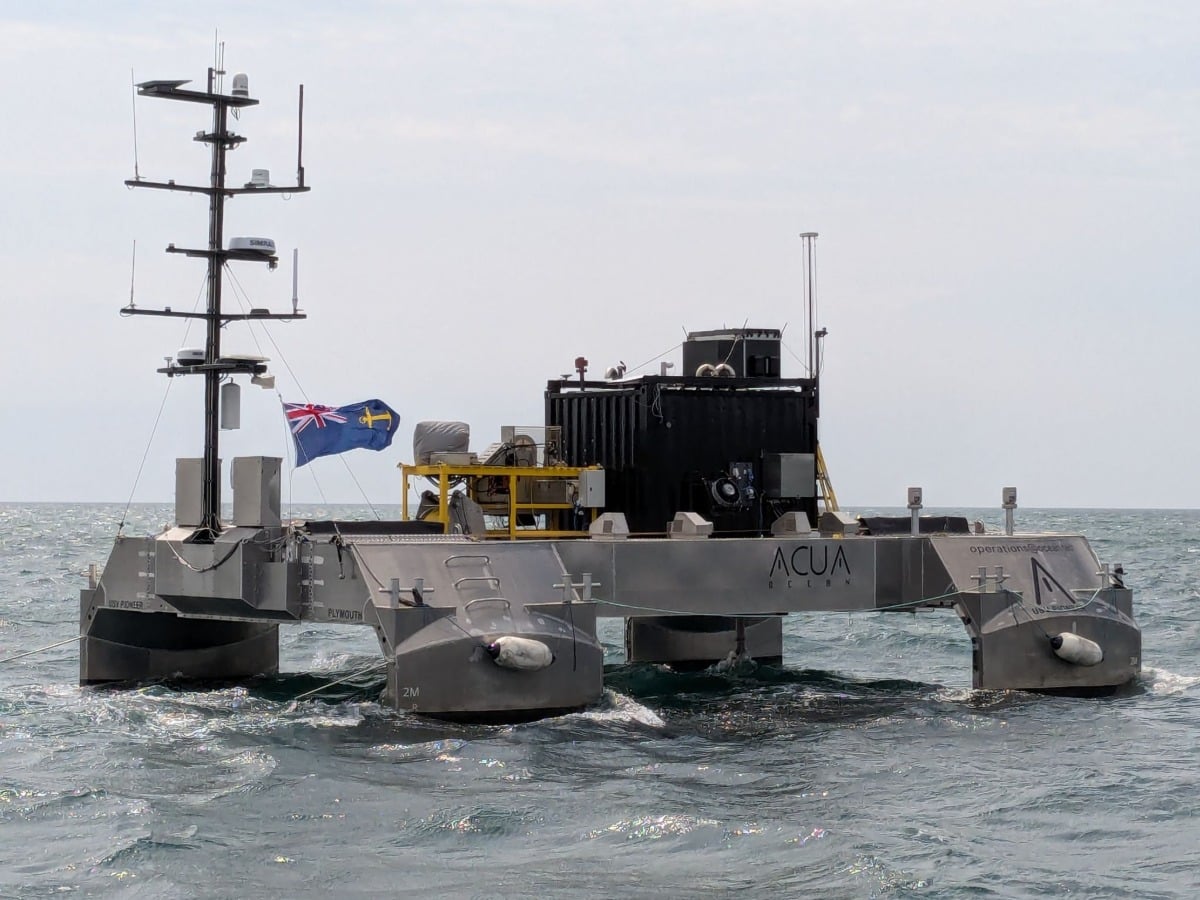
Instead of waiting for a multi-year acquisition cycle, defense planners put theory into practice off the south coast of England. They used the experimentation vessel XV Patrick Blackett to test an uncrewed surface system capable of deploying its own aerial strike drone while underway.
You aren't just looking at a cool gadget test. You're watching the messy, rapid birth of a hybrid fleet.
Moving Beyond Traditional Warships
Navies used to measure strength by the sheer tonnage of steel hulls floating on the water. Bigger destroyers and massive aircraft carriers defined dominance. Modern asymmetric threats turned that logic upside down. Cheap loitering munitions and uncrewed surface vessels altered the economic math of defense. Why risk a billion-dollar warship when a low-cost robotic setup can scout or strike first?
The Royal Navy understands this shift. Under Project Vantage, military engineers and sailors are actively testing Maritime One-Way Effectors. During the recent trials, teams from the 26 Royal Artillery and 744 Naval Air Squadron worked alongside Navy personnel to launch the Nyan drone straight from a deck-mounted launcher while the host ship stayed in motion.
This isn't happening in a sterile computer simulation. It's happening out in the open ocean with real wind, salt spray, and hardware limits.
The Operational Reality of Hybrid Fleets
Let's look at how these systems actually function in the field. Operating an aerial drone from a crewed ship is hard enough. Doing it from an uncrewed or lightly manned robotic boat introduces a completely different tier of engineering hurdles.
Communications bandwidth drops when you move further offshore. GPS jamming remains a constant threat in modern contested environments. Power management gets tricky when auxiliary launchers pull energy from the host vessel's main battery stores.
During the tests off southern England, the focus centered on pre-programmed flight trajectories and live-action handoffs. The drone, originally proven during land exercises like Exercise Spring Storm in Estonia alongside NATO allies, had to adapt to maritime motion. Launching an aircraft from a stable patch of dirt is easy. Launching it from a rolling, pitching deck on a dynamic surface platform requires tight software synchronization.
Lieutenant Commander David Burton, a capability sponsor for these systems, noted that the tests directly accelerate Atlantic Strike concepts into deployable capabilities. In plain terms: they're trying to figure out what breaks before an adversary gets the chance to exploit it.
What Most People Get Wrong About Autonomous Naval Tech
Observers often assume robotic boats operate entirely on their own like self-driving cars on a highway. They don't.
True full autonomy at sea is still a work in progress. Most current trials rely heavily on a supervised autonomy model. Operators monitor telemetry from a control console, stepping in when software hits edge cases or unexpected obstacles.
Another common misconception is that these systems replace sailors entirely. They don't. They shift human operators out of direct physical danger. Instead of standing watch on an exposed hull or sitting in a vulnerable cockpit, personnel manage operations from protected control stations.
The logistical footprint changes, too. Maintenance doesn't vanish; it just moves to the workshop. Saltwater destroys electronics fast. Corrosion, battery degradation, and actuator wear mean technicians spend hours washing down pods and diagnosing firmware bugs.
The Broader Defence Investment Strategy
This recent test isn't an isolated stunt. The UK government's Defence Investment Plan backs these autonomous trials with over five billion pounds earmarked specifically for uncrewed systems and advanced robotics.
Minister for Defence Readiness and Industry Luke Pollard emphasized that the transition to a hybrid navy sits at the core of future British defense readiness. When you combine crewed platforms with smart, expendable uncrewed assets, you multiply your tactical reach without scaling up personnel numbers. Crew sizes remain tight, but operational output expands.
Expect more of these trials to slip out of experimental phases and into standard fleet rotations over the next few years. The technology still has plenty of growing pains to work through, but the direction is locked in.
Stop treating maritime drones as science fiction. They're frontline kit now.
Britain's Navy Tests Strike Capable Drone at Sea
This short video clip provides a direct visual look at the Royal Navy's recent at-sea trials launching strike-capable drones from a moving vessel.
http://googleusercontent.com/youtube_content/1