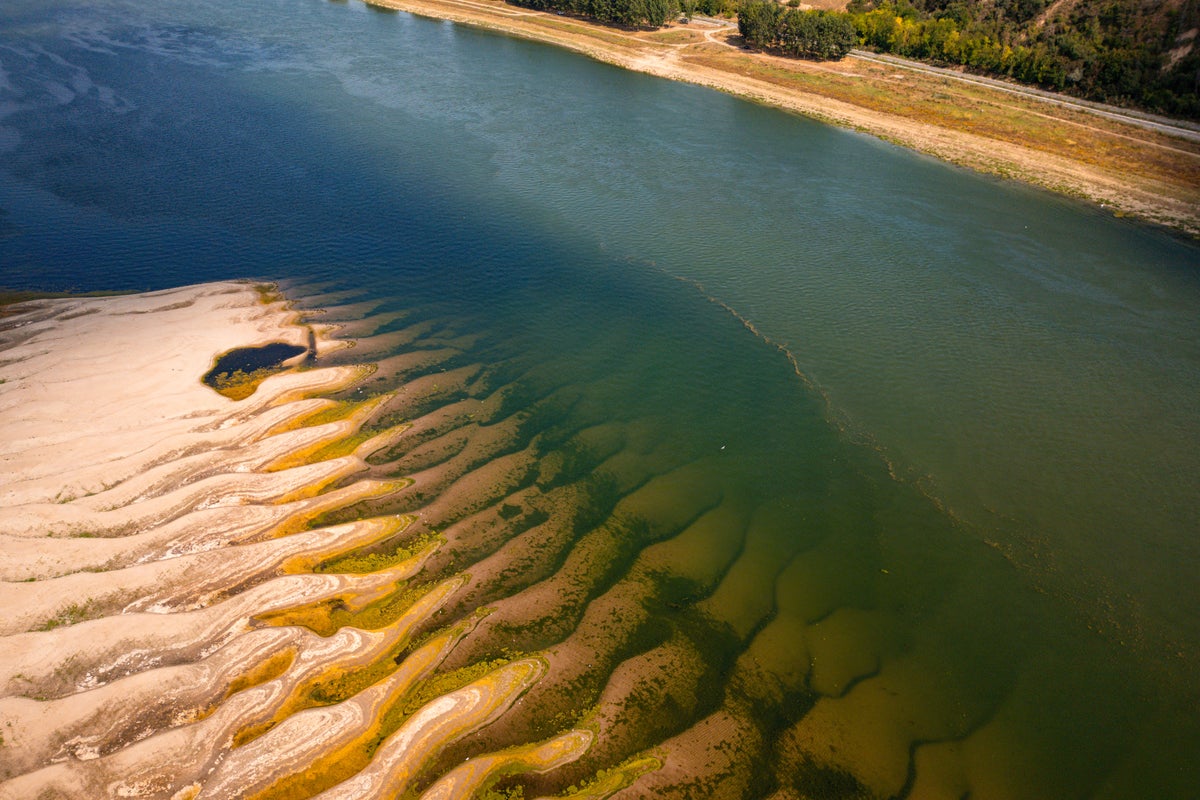
You do not normally expect a nation's military to use explosives on a major European waterway just to keep the lights on. Yet that is precisely what happened when a historic drought shrank the Danube river to a fraction of its normal flow.
When water levels drop to extremes, riverside infrastructure fails. For Romania, the crisis hit home at the Cernavodă nuclear power plant, which relies completely on the Danube for core cooling. With one reactor already forced offline and the last operational unit hurtling toward a mandatory shutdown, authorities took drastic action. They brought in the navy, packed the riverbed with explosives, and sank rock-filled barges to physically force water toward the plant intake channels.
The Anatomy of a River Crisis
The Danube's flow plunged to roughly 1,400 cubic meters per second, sitting at about one-third of the normal August average. That is an unprecedented drop. Nuclear reactors generate massive amounts of continuous power independent of weather conditions, but they are unforgivingly thirsty. They need a constant, high-volume flow of cool water to safely absorb waste heat.
When the riverbed becomes exposed mud and shallow pools, the intake pumps fail to pull enough volume. State operator Nuclearelectrica had no choice on July 28 but to disconnect the first of Cernavodă's two units. Those two reactors combined generate about twenty percent of Romania's total electricity. Losing both would cripple a national grid already stressed by soaring summer temperatures and failing hydroelectric output.
Engineering Solutions Out of Desperation
Faced with a complete blackout threat, the Romanian government skipped bureaucratic delays and launched an emergency river engineering campaign.
First, naval forces detonated nearly 400 pounds of explosives along the Bala channel to shatter a massive rock obstruction blocking the natural flow. Then, work crews moved in to dredge trapped sediment and sink four large barges loaded down with rocks. This makeshift dam was designed to act as a hydraulic wedge, forcing more water away from shallow branches and down the specific channel feeding Cernavodă.
It bought time. Plant director Romeo Urjan noted that without the intervention, the remaining reactor faced total shutdown within days. The blast and subsequent barge scuttling nudged water levels up by four centimeters over a single 24-hour window, extending the operational runway by at least nine days.
The Wider European Energy Trap
Romania is not alone in this fight. Hungary faced an identical nightmare at its Paks nuclear station, where the Danube fell to within millimeters of triggering an automatic emergency shutdown. Downstream industries across Central Europe were asked to curb power consumption voluntarily, while governments drafted contingency plans for rolling industrial cutbacks.
The underlying problem goes beyond a single dry summer. Relying on aging river-cooling infrastructure in an era of deepening climate volatility leaves national grids exposed. Energy imports cannot rescue neighbors when everyone is drawing from the same shrinking pool. Hydropower is down, thermal plants are restricted by high water temperatures, and atomic stations are at the mercy of river gauges.
Blasting riverbeds with dynamite is a temporary fix. It keeps the turbines spinning for another week or two, but it does not solve the long-term mismatch between rigid industrial designs and an unpredictable natural environment. If river levels continue to drop earlier each year, governments will need permanent technical overhauls for their intake systems rather than emergency military engineering.
Check your local energy grid resilience policies, monitor corporate water usage restrictions if you operate manufacturing assets in the region, and prepare for tighter power-saving mandates as summer heatwaves strain legacy infrastructure.