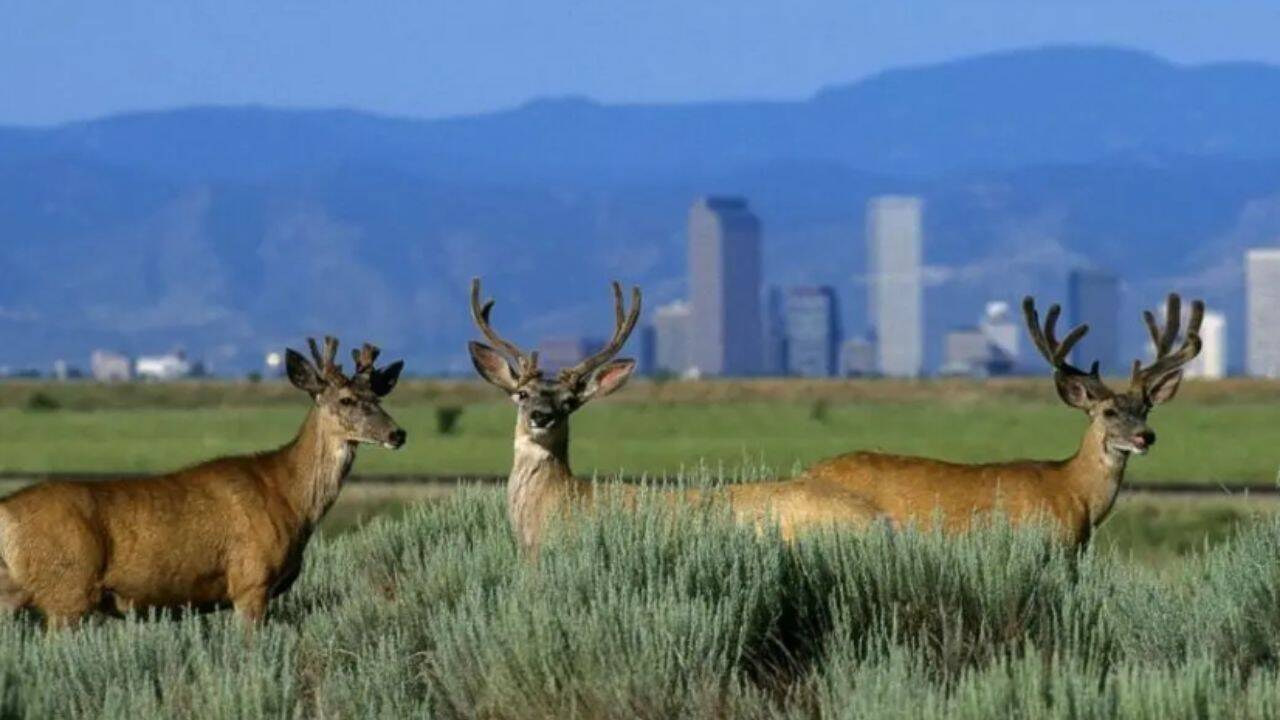
You can see the skyline of downtown Denver from the middle of the prairie, but instead of traffic noise, you hear the low grunts of roaming bison. It sounds like a strange juxtaposition. Ten miles northeast of Colorado's capital sits the Rocky Mountain Arsenal National Wildlife Refuge, a sprawling 15,000-acre sanctuary.
Today, it supports more than 330 animal species. Decades ago, this exact ground represented one of the most toxic industrial sites in North America.
How do you turn a former chemical weapons factory into a thriving ecosystem? The answer involves billions of dollars, a massive Superfund cleanup, and an unexpected assist from a group of wintering bald eagles.
From Farmland to Chemical Warfare
The story of the Arsenal didn't start with manufacturing, but it changed forever in 1942. Right after the United States entered World War II, the U.S. Army seized about 17,000 acres of quiet Colorado farmland in Commerce City. The military needed a secure location to produce chemical weapons and munitions.
Workers churned out mustard gas, Lewisite, and incendiary bombs to support the war effort. When peace returned, the facility didn't shut down. Instead, the government leased parts of the land to commercial entities, most notably the Shell Chemical Company.
For decades, the site manufactured heavy-duty pesticides like aldrin and dieldrin. Chemical processing, accidental spills, and waste disposal methods left a devastating mark. More than 600 distinct chemicals contaminated the soil and groundwater. Deep-well injection practices caused structural headaches and sparked local fears.
By 1987, the federal government placed the site on the Superfund National Priorities List. The land was a toxic hazard zone. Walking across it meant risking exposure to dangerous industrial waste.
The Bald Eagles That Saved the Land
Nature has a funny way of pushing back. In the early 1980s, before any major remediation began, biologists noticed something incredible. A roost of bald eagles chose the contaminated Arsenal as their winter home.
At the time, bald eagles were struggling heavily across the United States. Finding a protected, undisturbed communal roost on an active military and industrial site forced a massive shift in perspective. The U.S. Fish and Wildlife Service stepped in to protect the birds. That single discovery catalyzed a grassroots movement. Conservationists and local communities demanded that the land become a sanctuary rather than a permanent industrial wasteland.
In 1992, Congress officially designated the site as the Rocky Mountain Arsenal National Wildlife Refuge. The legal framework changed overnight. The ultimate goal shifted from containment to total ecological restoration.
A Two-Billion-Dollar Scrubdown
Cleaning up a chemical weapons manufacturing plant and pesticide factory is no easy feat. The multi-decade remediation project cost roughly $2.1 billion.
Crews dug up contaminated soil to depths of ten feet in the worst areas, safely sealing it inside specialized hazardous-waste landfills built right on the property. Where total removal wasn't practical, engineers buried waste beneath heavy composite covers. These barriers stopped rainwater from leaching toxins into the local groundwater supply.
Pumps whirred to life, treating polluted aquifers around the clock. Even prairie dogs played a functional role. Colonies sitting directly on top of toxic hot spots were safely trapped and relocated to pristine sections of the refuge.
The U.S. Army retained ownership of about 1,000 acres containing ongoing treatment facilities and waste management units, but the rest gradually transitioned to the U.S. Fish and Wildlife Service.
What Lives There Now
Walking through the refuge today feels surreal. The landscape has largely returned to its original shortgrass prairie roots.
You'll find a thriving bison herd roaming across thousands of acres. Brought back in 2007 from a small initial group, these heavy animals actively shape the terrain. Their hooves break up hard-packed earth, naturally tilling the soil and encouraging native grasses to flourish.
Black-footed ferrets—once thought to be completely extinct—now hunt prairie dogs and inhabit their underground tunnels. Mule deer, white-tailed deer, coyotes, and red foxes make their homes in the brush.
Bird watchers flock to the lakes and wetlands. Great blue herons, American avocets, snowy egrets, and burrowing owls use the seasonal waters and abandoned burrows. When winter arrives, bald eagles return in force to roost in the old cottonwood trees.
Nearly 500,000 people visit every year. They drive the 11-mile Wildlife Drive, hike the trails, and visit the green-built visitor center to learn about the property's wild history.
Planning Your Visit
If you want to experience this urban wilderness yourself, keep a few practical details in mind.
The refuge sits just off highway routes north of Denver, making it an easy afternoon trip. Admission is free, which surprises many first-time visitors. You can bring your own car for the Wildlife Drive, but stay inside your vehicle to keep the animals safe.
Bring binoculars, water, and sun protection because shade trees are sparse across the open prairie. Check the visitor center hours before heading out, as seasonal closures or weather events occasionally affect trail access.
Check out the exhibits near the entrance to understand the industrial remnants still hidden beneath the surface. It provides a jarring contrast to the sweeping views of wildlife against the backdrop of the Rocky Mountains.
Go early in the morning when the bison are active and the light hits the prairie grass just right.