We used to laugh at clumsy metallic prototypes tumbling over on testing stages. Not anymore.
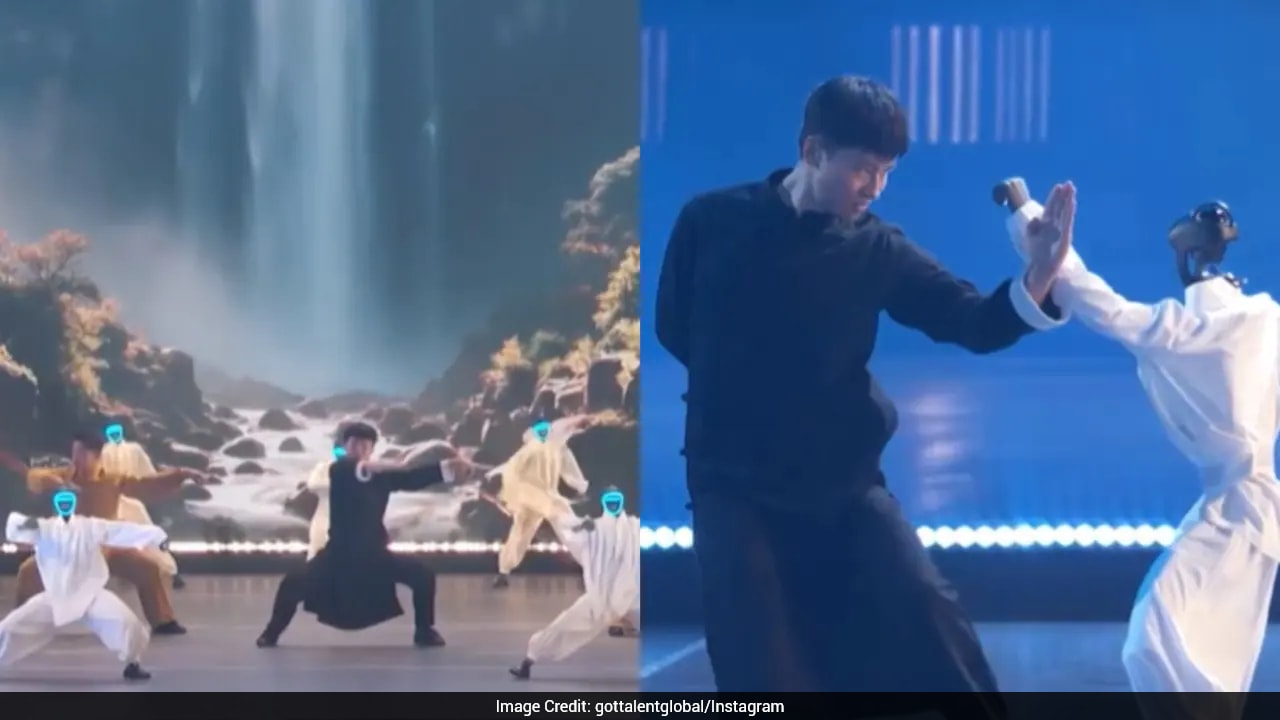
When a troop of Unitree G1 humanoid robots stepped onto the America's Got Talent stage alongside Chinese dancer Wu Yufei, they didn't just walk. They kicked, punched, flipped, and danced in terrifyingly precise synchronization. It wasn't a glitchy novelty act. It was a calculated display of agility that left judge Sofia Vergara so stunned she slammed the Live Golden Buzzer, sending the robots straight to the finals. In similar updates, we also covered: Why Simon Stone Turned Chekhov Into A Modern Korean Power Struggle.
Let's look past the flashing lights and reality TV hype. This moment marks a major shift in how public audiences perceive robotics.
Beyond the Novelty Act
Most people view stage robots as remote-controlled toys with zero real-world capability. That mindset is outdated. The machines built by companies like Unitree are rapidly closing the gap between rigid automation and fluid human movement. The Hollywood Reporter has analyzed this fascinating subject in extensive detail.
During their initial Season 21 audition back in June, eight G1 humanoids proved they could maintain balance and pull off basic routines. By the quarterfinals, the choreography evolved. The integration of traditional martial arts forms with high-speed mechanical execution created an eerie illusion of life.
- The robots executed precise backflips without losing balance.
- Punches and kicks matched human performers down to the millisecond.
- Balance recovery systems handled sudden shifts in momentum instantly.
The Reality Behind the Precision
You might wonder if these machines are truly thinking for themselves on live television. They aren't.
These units rely heavily on pre-programmed choreography rather than real-time autonomous decision-making. They don't walk out onto the stage and improvise a martial arts kata on the spot. Human engineers map every single trajectory, torque limit, and joint angle beforehand.
Yet, dismissing this as simple remote control misses the point entirely. The mechanical engineering required to make a bipedal robot execute a high-speed backflip without snapping its own actuators is staggering. The hardware stability has caught up with the software ambitions.
Why This Cultural Shift Matters
Pop culture shapes public comfort levels with emerging tech. Years ago, viewers panicked over dystopian sci-fi tropes of mechanical takeovers. Today, millions cheer as a robot hits a martial arts pose alongside a human dancer.
Entertainment acts as the ultimate testing ground for public relations. If people can accept a humanoid robot as a viable stage performer, accepting them as warehouse workers, security guards, or domestic assistants becomes much easier.
Social media reactions split sharply into two camps immediately following the Golden Buzzer win. Half the internet celebrated a magnificent leap in engineering. The other half voiced deep anxieties about military applications and labor displacement. Both sides are right. The same balance control that lets a robot execute a clean roundhouse kick on television can easily be adapted for frontline defense or heavy industry.
What Happens Next
The production value of live entertainment will never be the same. Once audiences get used to seeing bipedal robots executing synchronized martial arts routines on prime-time television, standard backup dancers are going to look quaint.
Expect to see commercial stages adopt automated performers at a rapid pace. The technology is stable enough, light enough, and expressive enough to tour globally.
Watch the finals closely. The machines won't just be dancing. They'll be normalizing the future right in front of your eyes.