A $250 million piece of space hardware is currently plunging toward Earth. It isn't a planned reentry, and it definitely isn't a controlled retirement. Instead, NASA's Neil Gehrels Swift Observatory has been dragged down by violent solar storms, sinking into the atmosphere much faster than anyone anticipated.
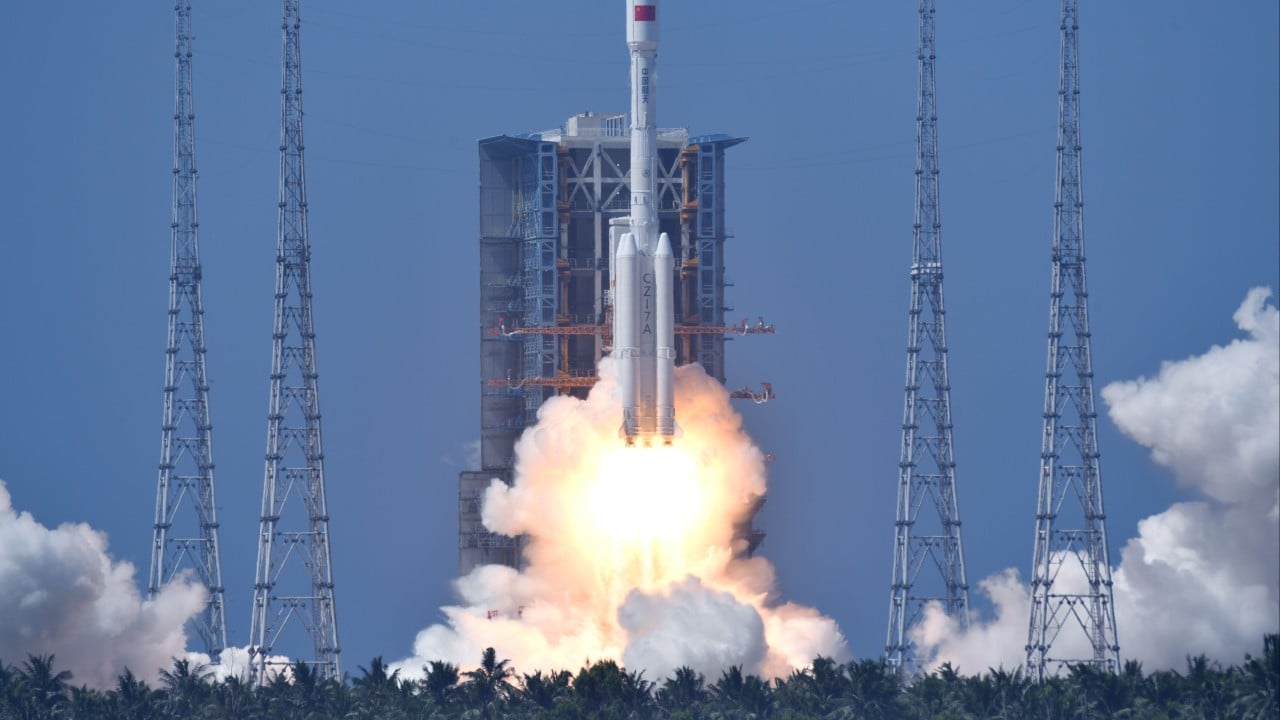
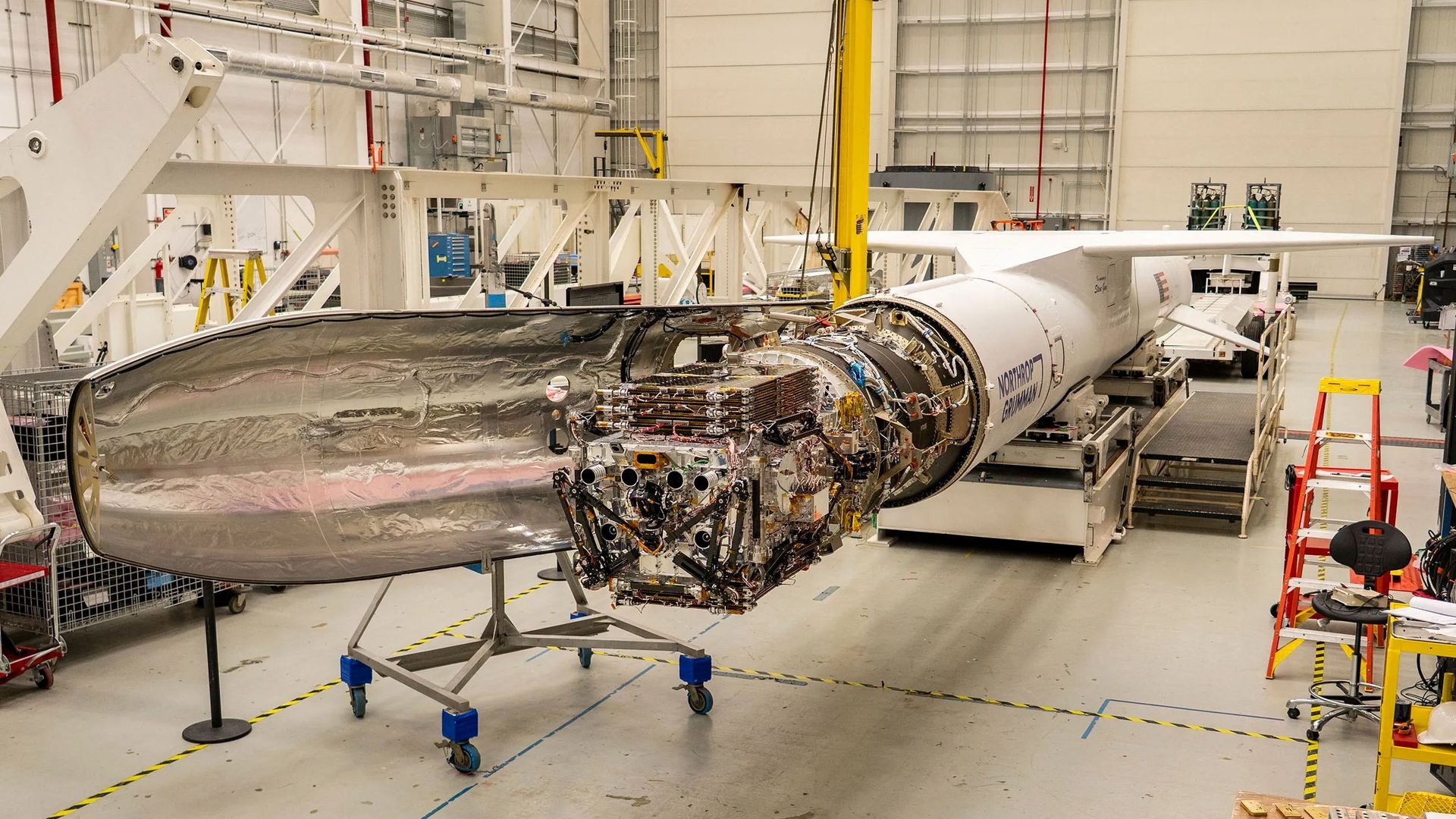
To save it, a modified L-1011 commercial airliner took off from the Marshall Islands on July 3, 2026. High above the Pacific, it dropped a Pegasus XL rocket that ignited and blasted a tiny, three-armed robotic spacecraft named Link into orbit. This is a desperate, first-of-its-kind rescue mission for a falling NASA space telescope. If it works, we enter a new era of space sustainability. If it fails, one of our most productive cosmic watchdogs burns up in the atmosphere by October.
NASA is paying a startup named Katalyst Space Technologies $30 million for this rescue. That's a fraction of what it costs to build a new observatory. But the clock is ticking, and the physics of this operation are terrifyingly complex.
The invisible enemy dragging Swift to its doom
Space isn't completely empty. In low Earth orbit, there's a thin layer of atmospheric gas. Usually, satellites can navigate this for decades before dropping. But our sun has been going absolutely wild lately.
We are currently in the peak of the solar cycle. Intense solar flares and coronal mass ejections have pounded Earth's magnetic field. This energy doesn't just trigger beautiful auroras; it heats up the upper atmosphere. When the atmosphere heats up, it expands outward like a balloon. Suddenly, satellites that were coasting in relatively clean space find themselves plowing through dense gas.
That brings us to the current situation. Swift is a 1.6-ton satellite orbiting just 224 miles up. Because of the sun's tantrums, the atmospheric drag has surged. The telescope is sinking like a stone. To save enough orbital energy to even make a rescue possible, scientists at Penn State had to shut down all of Swift's scientific instruments back in February. It's been sitting in the dark, silently falling. If its altitude drops below 185 miles, the atmosphere becomes too thick for any rescue craft to safely pull it back up. It'll hit the point of no return.
Inside the thirty million dollar rescue plan
This isn't a traditional NASA mission. The space agency didn't spend ten years designing a bespoke rescue vehicle. They couldn't. They only realized Swift was in terminal danger late last year. They gave Katalyst Space Technologies exactly nine months to put a mission together.
The rescue vehicle is called Link. It's about the size of a kitchen refrigerator, but it has a 40-foot solar wingspan. The most striking features are its three robotic arms. Each arm stretches just over three feet long and ends in a pair of tiny grippers that look exactly like the hands of a Lego minifigure.
Link has to spend the next month slowly chasing Swift down. Once it catches up, the autonomous software has to guide those three robotic arms to grab onto the telescope. Here is the catch: Swift was launched in 2004. Nobody designed it to be serviced. It doesn't have a standard docking port. It doesn't have handles for a robot to grab. Link has to grab onto whatever structure it can find without crushing delicate instruments or shattering solar panels.
If the grab succeeds, Link will fire its thrusters gently. It cannot just blast its engines; a sudden jerk could snap the robotic arms or tear Swift apart. Instead, it will apply a slow, steady push over several weeks to raise the telescope's altitude by 150 miles.
Why this falling NASA space telescope is irreplaceable
You might wonder why we are risking $30 million on a satellite that has been orbiting for over twenty years. Why not just build a new one?
The answer comes down to federal budgets and unique capabilities. NASA simply doesn't have the cash to build a replacement right now. More importantly, Swift is exceptional at what it does. It's NASA's astrophysical first responder.
Swift was built to track gamma-ray bursts. These are the most violent explosions in the known universe, occurring when massive stars collapse into black holes or when neutron stars collide. These bursts happen instantly and vanish in minutes. Swift earned its name because it can detect a burst, calculate its coordinates, and physically pivot its entire body to point its telescopes at the explosion within seconds.
Newer assets like the James Webb Space Telescope are incredible, but they're slow. Webb takes hours or days to point at a new target. It needs a scout to tell it where to look. Swift is that scout. If we lose it, our ability to catch these fleeting cosmic explosions drops significantly.
Moving past the throwaway culture of space flight
For the last six decades, humanity has treated space exploration like a single-use consumer habit. We launch a brilliant piece of technology, run it until the fuel runs out or a component breaks, and then watch it die. This mission changes that dynamic entirely.
If Katalyst Space Technologies pulls this off, it proves that commercial robotic servicing is viable. We can start treating satellites like infrastructure that can be repaired, refueled, and moved.
Think about the Hubble Space Telescope. It's much bigger than Swift, but it's suffering from the exact same problem. Solar activity is dragging Hubble down too. It doesn't have thrusters to raise its own orbit. NASA has already dropped hints that if the Link spacecraft saves Swift this summer, a similar commercial salvage mission could be approved to save Hubble in a couple of years.
The next critical steps for the mission
The launch was successful, but the hard part starts now. Space teams are working through a strict checklist over the coming days to ensure the mission succeeds.
- Establish communications: Engineers are currently working to lock down a stable telemetry signal with Link to confirm its health.
- Deploy the arrays: Teams must verify that the 40-foot solar panels have fully extended and are generating power.
- Orchestrate the approach: Navigators will begin a series of precise orbital burns to guide Link toward Swift over the next thirty days.
- The critical catch: By August, Link will attempt its autonomous approach and grab the telescope.
This is a high-wire act over the atmosphere. We'll know by September whether Swift is back to scanning the secrets of the universe or if it's destined to become a shooting star.