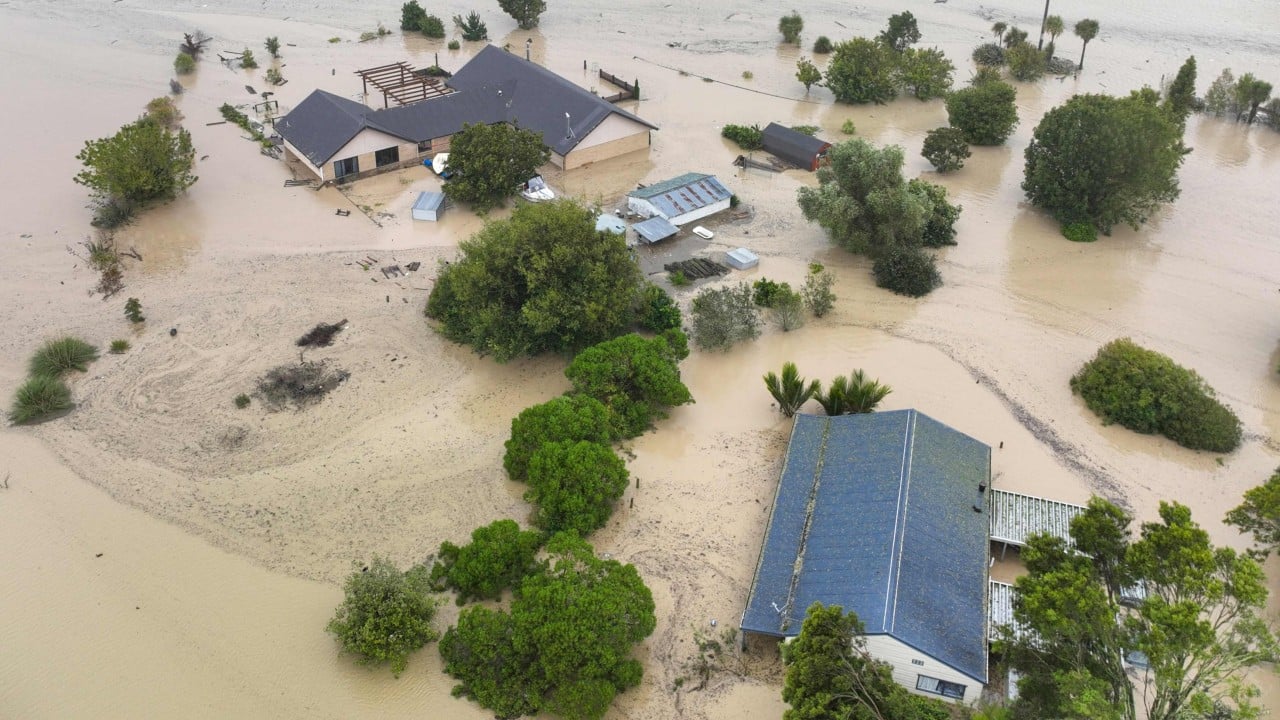
Buying a house in New Zealand right now feels like a cruel game of financial chicken. With interest rates squeezing budgets and the cost of living refusing to budge, first-home buyers and budget investors are desperate. Then, you see it. A decent property in Auckland or Hawke's Bay listed for $100,000 below the neighborhood average. It feels like you hit the lottery.
But it's a trap.
That massive discount exists because the property is sitting squarely inside a designated flood zone. Data from analytics firm Cotality shows an incredibly bizarre trend in the Kiwi property market. Buyers are actively hunting down these high-risk homes. In fact, value growth for houses in flood zones has actually outpaced unaffected properties by several percentage points since 2020. People see a short-term bargain and willingly sign up for long-term disaster. They are pricing in the risk, thinking a bit of water every few years is worth getting a foot on the property ladder.
They are wrong. Buying into these zones right now is a ticking financial time bomb, and the safety nets are already being pulled away.
The Illusion of the Disaster Discount
It makes sense on paper. If you're looking at a suburb like Mt Albert in Auckland, securing an upfront discount of $70,000 to $100,000 just because a map has some blue lines on it feels like a win. You tell yourself that the 2023 Auckland Anniversary Day floods or Cyclone Gabrielle were "one-in-a-hundred-year" anomalies. You figure you'll just park the car on higher ground or build a nice deck.
The market has responded to this desperation by bidding these properties up. Cotality's data reveals that since January 2020, flood-risk properties in heavily impacted zones grew in value by 18.4%, while nearby safe buffer zones only grew by 13%.
This isn't a sign of structural health. It's a sign of sheer desperation. Buyers are trading immediate affordability for massive, uninsurable future liabilities.
[Average Flood Zone Discount in Auckland: $70,000 - $100,000]
[Value Growth Since 2020 (Flood Zones): 18.4%]
[Value Growth Since 2020 (Safe Zones): 13.0%]
The Insurance Noose is Tightening
Here is the reality check you won't get from a real estate agent trying to flip a low-lying property. The insurance industry isn't stupid. They watch the weather, and they watch their profit margins.
Insurance companies like IAG have openly criticized New Zealand’s piecemeal approach to managing natural hazards. The days of cheap, blanket insurance policies are over. If a property has a known history of flooding or sits on a prominent flood plain, insurers are doing one of three things:
- Skyrocketing premiums: Your monthly mortgage payment might look manageable, but your insurance bill will swallow those savings whole.
- Massive excesses: If a storm hits, you might have to pay the first $10,000 or $20,000 of damage out of your own pocket before the policy kicks in.
- Total uninsurability: Insurers are increasingly refusing to cover specific properties at all.
If you can't get insurance, you can't get a mortgage. And if you can't get a mortgage, your property becomes what analysts call "non-transactable." You won't be able to sell it to anyone other than a cash buyer willing to take a massive gamble. You are essentially stuck in a house that is actively losing its liquidity.
The Government Bailouts are Done
During the catastrophic weather events of 2023, councils and the central government stepped in with voluntary buy-out schemes to rescue stranded homeowners. Dozens of homes in suburbs across Auckland are still being compulsorily bought by local councils to restore natural waterways and build flood plains.
If you think that safety net will always be there to catch you, guess again.
The government has explicitly warned that these massive taxpayer-funded buyouts are not going to continue indefinitely. The state is not your infinite insurance policy. If you buy a property in 2026 knowing full well it sits in a high-risk zone, you own that risk entirely. When the next major storm hits, no one is coming to write you a check for market value.
How to Actually Protect Yourself Before You Buy
Don't rely on top-level public maps or vague assurances from a vendor. If you're looking at a property that seems suspiciously cheap, you need to execute a strict due diligence checklist before handing over a single dollar for a builder's report or legal fees.
1. Call an Insurer First
Before you pay $1,000 for a property valuation or a structural report, call your insurance broker. Give them the exact address. Ask them straight up if they will insure the home, what the premium will be, and if there are any specific flood exclusions. If they hesitate, walk away.
2. Dive into the LIM and Council Flood Viewers
Auckland Council’s interactive Flood Viewer and similar tools across regional councils show the exact "blue veins" of overland flow paths and flood plains. Look at the land. A flood plain means there is at least a 1% chance of flooding every single year. Over a standard 15-year holding period for a property investment, that compresses into a nerve-wracking 14% cumulative chance of inundation.
3. Check the Physical Structural Elevation
Not all houses in a flood zone are equal. Look at how the home is constructed. Is it a low-slung, older concrete slab home sitting level with the pavement? It's going to catch water. Newer developments are frequently built on raised timber piles or feature underground stormwater detention tanks designed to hold thousands of liters of sudden runoff. Look at the neighboring properties. If the new builds next door are elevated three steps up from the street and the house you're looking at sits low, you're looking at the neighborhood sink.
Affordability Wins Today, Risk Shapes Tomorrow
It is incredibly tempting to take the discount. Saving $100,000 upfront sounds amazing when you're struggling to meet a bank's lending criteria. But a cheap home ceases to be a bargain the moment you have to shovel liquid silt out of your living room while holding an uncollectible insurance policy.
Be smart. Run the numbers on the long-term insurance costs, look at the physical elevation of the structures, and stop gambling your financial future on the hope that it won't rain.
To better understand how climate shifts are physically rewriting property values and council zoning laws across the country, check out this detailed analysis on Auckland's flood recovery and infrastructure changes. This breakdown explains exactly how local councils are restructuring urban spaces to handle intense weather, which directly impacts which homes will remain habitable and which ones will face strict structural restrictions.