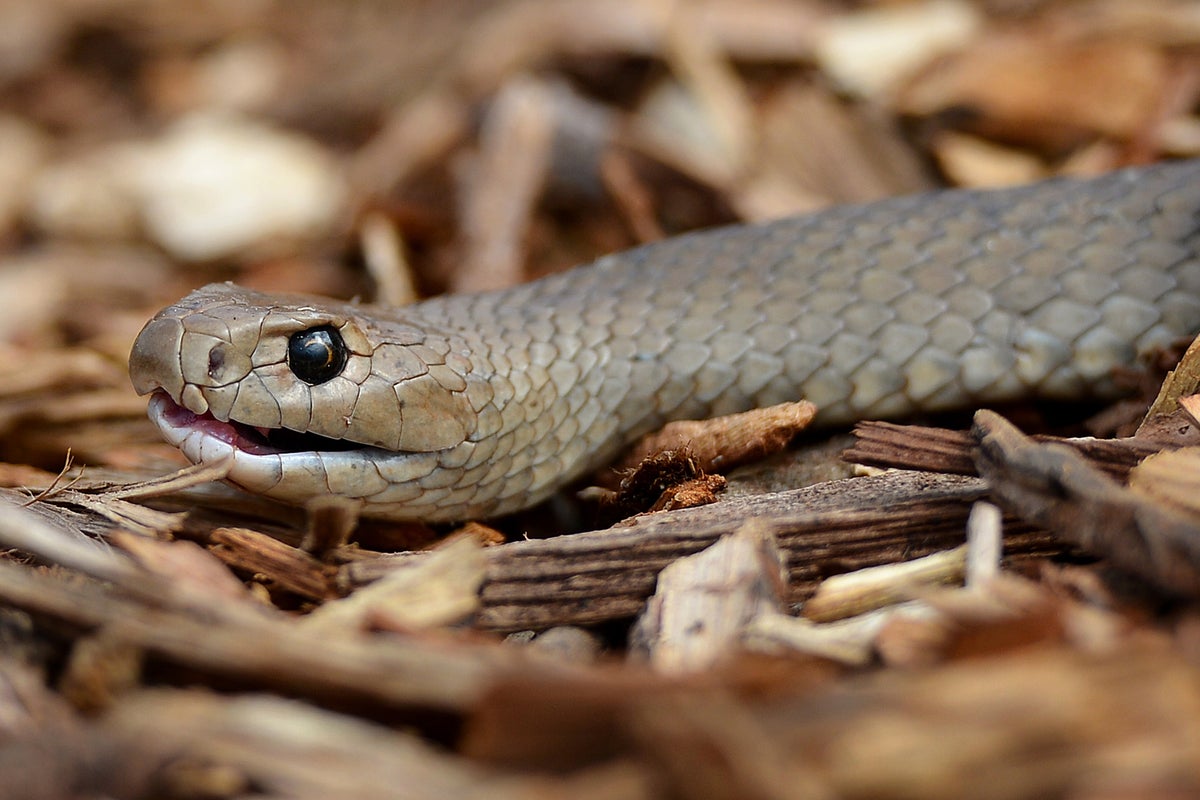
Imagine riding a peaceful rail trail on a crisp afternoon. You hear a sudden rattle. You feel a thud against your frame. You look down, expecting a stray branch stuck in your rear wheel. Instead, you see a massive, two-metre-long eastern brown snake wrapped tightly around your chain, its head thrashing and searching for a target.
This nightmare became reality for an unnamed Australian cyclist in her 60s riding the Northern Rivers Rail Trail in New South Wales. It is a freak accident that sends shivers down the spine of any trail rider. But beyond the shock value, this bizarre incident highlights a massive gap in how outdoor enthusiasts prepare for wildlife encounters. When this Australian cyclist was bitten by a snake, she survived because of quick medical intervention and sheer luck. You might not be so lucky.
Here is exactly what happened on that trail near Burringbar, why it matters to anyone who rides a bike, and what you need to do to survive if a deadly reptile hitches a ride on your drivetrain.
How a Routine Ride Turned Into a Nightmare
On a Wednesday afternoon, the cyclist was cruising along a popular converted rail trail. It was about 1:00 PM near the small town of Burringbar, just a short drive from Byron Bay. The trail is beautiful. It is flat, accessible, and attracts thousands of walkers and riders.
Then, disaster struck.
She did not see the snake. She rode right over it.
Because of the speed and the rotation of the wheels, the snake was thrown upward. In a split second, the two-metre eastern brown became tangled directly in her bike’s chain and drivetrain.
The mechanical force pinned the reptile’s body. But its head remained completely free, terrified and aggressive. Trapped and fighting for its life, the snake lashed out. It bit the woman right on her thigh.
The Delicate Rescue and the Aftermath
Imagine the sheer panic of stopping your bike, looking down, and realizing you are physically tethered to a thrashing, deadly predator.
Emergency services were called immediately. Paramedics rushed to the scene. The woman was stabilized and taken to Tweed Valley Hospital.
Meanwhile, the local police and a professional snake catcher had to deal with the bike. Sarah Mailey, a handler from I’ll Catch It Snake Relocations, arrived to a surreal scene. She had to restrain the snake’s head while officers and bystanders worked to carefully untangle the body from the chain.
The snake’s injuries from the bike’s moving parts were too severe. Mailey had to humanely euthanize the creature after extracting it.
The cyclist was incredibly fortunate. She spent the night in the hospital and was discharged the next morning. It was likely a "dry bite"—a bite where no venom is injected. Dry bites happen, but you can never, ever assume you have received one.
Why You Should Never Underestimate the Eastern Brown Snake
Let’s be clear. The eastern brown (Pseudonaja textilis) is not a creature to mess with.
It holds the title of the second-deadliest land snake on the planet based on its venom profile. It is responsible for more snakebite fatalities in Australia than any other species.
Its venom is a highly complex cocktail. It contains powerful neurotoxins that shut down your nervous system, alongside cardiotoxins that affect the heart. Most dangerously, it contains powerful procoagulants. These chemicals cause your blood to clot rapidly inside your vessels, consuming your body's clotting factors and leading to severe internal bleeding.
A bite can kill a human in under an hour if left untreated.
Debunking the Aggression Myth
Many people assume eastern browns are aggressive monsters that actively chase humans. This is flat-out wrong.
"I don't believe that they're an aggressive species, I just believe that they're defensive when they're feeling threatened," Sarah Mailey explained after the rescue.
In this case, the snake did what any animal would do. It was basking on the side of a trail, trying to absorb some warmth. When a heavy bicycle ran over its body, it fought back. It was pinned in a metal chain and terrified.
Eastern browns often freeze when they hear someone coming. They try to blend in with shadows, leaves, or branches. To a cyclist moving at 25 kilometers per hour, a sleeping snake looks exactly like a stick.
What to Do if an Australian Cyclist Is Bitten by a Snake
When venom enters the body, your survival depends entirely on what you do in the next five minutes. Most people get this wrong. They panic. They run. They do things they saw in old movies.
If you or your riding buddy are bitten on the trail, you must act with absolute precision.
The Absolute No-Nos of Snakebite Treatment
First, let's kill the myths.
Do not wash the bite site. This is a massive mistake. Medical teams at the hospital use swabs of the skin to test for residual venom, allowing them to identify the exact species of snake and administer the correct antivenom. If you wash the leg, you destroy that evidence.
Do not cut the wound or try to suck out the venom. This does not work. It only damages tissue and accelerates infection.
Do not apply a tourniquet. Restricting all blood flow to a limb can cause permanent damage and lead to amputation.
Do not try to catch or kill the snake. You will probably get bitten again. Take a quick photo from a safe distance if you can, but do not risk your life for it.
Do not ride or walk back to your car if you can avoid it. If you elevate your heart rate, the venom will pump through your lymphatic system and bloodstream at a terrifying speed. Sit down. Stay calm. Let help come to you.
The Pressure Immobilisation Technique Explained
This is the gold standard of snakebite first aid. You should know this by heart.
The lymphatic system moves venom. By applying firm, even pressure to the entire limb, you slow down the lymphatic flow. This keeps the venom localized, buying you hours of precious time.
- Keep the victim still. Instruct them to sit or lie down immediately. Reassure them. Panic increases the heart rate.
- Apply a broad compression bandage. Use a proper elasticized snakebite bandage (like a SMART bandage). If you do not have one, use whatever elastic bandage you have. Start at the toes of the bitten limb and wrap upward.
- Wrap firmly. The bandage should be as tight as you would wrap a sprained ankle. It should not cut off arterial blood circulation (you should still feel a pulse in the foot), but it must be firm.
- Bandage the entire limb. Wrap all the way up the leg, covering the bite site directly.
- Splint the limb. Use a straight branch, a bicycle pump, or a tire lever to keep the joint completely still. Secure the splint with extra straps or bandages.
- Call emergency services. In Australia, dial 000 immediately. Do not remove the bandage under any circumstances until you are in an emergency department and the medical team tells you to do so.
How to Spot a Snake on the Trail and Avoid a Collision
Riding a bike makes you vulnerable. You are moving fast, quietly, and your eyes are often focused just a few meters in front of your tire. Here is how to minimize your risk.
Look Far Ahead
Do not stare at your front wheel. Keep your gaze 10 to 15 meters down the trail. This gives you time to spot an obstacle—whether it is a wet log, a rock, or a two-metre eastern brown taking a nap. If you see something resembling a stick, assume it is alive until proven otherwise.
Control Your Speed on Blind Corners
On winding singletrack or overgrown rail trails, do not blast around corners blind. If a snake is basking just around the bend, you will run it over before you can squeeze your brake levers. Slow down, keep your weight balanced, and be ready to stop or steer away.
Give Them Space
If you see a snake crossing the path, stop. Give it room. Do not try to poke it with your front wheel or ride closely past it. Snakes do not want to fight you. Given a few seconds, they will almost always slither into the bush to hide. Let them.
Your Essential Trail Emergency Checklist
Most cyclists carry a spare tube, a multi-tool, and a CO2 inflator. But very few carry what actually matters when life hangs in the balance.
Your saddle bag needs a dedicated snake kit.
It takes up almost no space. It weighs next to nothing. Here is exactly what you should pack before your next ride:
- Two elasticized compression bandages: Standard crepe bandages are too weak. You need heavy-duty, wide elastic bandages.
- A marker pen: Use this to write the time of the bite and mark the exact location of the bite on the outside of the bandage.
- A whistle: If you lose phone reception in a valley, a whistle is your best tool to signal other riders or rescue teams.
- An emergency space blanket: Shock can cause hypothermia, even on a cold day.
The Reality of Trail Riding
We share the trails with incredible wildlife. Most of the time, encounters are beautiful. You see a kangaroo bouncing alongside you or a lizard sunning itself on a rock.
But sometimes, nature gets caught in the gears. Literally.
The story of the cyclist in Burringbar is a stark reminder that freak accidents happen. A split second can change a routine ride into a survival situation. Do not hit the trails unprepared. Buy a proper compression bandage today, pack it in your gear, and make sure you know exactly how to use it. Your life, or your mate's life, depends on it.