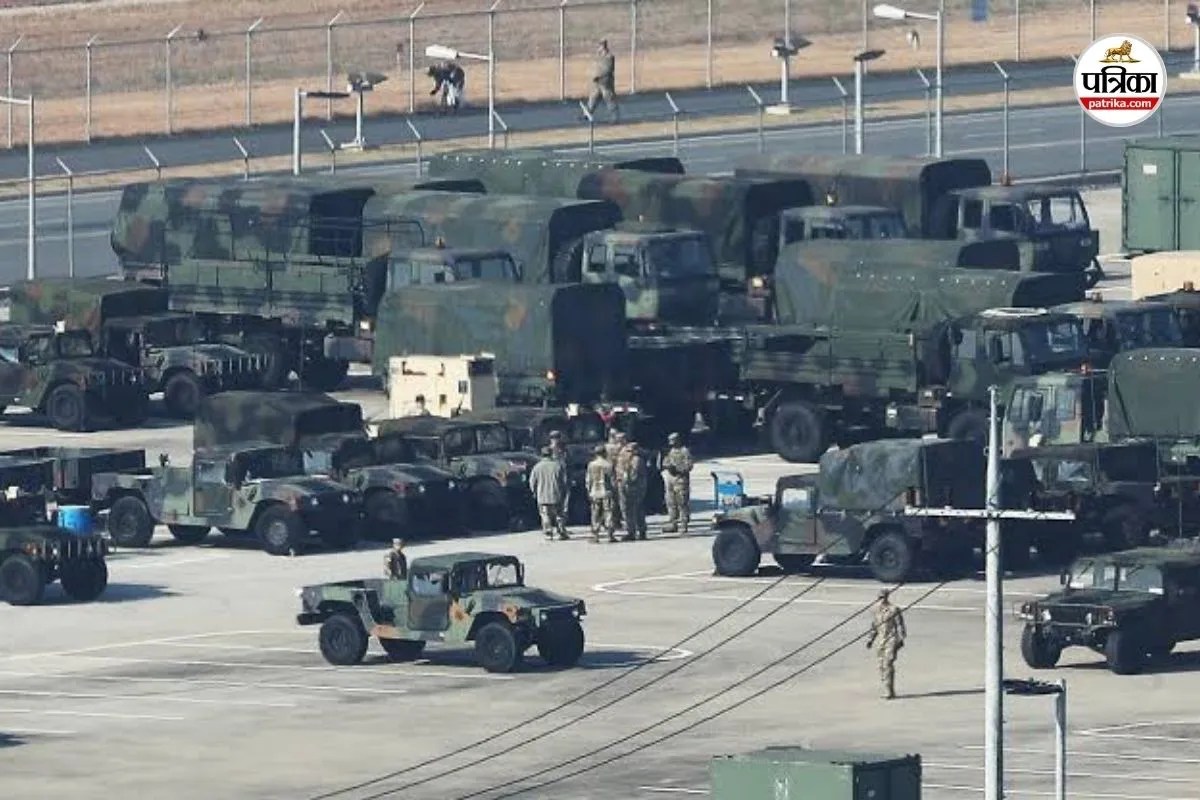
Panic hit Pyeongtaek fast. When local governments start flashing emergency warnings about toxic chemicals leaking near civilian populations, people pay attention.
South Korean authorities briefly sent out frantic text messages warning residents living near the U.S. K-55 Osan Air Base to get out. Why? A reported white phosphorus leak.
The incident kicked off around 5:07 p.m. local time. Police and firefighters rushed toward the perimeter. They set up roadblocks spanning 300 to 500 meters, shutting down traffic and pedestrian movement. But within minutes, the panic turned out to be much ado about a contained ground mishap.
Understanding the Osan Air Base Incident
The core of the issue traced back inside a munitions storage facility on the installation. According to local reports, white phosphorus residue appeared due to crystallization inside a munitions crate or during routine handling. Two munitions were involved.
U.S. forces and local emergency crews didn't take any chances. The U.S. 51st Fighter Wing established a strict safety cordon—roughly 1,000 feet wide—immediately after the discovery. Base commander Col. Ryan Ley emphasized that local safety remains an absolute priority, which explains why the response protocol triggered so aggressively.
Official statements later confirmed that the leaked substance was roughly 80 percent diluted. That detail matters. Pure white phosphorus behaves aggressively upon contact with open air. A heavily diluted compound changes the threat matrix completely, lowering the immediate hazard level to both public health and the surrounding environment.
Why White Phosphorus Terrifies People
You can't blame residents for panicking. White phosphorus has a dark reputation for a reason.
It is an extremely reactive chemical substance used heavily in military contexts for illumination rounds and smoke screens. When it meets oxygen, it ignites spontaneously and burns intensely at blistering temperatures. Direct skin contact causes brutal burns that can penetrate straight down to human bone. Inhaling thick smoke generated by the substance can easily prove fatal.
International oversight tightly regulates its deployment. So when news broke that it had somehow escaped a container at a major military hub just 60 kilometers south of Seoul, alarm bells rang instantly.
How Authorities Handled the Threat
Governments love to err on the side of caution during potential hazardous material spills. Pyeongtaek city officials fired off emergency disaster alerts advising citizens to steer clear of potential skin exposure.
Yet, the crisis window stayed remarkably short.
Emergency response personnel and explosive ordnance disposal teams moved in fast. They cleared the area, handled the decontamination work, and neutralized the risk. Barely 36 minutes after the first evacuation text lit up phones, the city lifted the warning. Normal routines resumed.
No injuries were reported. No severe structural damage occurred. The base returned to standard operational status once the 51st Fighter Wing confirmed the situation stayed entirely isolated.
Joint investigations between South Korean firefighters, police, and U.S. military investigators continue to lock down the exact trigger behind the minor breach. For now, the prompt coordination between local government text systems and base command prevented a localized accident from spiraling into a major diplomatic or public health crisis.